

Hyperthyroidism: When Your Thyroid Goes Into Overdrive

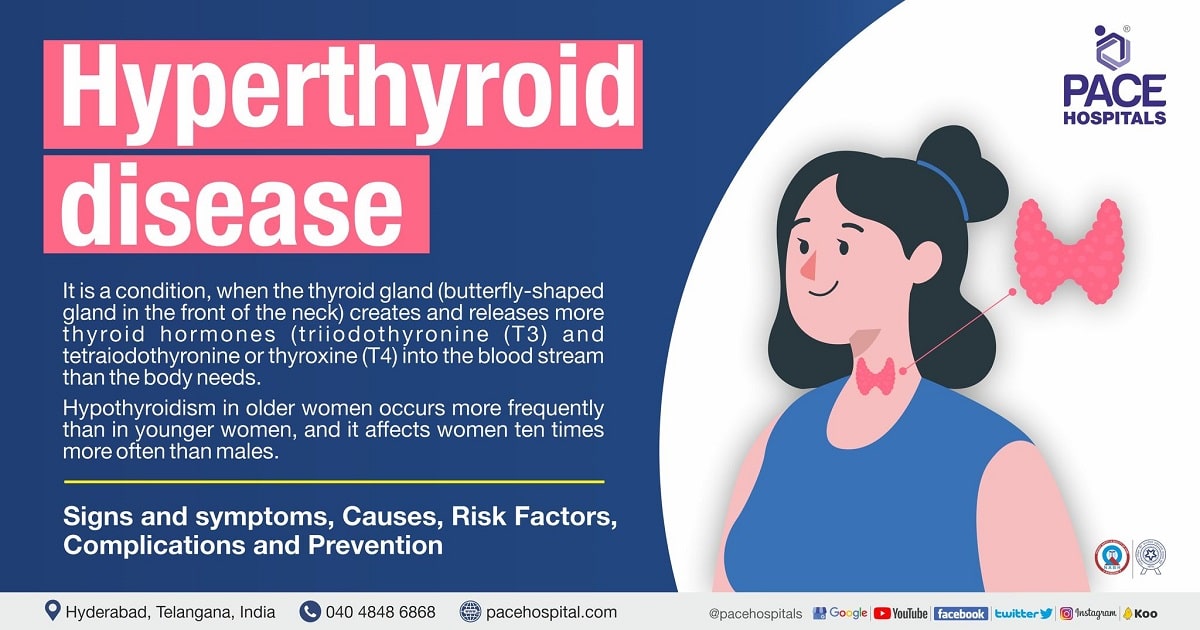
The thyroid gland is like the body’s engine regulator. Its job is to keep everything running at the right speed — heart rate, metabolism, temperature, digestion, and mood. But what happens when that regulator gets stuck at full throttle? When the thyroid produces far too much hormone, the entire body shifts into overdrive. The heart beats faster, weight drops without trying, hands tremble, sleep becomes impossible, and anxiety rises for no clear reason. This is hyperthyroidism — a condition that is far more than just a fast metabolism, and one that demands proper diagnosis and treatment before serious complications develop.
What Is Hyperthyroidism?
Hyperthyroidism refers to increased thyroid hormone synthesis and secretion, most commonly from Graves’ disease or toxic nodular goitre. The diagnosis is based on suppressed serum concentrations of thyroid-stimulating hormone, accompanied by free thyroxine and total or free triiodothyronine concentrations that are raised in overt hyperthyroidism or within range in subclinical hyperthyroidism. NORD
In simple terms, the thyroid is making more hormone than the body needs, and this excess acts like a constant accelerator pressed too hard for too long. Worldwide, hyperthyroidism affects about 2.5% of adults. It occurs between two and ten times more often in women. Onset is commonly between 20 and 50 years of age, though the condition is also more common in those over 60. PubMed Central
The Whickham Survey demonstrated a prevalence of hyperthyroidism in women approximately ten times greater than in men, at 2.7% versus 0.23%. Despite its prevalence, hyperthyroidism is often missed in older patients because its classic symptoms can be mistaken for normal ageing or anxiety disorders. Cincinnati Children’s
What Causes Hyperthyroidism?
Several different conditions can trigger the thyroid to overproduce hormones, and identifying the correct cause is essential for choosing the right treatment.
Graves’ Disease is by far the most common cause. The most common cause of hyperthyroidism is Graves’ disease, with a global prevalence of 2% in women and 0.5% in men. It is an autoimmune condition in which the immune system produces antibodies called TSH-receptor antibodies that mistakenly stimulate the thyroid to produce hormone continuously, without the normal regulatory feedback. Graves’ disease is the leading cause in younger patients, with incidence peaking between ages 30 and 50. It can also cause a distinctive eye condition called Graves’ ophthalmopathy, where the eyes protrude or become inflamed. ScienceDirect
Toxic Nodular Goitre, also called toxic multinodular goitre, is the second most common cause and is more often seen in older individuals. Hyperthyroidism is mostly caused by Graves’ disease at 70% of cases or toxic nodular goitre at 16%. In this condition, one or more lumps (nodules) develop in the thyroid and begin producing hormone independently, ignoring the body’s normal control signals. NORD
Thyroiditis refers to inflammation of the thyroid, which can cause a temporary burst of stored hormones into the bloodstream. It can follow a viral illness, occur after pregnancy (postpartum thyroiditis), or be triggered by certain medications. Subacute granulomatous thyroiditis accounts for about 3% of hyperthyroidism cases, and drugs account for approximately 9% of cases. Drug causes include amiodarone, tyrosine kinase inhibitors, and immune checkpoint inhibitors. NORD
Excessive Iodine Intake — whether through diet, supplements, or iodine-containing medications like amiodarone — can also overstimulate the thyroid. Amiodarone-induced thyrotoxicosis is seen in about 6% of individuals taking the medication in iodine-sufficient areas and about 10% in individuals taking it in iodine-deficient areas. Taking too much synthetic thyroid hormone prescribed for hypothyroidism can also produce a hyperthyroid state if the dose is not properly monitored. Cincinnati Children’s
Every Symptom of Hyperthyroidism
Because thyroid hormones accelerate virtually every process in the body, the symptoms of hyperthyroidism are wide-ranging. Common symptoms of thyrotoxicosis include anxiety, insomnia, palpitations, unintentional weight loss, diarrhoea, and heat intolerance. ScienceDirect
Heart-related symptoms are among the most concerning. Rapid heartbeat, irregular heart rhythm (including atrial fibrillation), and palpitations are common and can put significant strain on the cardiovascular system over time. Other symptoms include irritability, muscle weakness, sleeping problems, fast heartbeat, heat intolerance, diarrhoea, enlargement of the thyroid, and weight loss. Some of the symptoms include nervousness, increased perspiration, hand tremors, anxiety, thinning of the skin, fine brittle hair, and muscular weakness — especially in the upper arms and thighs. PubMed Central
Bone health is also affected in untreated or long-standing hyperthyroidism. Excess thyroid hormone accelerates bone turnover, reducing bone density over time and significantly increasing the risk of osteoporosis and fractures, particularly in older women. Eye problems — especially in Graves’ disease — can include bulging eyes, double vision, dry or gritty eyes, and light sensitivity.
In older adults, the classic symptoms of anxiety and rapid heart rate may be absent, replaced instead by unexplained weight loss, heart failure, or confusion — a presentation called “apathetic hyperthyroidism” that is easily missed.
How Is Hyperthyroidism Diagnosed?
A blood test is the cornerstone of diagnosis. A low TSH level combined with high free T4 and/or T3 confirms overt hyperthyroidism. In subclinical hyperthyroidism, TSH is low but T4 and T3 remain within the normal range. Once the blood test confirms hyperthyroidism, identifying the specific cause is the next step.
Etiology can typically be established based on clinical presentation, thyroid function tests, and TSH-receptor antibody status. Thyroid scintigraphy is recommended when the diagnosis is uncertain. A thyroid ultrasound helps identify nodules or goitre. TSH-receptor antibodies, when elevated, confirm Graves’ disease. A radioactive iodine uptake scan shows how much iodine the thyroid is absorbing — high uptake suggests Graves’ disease or toxic nodules, while low uptake points toward thyroiditis. ScienceDirect
For further guidance on thyroid health and global endocrine resources, visit the World Health Organization and ObserverVoice.com.
Every Treatment Option for Hyperthyroidism
Treatment depends on the cause, age of the patient, severity of symptoms, and personal preferences. Three main approaches are available, and each has advantages and trade-offs.
Antithyroid Drugs are typically the first treatment used, especially for Graves’ disease. Antithyroid drugs are recommended for treatment of hyperthyroidism caused by overproduction of hormones in children, adults, and pregnant women. In adults, treatment of Graves’ disease usually lasts 12 to 18 months. After 4 to 12 weeks, normal thyroid levels are usually achieved and the drug dose can be reduced. Further treatment with low doses is continued for 1.5 years or longer. The main drugs used are methimazole and propylthiouracil (PTU). PTU is preferred during the first trimester of pregnancy. These medications may result in side effects including rash, joint pain, gastrointestinal upset, or more serious complications such as liver toxicity or neutropenia — a dangerously low white blood cell count that requires immediate medical attention. EyeWikiBlue Cross NC
Radioactive Iodine Therapy (RAI) is a definitive treatment that destroys overactive thyroid tissue. The patient swallows a capsule or drink containing radioactive iodine, which is absorbed by the thyroid and gradually reduces its activity. There are three treatment modalities for Graves’ disease that have remained largely unchanged for nearly 80 years: antithyroid drugs, radioactive iodine, and surgery. RAI is highly effective but almost always results in permanent hypothyroidism, requiring lifelong thyroid hormone replacement afterwards. It is generally avoided in pregnancy and in patients with significant Graves’ eye disease, as it can worsen eye symptoms. nih
Thyroid Surgery (Thyroidectomy) involves removing most or all of the thyroid gland. Surgical treatment has been found to be more effective than radioiodine therapy to achieve a cure and reduce recurrence, but it carries surgical risks and requires lifelong thyroid hormone replacement afterwards. Preoperative preparation to render the patient euthyroid is essential in order to prevent thyroid storm. Surgery is particularly suitable for patients with very large goitres causing breathing or swallowing difficulties, or those who cannot tolerate medications and wish to avoid radioiodine. Medscape
Beta-Blockers such as propranolol do not treat hyperthyroidism directly but provide rapid relief from distressing symptoms like rapid heart rate, tremors, and anxiety while the primary treatment takes effect. They are an important bridge therapy used alongside other treatments.
The Danger of Thyroid Storm
Left untreated or poorly managed, hyperthyroidism can escalate into a rare but life-threatening emergency called thyroid storm. Most cases of thyroid storm occur after a precipitating event, intercurrent illness, or discontinuation of antithyroid medication. The most important determinants of survival in life-threatening thyroid storm are early recognition and institution of appropriate therapy. Symptoms include extremely high fever, racing heart, confusion, vomiting, and loss of consciousness. Thyroid storm requires immediate hospital admission and intensive treatment. NCBI
Frequently Asked Questions
Q1. Can hyperthyroidism go away on its own? In some cases, particularly with thyroiditis following a viral illness or after pregnancy, hyperthyroidism is temporary and resolves without treatment. However, Graves’ disease and toxic nodular goitre rarely resolve spontaneously and require active treatment. Never assume it will resolve without a medical evaluation.
Q2. Can hyperthyroidism cause permanent heart damage? If left untreated for a prolonged period, hyperthyroidism can cause atrial fibrillation — an irregular heart rhythm that increases the risk of stroke — and weaken the heart muscle. These effects are generally reversible with successful treatment, but early diagnosis greatly reduces the risk of lasting damage.
Q3. Is hyperthyroidism dangerous during pregnancy? Yes. Untreated hyperthyroidism during pregnancy increases the risk of miscarriage, premature birth, low birth weight, and serious complications for the mother, including heart failure. Propylthiouracil is the preferred antithyroid drug in early pregnancy. Close monitoring throughout pregnancy is essential.
Q4. What is the difference between hyperthyroidism and Graves’ disease? Graves’ disease is the most common cause of hyperthyroidism, responsible for about 70% of all cases. Hyperthyroidism is the broader condition — the overproduction of thyroid hormone — while Graves’ disease is one specific autoimmune disorder that produces it. Not all hyperthyroidism is caused by Graves’ disease.
Q5. After radioactive iodine treatment, will I need medication forever? In most cases, yes. Radioactive iodine almost always causes the thyroid to become underactive over time, resulting in hypothyroidism that requires lifelong daily levothyroxine replacement. This is a predictable and manageable outcome that most patients tolerate very well.
References
- StatPearls / NIH — Hyperthyroidism
- PMC / NIH — Hyperthyroidism: A Review, JAMA 2023
- The Lancet — Hyperthyroidism: Aetiology, Pathogenesis, Diagnosis, Management
- PMC / NIH — Antithyroid Drugs
- PMC / NIH — Treatment of Graves’ Disease 2025
- WHO — Thyroid Disorders
Disclaimer
This article adapts publicly available information from WHO’s Thyroid Disorders page and other publicly available sources on hyperthyroidism, Graves’ disease, and thyroid hormone management. This content is for informational and educational purposes only and does not constitute medical advice. Diagnosis and management of hyperthyroidism should always be guided by a qualified endocrinologist or healthcare professional. ObserverVoice.com is a news and information platform — not a healthcare provider.
Observer Voice is the one stop site for National, International news, Sports, Editor’s Choice, Art/culture contents, Quotes and much more. We also cover historical contents. Historical contents includes World History, Indian History, and what happened today. The website also covers Entertainment across the India and World.

