

Disability: 1.3 billion people face health inequities created by barriers, not bodies
Disability: 1.3 billion affected—barriers create inequity, not impairments

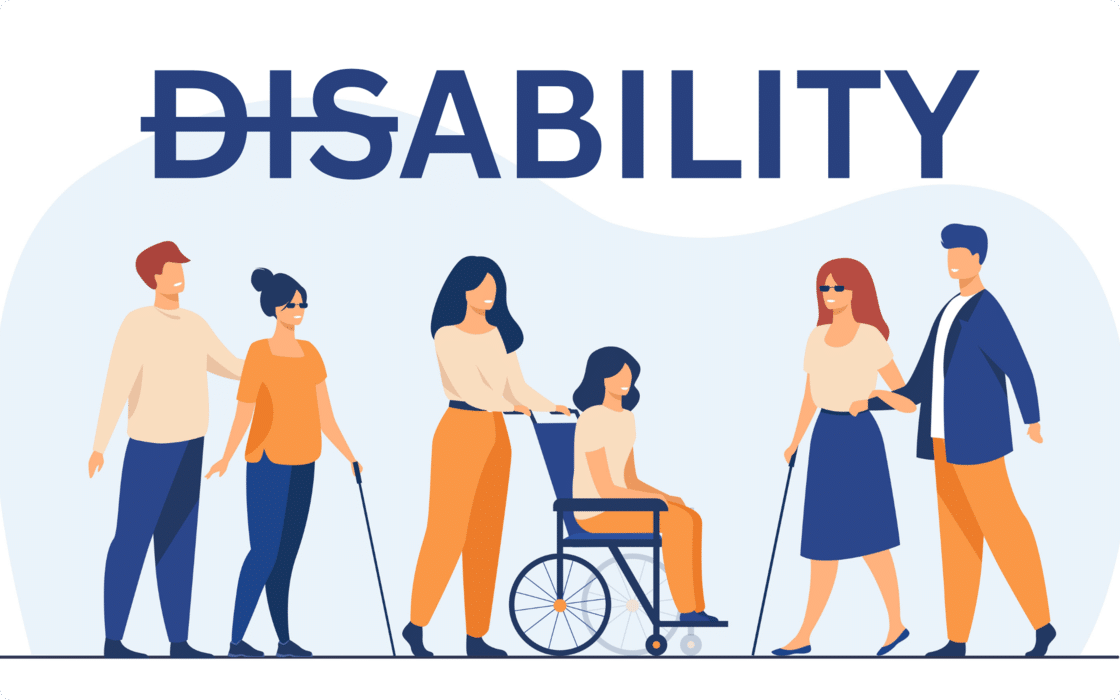
Maria Santos wheeled her chair up to the clinic entrance in Manila and stopped.
Eight concrete steps. No ramp. No elevator. No alternative entrance.
She’d arrived for her annual diabetes checkup—critical for managing her blood sugar and preventing complications. But the clinic that served her neighborhood for everyone else was completely inaccessible to her.
“The receptionist came outside and said I could make the appointment over the phone instead,” Maria recalled. “But I needed blood tests, a physical exam, my feet checked for neuropathy. You can’t do that over the phone. So I just… didn’t get care that year.”
Her diabetes worsened. By the time she finally found an accessible clinic 90 minutes away—requiring two bus transfers, neither with wheelchair lifts—she had developed early-stage kidney damage that might have been prevented with proper monitoring.
Maria’s story illustrates a reality facing an estimated 1.3 billion people worldwide who experience significant disability—about 16% of the global population. This number is increasing due to population aging and rising prevalence of noncommunicable diseases.
Here’s the critical point that WHO emphasizes: disability results from the interaction between individuals with health conditions and environmental and personal factors. The stairs didn’t exist because of Maria’s spinal cord injury—they existed because the clinic was designed without considering wheelchair users. The disability was created by barriers, not by her body.
Understanding Disability Through a Social Lens
For decades, disability was viewed primarily as a medical problem residing in individual bodies—something to fix or cure. This “medical model” focused on impairments and limitations.
The social model of disability, reflected in WHO’s approach, recognizes that disability results from the interaction between people with health conditions—such as cerebral palsy, Down syndrome, vision loss, depression, or mobility impairments—and personal and environmental factors.
Those environmental factors include negative attitudes and stigma, inaccessible transportation and public buildings, limited social support, discriminatory laws and policies, and healthcare systems designed without considering diverse needs.
A person’s environment has a huge effect on the experience and extent of disability. Inaccessible environments create barriers that hinder full and effective participation in society on an equal basis with others.
Consider two people with the same visual impairment. In a country with accessible technology, screen readers, Braille signage, and inclusive education, that person might work as a lawyer, navigate independently, and participate fully in community life. In a country without these accommodations, the same person might face unemployment, social isolation, and dependence on family members—not because their vision is different, but because their environment is different.
Progress on improving social participation can be made by addressing barriers and facilitating persons with disabilities in their daily lives.
For more on creating inclusive communities, see our article on universal design and accessibility.
The Devastating Health Inequities
The health inequities facing persons with disabilities are stark and well-documented in WHO’s Global Report on Health Equity for Persons with Disabilities.
Persons with disabilities die earlier, have poorer health, and experience more limitations in everyday functioning than the rest of the population—not because of their impairments, but due to health inequities.
These inequities arise from unfair conditions affecting persons with disabilities disproportionately: stigma from healthcare providers who make assumptions about quality of life, discrimination in healthcare settings, poverty (persons with disabilities are more likely to be poor and poor people are more likely to acquire disabilities), exclusion from education and employment limiting resources for healthcare, and barriers within the health system itself.
The statistics are sobering. Compared to persons without disabilities, some persons with disabilities die up to 20 years earlier; have more than double the risk of developing comorbid conditions such as depression, asthma, diabetes, stroke, obesity, or poor oral health; find inaccessible health facilities up to six times more hindering; and are up to 15 times more limited by inaccessible and unaffordable transportation.
These aren’t inevitable outcomes of having disabilities—they’re the result of health systems and societies that fail to ensure equitable access.
Dr. James Chen, who uses a wheelchair and works as a public health researcher in Singapore, explained the compounding effect: “When you can’t access preventive care because clinics have stairs, you develop complications. When those complications require specialist care but the hospital examination tables don’t adjust and the imaging equipment can’t accommodate wheelchairs, you don’t get proper diagnosis. When medications aren’t explained in accessible formats, you can’t manage your conditions properly. Each barrier creates the next health problem.”
WHO’s Response: Building Health Equity
WHO is working to fully integrate and promote disability inclusion in the health sector, ensuring persons with disabilities have equitable access to effective health services, are included in health emergencies preparedness and responses, and can access cross-sectoral public health interventions to achieve the highest attainable standard of health.
Following World Health Assembly Resolution 74.8 on “The highest attainable standard of health for persons with disabilities,” WHO launched the Global Report on Health Equity for Persons with Disabilities in December 2022, providing updated evidence, analysis, and recommendations on disability inclusion.
Building on this foundation, WHO developed the Health Equity for Persons with Disabilities: Guide for Action (also called the Disability Inclusion Guide for Action)—a national strategic planning toolkit providing practical guidance on developing comprehensive plans to advance health equity through integration into health systems governance and planning.
Montenegro became the first country in the European Region to implement the WHO Disability guide for action, demonstrating how countries can systematically address barriers.
In June 2025, WHO launched the Disability Health Equity Initiative, with partners uniting to advance health equity. By November 2025, the WHO Disability Health Equity Network was inaugurated with 154 global members.
The Global Disability Summit in May 2025 marked a pivotal moment in advancing health for all.
WHO is also making accessible telehealth services, supporting countries to advance health equity, and strengthening data collection on disability through tools like the WHO Disability Assessment Schedule (WHODAS) and Model Disability Survey.
Disability Inclusion Within WHO
WHO is implementing the UN Disability Inclusion Strategy across the organization through its policy on disability launched in December 2020.
This ensures WHO itself is an inclusive organization, providing an enabling environment where persons with disabilities fully and effectively participate on an equal basis with others, and that disability is systematically integrated into all WHO work.
WHO strives to model the inclusion it advocates globally—demonstrating that disability inclusion isn’t just about healthcare access, but about transforming institutions to value diverse ways of being human.
What Needs to Happen
Achieving health equity for persons with disabilities requires action across multiple levels.
Health systems must:
- Ensure physical accessibility of all facilities (ramps, elevators, accessible examination equipment, accessible bathrooms)
- Train all healthcare workers on disability inclusion and communication with persons with disabilities
- Provide information in accessible formats (large print, Braille, easy-to-read, sign language)
- Include persons with disabilities in health emergency preparedness and response
- Collect disaggregated data on health outcomes by disability status
- Make assistive technology available and affordable
Governments must:
- Implement laws and policies ensuring disability rights, including healthcare access
- Include persons with disabilities in universal health coverage schemes
- Address social determinants affecting persons with disabilities (education, employment, housing)
- Combat stigma and discrimination through public education
- Ensure transportation systems are accessible
Communities must:
- Challenge negative attitudes and stereotypes about disability
- Include persons with disabilities in decision-making
- Create accessible public spaces
- Support families of children with disabilities
Research must:
- Include persons with disabilities in health research, not just research about disability
- Use tools like the checklist for including women with disabilities in violence research
- Address data gaps on health equity
As WHO emphasizes: it is a state obligation, through the health sector in coordination with other sectors, to address existing health inequities so persons with disabilities can enjoy their inherent right to the highest attainable standard of health.
Acting to achieve health equity for persons with disabilities is acting to achieve Health for All.
Back in Manila, Maria eventually found a clinic with a ramp, adjustable examination tables, and staff trained in disability inclusion. “The difference is night and day,” she said. “The doctor actually talks to me, not over my head to whoever accompanied me. The equipment works for my body. I can get the care I need.”
But she shouldn’t have had to search for that. Every clinic, every hospital, every health facility should be designed from the beginning to serve all bodies, all people.
Disability is part of being human. Healthcare that excludes 16% of humanity isn’t healthcare—it’s a system that needs transformation.
Frequently Asked Questions (FAQs)
Disability is part of being human, experienced by an estimated 1.3 billion people—about 16% of the global population—with numbers increasing due to population aging and rising noncommunicable diseases. Disability results from the interaction between individuals with health conditions (such as cerebral palsy, Down syndrome, depression, vision loss, or mobility impairments) and personal and environmental factors including negative attitudes, inaccessible transportation and public buildings, and limited social support. A person’s environment has a huge effect on the experience and extent of disability—inaccessible environments create barriers hindering full participation in society on an equal basis with others. Progress can be made by addressing these barriers and facilitating persons with disabilities in daily life. Learn more at WHO’s disability health topic page and the WHO disability fact sheet.
Persons with disabilities die earlier, have poorer health, and experience more limitations in everyday functioning due to health inequities arising from unfair conditions: stigma, discrimination, poverty, exclusion from education and employment, and barriers in the health system itself. Compared to persons without disabilities, some persons with disabilities die up to 20 years earlier; have more than double the risk of developing comorbid conditions such as depression, asthma, diabetes, stroke, obesity, or poor oral health; find inaccessible health facilities up to 6 times more hindering; and are up to 15 times more limited by inaccessible and unaffordable transportation. These inequities are documented in WHO’s Global Report on Health Equity for Persons with Disabilities. World Health Assembly Resolution WHA74.8 calls for addressing these inequities to ensure the highest attainable standard of health.
WHO works to fully integrate and promote disability inclusion in the health sector, ensuring persons with disabilities have equitable access to effective health services, are included in health emergencies, and can access public health interventions. WHO developed the Health Equity for Persons with Disabilities: Guide for Action providing practical guidance for countries to develop comprehensive plans for disability inclusion in health systems. WHO launched the Disability Health Equity Initiative in June 2025, and the WHO Disability Health Equity Network with 154 global members in November 2025. WHO is making telehealth accessible, supporting countries, and strengthening data collection.
WHO provides several tools for strengthening disability data collection and assessment. The WHO Disability Assessment Schedule (WHODAS) is a standardized tool for measuring health and disability across cultures. WHO supports the Model Disability Survey for population-based data collection. WHO published rapid diagnostic test accessibility considerations for professional use and self-tests, and a checklist to support inclusion of women with disabilities in violence research. The Disability Inclusion Guide for Action executive summary and EasyRead version make guidance accessible to diverse audiences. Countries can access WHO’s work on strengthening disability data collection.
WHO is implementing the UN Disability Inclusion Strategy across the organization through its policy on disability launched in December 2020 with an action plan for implementation. WHO strives to be an inclusive organization providing an enabling environment where persons with disabilities fully and effectively participate on an equal basis with others, and disability is systematically integrated into all WHO work as it advances its mission to promote health, keep the world safe, and serve the most vulnerable. WHO’s work on implementing the UN Disability Inclusion Strategy and strengthening disability inclusion through collaboration demonstrates organizational commitment. WHO marked the Global Disability Summit in May 2025 as a pivotal moment.
- WHO Disability Health Topic
- WHO Disability Fact Sheet
- Global Report on Health Equity for Persons with Disabilities
- Health Equity for Persons with Disabilities: Guide for Action
- WHO Disability Health Equity Initiative
- WHO Disability Assessment Schedule (WHODAS)
- WHO Policy on Disability
- UN Disability Inclusion Strategy
- WHA74.8 Resolution
- International Day of Persons with Disabilities
Disclaimer: This article is an adaptation of publicly available information from WHO’s Disability
health topic page (WHO, Geneva. Licence: CC BYNC-SA 3.0 IGO). WHO is not responsible for the
content or accuracy of this adaptation. This content is for informational and educational purposes
only and does not constitute medical advice. ObserverVoice.com is a news and information platform
— not a healthcare provider.
Observer Voice is the one stop site for National, International news, Sports, Editor’s Choice, Art/culture contents, Quotes and much more. We also cover historical contents. Historical contents includes World History, Indian History, and what happened today. The website also covers Entertainment across the India and World.

