

Empowering Scheduled Castes: The Impact of PM-AJAY Initiative

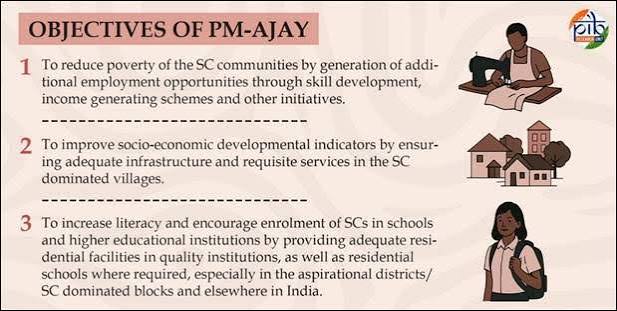
The Ministry of Social Justice and Empowerment is making significant strides in enhancing the socio-economic status of Scheduled Caste communities through the Pradhan Mantri Anusuchit Jaati Abhyuday Yojana (PM-AJAY). This flagship initiative aims to alleviate poverty, foster sustainable livelihoods, and enhance infrastructure in communities predominantly inhabited by Scheduled Castes, all while promoting inclusive development driven by technology and measurable outcomes.
A senior official from the Ministry recently reported impressive advancements under the PM-AJAY scheme. Notably, the Adarsh Gram component has successfully reached 47,316 villages, benefitting an astounding 4,759,399 citizens across India. To date, a total of 46,782 development projects have been realized, and 24,133 comprehensive Village Development Plans (VDPs) have been established.
In line with these achievements, 16,759 villages have been designated as Adarsh Grams. This recognition reflects substantial improvements in infrastructure, basic services, and the overall quality of life in areas with a large population of Scheduled Caste residents.
Looking ahead, the Ministry has earmarked ₹22.50 Crore in central assistance for the fiscal year 2026-27, aimed specifically at constructing three hostel projects—two of which are dedicated to girls—providing accommodation for up to 750 students. This investment underscores the government’s commitment to enhancing educational facilities for Scheduled Caste youth.
Union Minister of Social Justice and Empowerment Dr. Virendra Kumar emphasized the pivotal role of PM-AJAY in tackling socio-economic inequalities. He highlighted how targeted interventions and collaborative initiatives are empowering Scheduled Caste individuals while fostering inclusive growth throughout society.
The PM-AJAY initiative encompasses three key components designed to promote holistic development within Scheduled Caste communities. The Adarsh Gram component emphasizes integrated village development through infrastructure enhancements and community-driven planning. Meanwhile, the Grants-in-Aid component allocates resources for livelihood generation, skill development, and income-boosting activities. Lastly, the Hostel component provides crucial financial backing for the construction and refurbishment of hostels, enhancing educational access for Scheduled Caste students.
Furthermore, the Ministry has adopted a robust digital governance model using the PM-AJAY Portal and AJAY Mobile Application. These tools facilitate a seamless online implementation of the program, enabling efficient preparation of Village Development Plans, project evaluations, fund tracking, and beneficiary monitoring. This digital transformation ensures transparency and effective oversight at every project stage.
Through continuous partnerships with States, Union Territories, and implementing agencies, the Ministry is dedicated to ensuring the timely execution of PM-AJAY projects. With sustained investments in infrastructure, livelihood opportunities, education, and digital governance, the scheme is on a promising path toward fostering an inclusive and equitable society where Scheduled Caste communities can fully engage in India’s growth narrative.
Observer Voice is the one stop site for National, International news, Sports, Editor’s Choice, Art/culture contents, Quotes and much more. We also cover historical contents. Historical contents includes World History, Indian History, and what happened today. The website also covers Entertainment across the India and World.

