

Diphtheria: The throat-coating killer we thought we’d defeated is making a comeback
Diphtheria: Vaccine-preventable disease still kills—14 million unvaccinated

Six-year-old Amina started with what seemed like a simple sore throat.
Her mother, Fatima, thought it was nothing serious—children get sore throats all the time in their crowded neighborhood in Kano, Nigeria. But within 48 hours, Amina’s neck swelled dramatically, and when Fatima looked in her daughter’s mouth, she saw something terrifying: a thick, grey membrane coating the back of Amina’s throat like a grotesque film.
At the local clinic, the health worker recognized it immediately. “Diphtheria,” she said quietly. “We need to get her to the hospital right now.”
Amina was lucky. She received diphtheria antitoxin and antibiotics in time and survived. But dozens of other children in her community weren’t as fortunate during Nigeria’s 2023 diphtheria outbreak, which spread across multiple states.
According to WHO’s information on diphtheria, this is a disease we’ve had effective vaccines against since the 1920s. It should be a relic of medical history, something our great-grandparents feared but we don’t. Yet in 2023, Nigeria alone reported hundreds of suspected cases and numerous deaths. Guinea faced its own outbreak the same year.
The question isn’t whether we can prevent diphtheria—we absolutely can. The question is why we’re not.
What Diphtheria Actually Does
Diphtheria is a serious bacterial infection caused by strains of Corynebacterium diphtheriae, which produce a powerful toxin. Understanding what this bacteria does to the human body makes clear why vaccination is so critical.
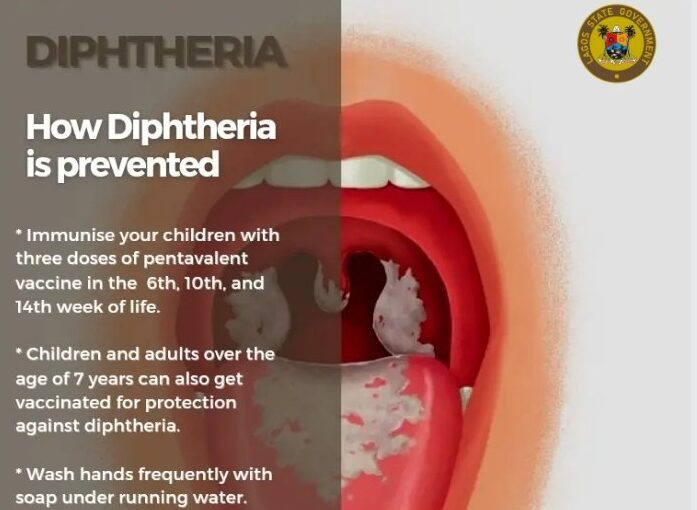
The bacteria typically attach to tissues in the respiratory system—the nose, tonsils, and throat. The toxin they produce kills healthy tissue. Within two to three days of infection, the dead tissue forms a thick, grey or white coating that can cover the nose, tonsils, and throat.
This isn’t just uncomfortable—it’s life-threatening. The coating makes breathing and swallowing extremely difficult. In severe cases, it can block the airway completely, suffocating the patient. Imagine trying to breathe through a straw that’s being progressively covered from the inside.
Typical symptoms include sore throat, fever, swollen neck glands (the characteristic “bull neck” appearance), and weakness. But the real danger often comes from complications.
Sometimes the toxin enters the bloodstream and travels throughout the body, damaging the heart, kidneys, and nerves. Heart complications can cause irregular heartbeats or heart failure. Kidney damage can lead to kidney failure. Nerve damage can cause paralysis, often affecting the throat and respiratory muscles—creating a vicious cycle where breathing becomes even more difficult.
The bacteria spread from person to person through respiratory droplets from coughing or sneezing, just like the flu or COVID-19. People can also contract diphtheria from touching infected open sores or ulcers, though this is less common.
Those at highest risk include household contacts of infected patients, anyone exposed to secretions from an infected person, and those with frequent close contact with infected individuals. Crowded living conditions—like refugee camps, urban slums, or areas with poor housing—facilitate rapid spread.
For more on bacterial infections and prevention, see our article on infectious disease control.
The Vaccine That Changed Everything
Here’s the frustrating part: diphtheria is completely vaccine-preventable.
The diphtheria vaccine has been available for over a century and is included in every country’s essential immunization program. It’s a bacterial toxoid—essentially a toxin whose toxicity has been inactivated. It teaches the immune system to recognize and fight the diphtheria toxin without causing disease.
Currently available diphtheria vaccines are remarkably effective at preventing this disease.
WHO recommends a specific vaccination schedule: a three-dose primary vaccination series with diphtheria-containing vaccine, followed by three booster doses. The primary series should begin as early as six weeks of age, with subsequent doses given with a minimum four-week interval between doses.
The three booster doses should preferably be given during the second year of life (12-23 months), at 4-7 years, and at 9-15 years of age. Ideally, there should be at least four years between booster doses to achieve long-term protection.
The vaccine is typically given in combination with other vaccines—tetanus, pertussis (whooping cough), hepatitis B, Haemophilus influenzae type b, and polio. This combination approach is efficient and reduces the number of injections children need.
Side effects from diphtheria vaccination are typically mild—perhaps soreness at the injection site, mild fever, or fussiness. Serious side effects are rare.
The vaccine works. When vaccination coverage is high, diphtheria virtually disappears. When coverage drops, the disease returns.
The Vaccination Crisis
Despite having a highly effective, relatively inexpensive vaccine that’s been available for decades, we’re failing to protect millions of children.
In July 2025, WHO and UNICEF reported that global childhood vaccination coverage holds steady, yet over 14 million infants remain unvaccinated. These are children who didn’t receive a single dose of DTP vaccine (diphtheria-tetanus-pertussis).
The COVID-19 pandemic severely disrupted childhood immunization programs worldwide. Lockdowns prevented clinic visits. Healthcare workers were diverted to pandemic response. Supply chains were interrupted. Misinformation about vaccines spread rapidly on social media, increasing vaccine hesitancy.
In response, global partners launched “The Big Catch-up” in April 2023—a targeted effort to vaccinate millions of children and restore immunization progress lost during the pandemic.
Childhood immunization has begun recovery from COVID-19 backslides, but millions remain unprotected, creating vulnerabilities for outbreaks.
The consequences are predictable and tragic. When vaccination coverage drops below a certain threshold, outbreaks occur. Nigeria’s 2023 outbreak demonstrated this pattern clearly. Kano State, where Amina lived, had particularly low vaccination coverage in certain areas—perfect conditions for diphtheria to spread.
Treatment: Effective but Race Against Time
If someone contracts diphtheria, treatment options exist, but timing is absolutely critical.
Treatment includes two main components: antibiotics to kill the bacteria, and for serious cases, diphtheria antitoxin to neutralize the bacterial toxin before it causes more damage.
The antibiotics eliminate the bacteria themselves. The specific antibiotics used depend on local antibiotic resistance patterns, which vary by region.
The diphtheria antitoxin is the critical, life-saving intervention for serious illness. It stops the bacterial toxin from causing further damage to the respiratory system, heart, kidneys, and nerves. However, antitoxin can only neutralize toxin that hasn’t yet attached to tissues—it can’t reverse damage already done. This is why early treatment is essential.
WHO published updated clinical management of diphtheria guidelines in February 2024, providing healthcare workers with the most current recommendations for managing diphtheria patients.
Close contacts of a diphtheria patient are also treated with antibiotics preventively to stop further spread of bacteria.
Anyone who has had diphtheria should still receive the vaccine after the acute phase of illness is over, as natural infection doesn’t always provide complete immunity.
The risk of complications or death decreases considerably with early, appropriate treatment. If diphtheria is suspected, testing to confirm the disease should be done promptly, and treatment should start as soon as possible—ideally the same day.
But here’s the catch: many healthcare facilities, especially in resource-limited settings, don’t have diphtheria antitoxin readily available. It’s not a commonly needed medication in countries with high vaccination coverage, so stockpiles may be limited. During outbreaks, antitoxin supplies can be quickly exhausted.
WHO maintains outbreak response resources including a Diphtheria Outbreak Toolbox and infection prevention and control operational guides for healthcare settings to help countries respond effectively when outbreaks occur.
What Must Happen
The solution to diphtheria is straightforward: vaccinate children according to WHO’s recommended schedule.
This requires functional immunization programs with reliable vaccine supply chains, adequate cold chain infrastructure (vaccines must be kept at proper temperatures), trained healthcare workers, community health education to address vaccine hesitancy, and surveillance systems to detect outbreaks early.
Countries need to reach every child, especially those in remote areas, conflict zones, urban slums, and marginalized communities where vaccination coverage typically lags.
The 50th anniversary of the Expanded Programme on Immunization in 2024 highlighted both remarkable progress—vaccines now reach more children than ever before in history—and sobering gaps, with millions still unprotected.
WHO’s Immunization, Vaccines and Biologicals team works globally to strengthen immunization programs and provides countries with technical guidance and support.
Back in Kano, Nigeria, health workers like Aishatu Umar are building momentum against the diphtheria outbreak, going door-to-door to vaccinate children and educate communities about the disease.
Amina’s mother, Fatima, became an advocate for vaccination after nearly losing her daughter. “I didn’t know about diphtheria before,” she explained. “I thought vaccines weren’t important, that childhood illnesses were just normal. Now I make sure all my children and my neighbors’ children are vaccinated. I tell everyone about what happened to Amina, about that grey thing in her throat that almost killed her.”
She paused, then added quietly: “No mother should have to see that.”
She’s absolutely right. In the 21st century, with effective vaccines available for over a century, no child should die from diphtheria. The fact that hundreds still do each year isn’t a medical failure—it’s a failure of implementation, of reaching every child with life-saving vaccines.
We have the tools. We just need to use them.
Frequently Asked Questions (FAQs)
Diphtheria is a serious bacterial infection caused by strains of bacteria called Corynebacterium diphtheriae that produce a powerful toxin. The toxin attaches to tissues in the respiratory system (nose, tonsils, throat) and kills healthy tissue, forming a thick grey or white coating within 2-3 days that can make breathing and swallowing extremely difficult. Sometimes the toxin enters the bloodstream and damages the heart, kidneys, and nerves, potentially causing irregular heartbeats, heart failure, kidney failure, or paralysis. The bacteria spread person-to-person through respiratory droplets from coughing or sneezing, or less commonly through contact with infected sores. Those at highest risk include household contacts and people with frequent close contact with infected individuals. Learn more at WHO’s diphtheria health topic page and read the WHO fact sheet on diphtheria.
Diphtheria is completely vaccine-preventable and included in all countries’ essential immunization programs. The vaccine is a bacterial toxoid (inactivated toxin) and is highly effective at preventing disease. WHO recommends a specific schedule: three-dose primary vaccination series starting as early as 6 weeks of age with minimum 4-week intervals between doses, followed by three booster doses preferably at 12-23 months, 4-7 years, and 9-15 years of age. Ideally, at least 4 years should separate booster doses for long-term protection. The vaccine is typically given in combination with tetanus, pertussis, hepatitis B, Haemophilus influenzae type b, and polio vaccines. Side effects are usually mild (soreness, mild fever); serious side effects are rare. Track global immunization data at the WHO Immunization Data portal.
Treatment for diphtheria includes antibiotics to kill the bacteria and, for serious cases, diphtheria antitoxin to neutralize the bacterial toxin before it causes more damage to the respiratory system, heart, kidneys, and nerves. The critical factor is timing—antitoxin can only neutralize toxin that hasn’t yet attached to tissues, so it cannot reverse damage already done. This makes early treatment absolutely essential. If diphtheria is suspected, testing should be done promptly and treatment started as soon as possible, ideally the same day. The specific antibiotics used depend on local antibiotic resistance patterns. Close contacts of infected patients are also treated with antibiotics to prevent spread. WHO published updated clinical management guidelines in February 2024 and provides safety guidance for diphtheria antitoxin administration.
Despite having highly effective vaccines available for over a century, over 14 million infants globally remain completely unvaccinated—they didn’t receive a single dose of DTP vaccine. WHO and UNICEF reported in July 2025 that while global vaccination coverage is holding steady, massive gaps persist. The COVID-19 pandemic severely disrupted childhood immunization programs—lockdowns prevented clinic visits, healthcare workers were diverted to pandemic response, and misinformation increased vaccine hesitancy. When vaccination coverage drops below critical thresholds in communities, outbreaks occur, as seen in Nigeria and Guinea in 2023. Global partners launched “The Big Catch-up” to restore immunization progress.
WHO provides comprehensive resources for outbreak response and clinical management. The Diphtheria Outbreak Toolbox offers outbreak response guidance. Infection prevention and control operational guides address important IPC and WASH measures for healthcare settings during outbreaks. WHO published infection prevention and control measures for respiratory diphtheria and surveillance standards for vaccine-preventable diseases. Healthcare workers can access Immunization in Practice training and track disease data through the Global Health Observatory. WHO’s Immunization, Vaccines and Biologicals team provides ongoing technical support.
Disclaimer: This article is an adaptation of publicly available information from WHO’s Diphtheria
health topic page (WHO, Geneva. Licence: CC BYNC-SA 3.0 IGO). WHO is not responsible for the
content or accuracy of this adaptation. This content is for informational and educational purposes
only and does not constitute medical advice. ObserverVoice.com is a news and information platform
— not a healthcare provider.
Observer Voice is the one stop site for National, International news, Sports, Editor’s Choice, Art/culture contents, Quotes and much more. We also cover historical contents. Historical contents includes World History, Indian History, and what happened today. The website also covers Entertainment across the India and World.

