

Becker Muscular Dystrophy: How It Differs From Duchenne and What to Expect

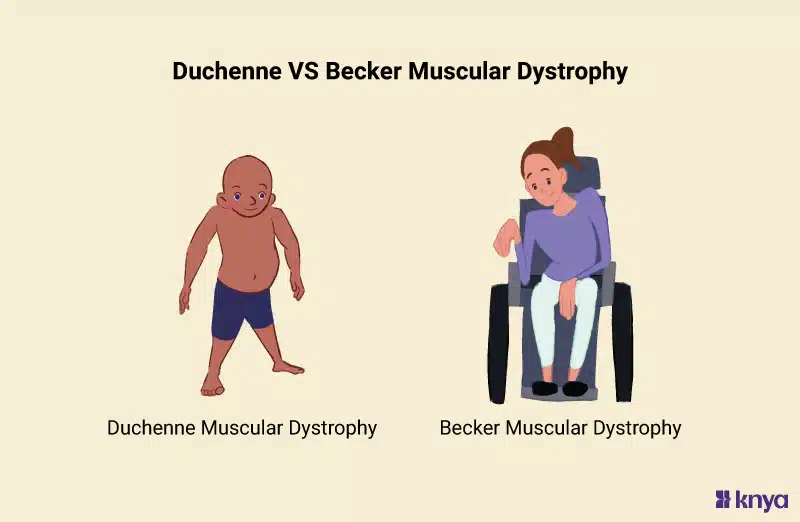
Becker Muscular Dystrophy, commonly called BMD, is a genetic neuromuscular disorder that causes progressive muscle weakness and degeneration, similar to Duchenne Muscular Dystrophy but much milder and slower progressing. Like Duchenne, Becker is caused by mutations in the dystrophin gene located on the X chromosome, but the mutations in Becker Muscular Dystrophy produce a partially functional dystrophin protein rather than no functional protein at all. This difference in the amount of working dystrophin protein is the main reason why Becker is milder than Duchenne. Becker Muscular Dystrophy affects approximately one in every ten thousand to fifteen thousand boys born worldwide, making it less common than Duchenne but still a relatively frequent genetic disorder. The condition was first described by Johann Becker in 1955 when he recognized a milder form of muscular dystrophy that was very similar to Duchenne but progressed much more slowly and had a much better prognosis. For many years, Becker was not well understood, and boys with BMD were sometimes misdiagnosed with Duchenne or other conditions. However, with advances in genetic testing, doctors now understand that Becker and Duchenne are both caused by mutations in the same dystrophin gene, but different types of mutations result in different amounts of dystrophin protein production. Boys with Becker Muscular Dystrophy can often walk well into their twenties, thirties, or even longer, in contrast to boys with Duchenne who typically lose the ability to walk by their early teens. Life expectancy for boys with Becker is much better than for Duchenne, with many living into their fifties, sixties, or beyond. With proper medical care and management, boys with Becker can have relatively normal lives with good quality of life, though they do face progressive muscle weakness and potential complications over time.
How Does Becker Muscular Dystrophy Differ From Duchenne?
Becker Muscular Dystrophy and Duchenne Muscular Dystrophy are both caused by mutations in the same dystrophin gene located on the X chromosome, but they differ in several important ways related to the type of mutation and the resulting amount of functional dystrophin protein. The key difference is that in Duchenne, the mutations usually result in either no dystrophin protein or a completely non-functional dystrophin protein. In Becker, the mutations result in production of a partially functional or shortened dystrophin protein that retains at least some ability to protect muscle cells. This difference in dystrophin protein function leads to major differences in disease progression and severity. In Duchenne, muscle weakness begins early in childhood, usually by age two to four years, and progresses rapidly. Most boys with Duchenne lose the ability to walk by their early teens. In Becker, symptoms typically appear later, usually in late childhood or early adolescence, and progress much more slowly. Most boys with Becker maintain the ability to walk well into their twenties, thirties, or even longer. The rate of muscle cell death and degeneration is much slower in Becker than in Duchenne, so muscle weakness accumulates over decades rather than years. Calf pseudohypertrophy, where calf muscles appear enlarged but are actually being replaced by fat and scar tissue, is common in both conditions but is often more pronounced in Becker. Intellectual disability is more common in Duchenne, occurring in about thirty percent of cases. Intellectual disability is much less common in Becker. Cardiac involvement can occur in both conditions, but is more severe and more common in Duchenne. Cardiomyopathy, where the heart muscle becomes weak and enlarged, occurs in many boys with Duchenne but is less common in Becker. Respiratory muscle weakness is a major problem in Duchenne, often leading to respiratory failure. Respiratory weakness occurs in Becker as well but usually develops later and is generally less severe. Life expectancy is drastically different between the two conditions. Most boys with Duchenne die in their late twenties to thirties from respiratory or cardiac complications. Boys with Becker typically have near-normal or only slightly shortened life expectancy, with many living into their fifties, sixties, or beyond. The genetic basis for the difference is that mutations causing Becker either delete entire exons in a way that maintains the reading frame, allowing a shortened but functional protein to be made, or cause mutations that allow some dystrophin protein to be produced through alternative processing of the gene. In Duchenne, mutations usually cause frameshift mutations that completely disrupt the genetic code and prevent production of any functional protein.
What Are the Main Symptoms and Signs of Becker Muscular Dystrophy?
Becker Muscular Dystrophy causes progressive muscle weakness, but the symptoms appear later and progress much more slowly than in Duchenne Muscular Dystrophy. The timing and severity of symptoms vary widely among individuals with Becker, and some people may remain relatively asymptomatic for years despite having the condition. Many boys with Becker develop symptoms in late childhood or adolescence, though some don’t show symptoms until their twenties or thirties. Early signs often include difficulty with athletic activities, with the boy noticing he cannot run as fast or jump as high as his peers. The boy may develop muscle cramps or pain with activity, especially after exertion. Muscle pain can be prominent in Becker, more so than in Duchenne. Calf muscles often appear enlarged or swollen, a condition called pseudohypertrophy. The enlarged appearance is actually due to replacement of muscle tissue with fat and scar tissue, so despite looking large, the muscles are weaker than normal. Progressive difficulty with physical activities develops over time. The boy may have difficulty climbing stairs or getting up from a seated position. Running becomes increasingly difficult and eventually impossible. Walking becomes progressively more difficult and may require assistive devices like canes or walkers. Some boys eventually use wheelchairs for community mobility, though this typically happens much later in life, if at all, compared to Duchenne. Proximal muscle weakness, affecting muscles closest to the center of the body like hip and shoulder muscles, develops over time. Weakness affects the legs more than the arms in early disease but eventually spreads to affect arms, trunk, and neck. Contractures, where muscles become permanently tight and shortened, may develop, particularly in the legs and feet. Scoliosis, curvature of the spine, can develop, particularly in those who become wheelchair-dependent, though this is less common in Becker than Duchenne. Respiratory muscle weakness may develop, though usually much later in life and less severely than in Duchenne. Shortness of breath with exertion may develop in middle age or later. Difficulty with sleep apnea may occur. Cardiac involvement may develop, with cardiomyopathy occurring in some individuals. Heart problems may cause shortness of breath, fatigue, or palpitations. However, cardiac involvement is usually mild or absent in most people with Becker. Swallowing difficulties may develop as throat and swallowing muscles weaken, though this is less common in Becker than Duchenne. The wide variation in disease severity and progression means that some people with Becker have relatively minimal symptoms throughout life while others have more significant disability. Genetic testing can help predict severity based on the specific mutation.
How is Becker Muscular Dystrophy Detected and Diagnosed?
Becker Muscular Dystrophy is detected and diagnosed through a combination of clinical findings, blood tests, and genetic testing, similar to the process for Duchenne but the clinical presentation may be different because symptoms appear later and progress more slowly. When a boy or young adult develops progressive muscle weakness, difficulty with athletic activities, or muscle cramps with exertion, doctors may suspect Becker or other muscular dystrophies. A family history of muscular dystrophy or unexplained muscle disease in family members raises suspicion for a genetic condition like Becker. Clinical examination by a neurologist looking for signs of muscle weakness, calf pseudohypertrophy, and the pattern of muscle involvement helps assess for muscular dystrophy. Creatine kinase, or CK, is an enzyme found in muscles that leaks into the blood when muscle cells are damaged. A blood test measuring CK levels is elevated in Becker, usually to moderately high levels, indicating muscle damage. In Becker, CK levels are typically not as extremely elevated as in Duchenne, but are still significantly above normal. An elevated CK level in a young man with muscle weakness suggests muscular dystrophy and warrants further testing. Electromyography, or EMG, which measures electrical activity in muscles, shows a pattern of muscle damage consistent with muscular dystrophy. This test helps confirm that muscle cells are being damaged and that the problem is in the muscle itself rather than in the nerves. Genetic testing for mutations in the dystrophin gene is the most definitive test for diagnosing Becker Muscular Dystrophy. A blood test can identify the specific mutation in the dystrophin gene. In Becker, the mutations usually allow production of a shortened but partially functional dystrophin protein, which is different from Duchenne mutations. The specific type of mutation helps predict disease severity. Muscle biopsy, where a small sample of muscle tissue is removed and examined under a microscope, can look for the presence of a shortened dystrophin protein using immunohistochemistry staining. In Becker, dystrophin protein is present but may be reduced in amount or abnormal in size. In Duchenne, dystrophin is completely absent. This difference in the muscle biopsy appearance helps distinguish Becker from Duchenne. However, genetic testing has made muscle biopsy less necessary in many cases. Genetic counseling with a genetic counselor helps families understand the diagnosis, how it is inherited, and what to expect for the future. The specific dystrophin mutation and genetic pattern can be discussed. Life expectancy and disease progression can be estimated based on the mutation type. Early diagnosis of Becker is important because it allows for appropriate monitoring and management of potential cardiac and respiratory complications. However, since Becker progresses much more slowly than Duchenne, delayed diagnosis may not have as dramatic consequences as delayed diagnosis of Duchenne would.
Why Does Becker Produce a Milder Form of Disease Than Duchenne?
Understanding why Becker Muscular Dystrophy is milder than Duchenne requires understanding the molecular genetics of dystrophin gene mutations. The dystrophin gene is enormous, containing seventy-nine exons, or coding segments. The gene is so large that there are many different places where mutations can occur. The type of mutation and where it occurs in the gene determine how much functional dystrophin protein can be produced. In Duchenne Muscular Dystrophy, mutations typically result in frameshift mutations or mutations that prevent the protein from being completed. A frameshift mutation occurs when the genetic code is shifted after the mutation, causing all the instructions after the mutation to be read incorrectly. This produces a completely non-functional protein or no protein at all. Without any functional dystrophin protein, muscle cells have no structural protection, and they are damaged and destroyed with each contraction. In Becker Muscular Dystrophy, mutations usually preserve the reading frame or occur in ways that allow production of a shortened but still partially functional dystrophin protein. In many Becker mutations, entire exons are deleted, but because the number of nucleotides deleted is a multiple of three, the reading frame is preserved. This allows the remaining exons to be read correctly, producing a shorter protein that is missing some domains but retains functional domains. A shortened dystrophin protein, sometimes called microdystrophin, can still provide significant structural support to muscle cells and protect them from damage, though not as well as the normal full-length protein. Because some functional protection is provided, muscle cells are damaged more slowly, and the disease progresses much more slowly. The amount of dystrophin protein produced affects disease severity. Some Becker mutations result in more dystrophin protein production, leading to milder disease. Other Becker mutations result in less dystrophin protein production, leading to more severe disease. This variation in disease severity even within Becker is due to differences in how much shortened dystrophin protein different mutations produce. Genetic testing can identify the specific mutation and sometimes can predict disease severity and progression based on the mutation type. Some mutations are known to cause very mild disease while others cause more severe disease, allowing doctors to give families more accurate prognosis.
What Health Problems Do Boys with Becker Muscular Dystrophy Face?
Boys and men with Becker Muscular Dystrophy face progressive muscle weakness and potential complications, but generally these develop later in life and are less severe than in Duchenne. Progressive muscle weakness is the primary feature, affecting skeletal muscles progressively over decades. The weakness typically begins in the legs and may gradually spread to other muscles. The rate of progression varies widely among individuals, with some experiencing rapid progression and others having very slow progression. Muscle pain and cramps are particularly common in Becker, more so than in Duchenne. The pain can occur with activity and sometimes at rest. Some men with Becker report significant pain that affects their quality of life. Pain management may require physical therapy, medications, or other interventions. Calf pseudohypertrophy occurs in most people with Becker. The enlarged calf muscles appear swollen but are actually being replaced by fat and scar tissue. The pseudohypertrophy may be more pronounced in Becker than in Duchenne. Contractures, where muscles become permanently tight and shortened, may develop, particularly in the calves and other muscles if the disease is not managed with stretching and physical therapy. Scoliosis, curvature of the spine, can develop, particularly in those who become wheelchair-dependent, though this is less common in Becker than Duchenne due to later loss of walking ability and longer walking period. Respiratory muscle weakness may develop later in life, usually in middle age or beyond. Shortness of breath with exertion is the main symptom. Sleep apnea, where breathing stops during sleep, may occur. Most people with Becker do not develop severe respiratory failure requiring mechanical ventilation, though it can happen in some cases. Cardiac involvement including cardiomyopathy can develop in some individuals with Becker. The incidence and severity of cardiac disease is lower in Becker than in Duchenne. Some people may have no cardiac involvement at all, while others develop significant cardiomyopathy. Regular cardiac monitoring is recommended. Swallowing difficulties may develop due to weakness of swallowing muscles, though this is less common in Becker than Duchenne. Nutrition problems may occur if swallowing becomes severely impaired. Intellectual disability is less common in Becker than Duchenne. Only a small percentage of people with Becker have intellectual disability, and most have normal intelligence. Bone health problems may occur due to immobility and sometimes corticosteroid use if steroids are used for treatment. Osteoporosis can develop, increasing fracture risk. Psychosocial challenges including depression and anxiety can occur as people cope with progressive disability and limitations. Social isolation may occur due to loss of mobility and inability to participate in activities. Life expectancy is much better for Becker than Duchenne. Most people with Becker have normal or only slightly shortened life expectancy, with many living into their fifties, sixties, or beyond. Life expectancy depends on severity of disease and development of cardiac complications.
What Treatments Help People with Becker Muscular Dystrophy?
Treatment for Becker Muscular Dystrophy focuses on slowing disease progression, maintaining function, managing complications, and optimizing quality of life. Unlike Duchenne, where corticosteroids are a cornerstone of treatment, the use of corticosteroids in Becker is less clear and varies among specialists. Some doctors may offer corticosteroids to slow disease progression, while others reserve them for specific situations or do not recommend them routinely. The decision to use corticosteroids requires careful consideration of benefits and risks specific to each individual. Physical therapy is crucial for maintaining muscle strength and function for as long as possible. Regular stretching helps prevent contractures in muscles. Gentle exercise helps maintain muscle strength and mobility, though excessive exercise should be avoided as it can cause fatigue and potentially worsen muscle damage. Walking and light physical activity are generally encouraged. Occupational therapy helps people develop strategies to maintain independence with daily activities despite progressive muscle weakness. Adaptive equipment including canes, walkers, and eventually wheelchairs helps maintain mobility and independence. Bracing can help maintain posture and prevent contractures. Pain management is important in Becker because muscle pain is common. Stretching, physical therapy, and sometimes medications including anti-inflammatory drugs or muscle relaxants may help manage pain. Cardiac monitoring is important even though cardiac involvement is less common in Becker than Duchenne. Echocardiograms and EKGs should be done periodically to assess heart function. If cardiomyopathy develops, medications including ACE inhibitors or beta-blockers may be prescribed. Respiratory monitoring is important, particularly as people get older. Sleep studies should be done if sleep apnea is suspected. Oxygen therapy or non-invasive ventilation can help if respiratory weakness develops. Nutritional support ensures adequate nutrition. If swallowing becomes impaired, dietary modifications or feeding tubes may be needed. Mental health support including counseling helps people cope with progressive disability and emotional challenges. Support groups connect people with others who have the condition. Educational support helps people succeed in school and other settings despite their condition. Emerging treatments being developed for Duchenne may also benefit people with Becker. Gene therapy and antisense oligonucleotide therapies that are being developed for Duchenne could potentially benefit people with Becker as well, though the milder nature of Becker means the urgency for treatment is less than for Duchenne. As new treatments are developed, people with Becker will have access to additional treatment options.
Living with Becker Muscular Dystrophy
Living with Becker Muscular Dystrophy presents ongoing challenges related to progressive muscle weakness, but many people with Becker can maintain relatively normal lives with good quality of life because of the slower disease progression and better prognosis compared to Duchenne. For boys and young men newly diagnosed with Becker, the diagnosis may come as a relief that the condition is milder and slower progressing than Duchenne, though it still represents a lifelong genetic condition that will lead to progressive weakness. Understanding the condition and what to expect helps people make informed decisions about life planning and treatment. Education about the condition is important so that the individual and family understand disease progression, potential complications, and available treatments. In childhood and adolescence, many boys with Becker can participate in normal school and social activities. Physical education and sports may need to be modified as weakness develops, but many boys can continue to participate in regular school. Some may eventually need academic accommodations due to fatigue or mobility limitations. Maintaining social connections and friendships is important for emotional health and quality of life. Walking may remain possible well into adulthood, allowing more independence than Duchenne. Many young adults with Becker can work in regular employment if the job is appropriate for their abilities. Some careers requiring high physical demands may not be feasible, but many professions can be pursued by people with Becker. Career planning should consider realistic possibilities given progressive weakness. Higher education is often feasible, with accommodations for mobility and energy limitations as needed. Dating and relationships are possible for people with Becker, though societal attitudes about disability and physical appearance may create challenges. Sexuality and sexual function may be affected by muscle weakness, but many people with Becker can have healthy sexual relationships. Reproductive issues are important considerations for men with Becker. Since Becker is X-linked, affected men will pass the mutation to all of their daughters, making them carriers. Their sons will not inherit the mutation. Genetic counseling is important for men with Becker who are considering having children. Mobility changes as weakness progresses over decades. In middle age or later, walking may become more difficult, and some people eventually use wheelchairs for community mobility. Home modifications may be needed to accommodate mobility aids. Accessible transportation becomes important for maintaining independence. Employment may become difficult or impossible as weakness progresses. Vocational rehabilitation services can help with transition to less physically demanding work or to other accommodations. Mental health challenges including depression and anxiety about progressive disability are important to address with counseling and sometimes medication. Support groups for people with Becker provide community and practical advice from others with the condition. Family relationships and roles may change as weakness progresses. Spouses, children, and other family members may need to provide increasing amounts of assistance with physical tasks. Family counseling can help families adjust to changing roles and responsibilities. Respiratory and cardiac monitoring throughout life is important to detect and manage complications early. With good medical care, maintaining physical activity as long as possible, managing pain and other symptoms, strong family and social support, and access to new treatments as they become available, people with Becker can have meaningful lives and achieve their goals despite progressive muscle weakness.
Frequently Asked Questions About Becker Muscular Dystrophy
FAQ 1: How is Becker Muscular Dystrophy inherited and what are the chances of passing it to children? Becker Muscular Dystrophy is inherited in an X-linked recessive inheritance pattern because the dystrophin gene is located on the X chromosome. Affected males have the mutation on their single X chromosome. Affected males will pass the X chromosome with the mutation to all of their daughters, making them at least carriers. Their sons will inherit the Y chromosome from their father, not the X chromosome, so sons of affected fathers will not inherit the condition. Carrier females, who have the mutation on one X chromosome and a normal copy on the other, usually have no symptoms or only mild symptoms due to X-inactivation. When a carrier female has children, there is a fifty percent chance that each son will inherit the X chromosome with the mutation and have Becker, and a fifty percent chance that each daughter will be a carrier. Men with Becker can have normal life expectancy and may have children. If a man with Becker has children with a woman who is not a carrier, all daughters will be carriers and all sons will be unaffected. If a man with Becker has children with a carrier woman, daughters have a fifty percent chance of being carriers and fifty percent chance of having Becker, and sons have fifty percent chance of having Becker and fifty percent chance of being unaffected. Genetic counseling is important for people with Becker who are planning to have children so they can understand the inheritance pattern and implications for their children.
FAQ 2: How much longer do people with Becker live compared to Duchenne? Life expectancy is dramatically different between Becker and Duchenne Muscular Dystrophies. Most boys with Duchenne die in their late twenties to early thirties from respiratory failure or cardiac complications. In contrast, most people with Becker have normal or only slightly shortened life expectancy. Many people with Becker live into their fifties, sixties, or beyond. Some people with very mild forms of Becker may have completely normal life expectancy. The variation in life expectancy even within Becker depends on disease severity, how much muscle weakness develops, and whether cardiac or respiratory complications occur. People with Becker who maintain good overall health, receive appropriate medical care, exercise regularly within their limitations, and manage any cardiac or respiratory complications tend to have longer life expectancy. Advances in medical care and emerging treatments may extend life expectancy even further for people with Becker in the future.
FAQ 3: Can people with Becker Muscular Dystrophy eventually lose the ability to walk? Some people with Becker Muscular Dystrophy eventually lose the ability to walk, but this typically happens much later in life, if at all, compared to Duchenne. Many people with Becker maintain the ability to walk well into their twenties, thirties, or even longer. Some people with Becker never lose the ability to walk, even if they eventually need assistive devices like canes or walkers to ambulate. The loss of walking ability depends on disease severity and rate of disease progression. People with more severe forms of Becker may lose the ability to walk earlier, sometimes in their teens or twenties. People with milder forms may maintain walking ability into middle age or beyond. Even when walking becomes impossible or impractical and people transition to using wheelchairs, quality of life can be maintained through adaptation and use of assistive technology. The slower pace of disease progression in Becker compared to Duchenne means that people typically have many years or decades to adapt to changing abilities and plan for future mobility needs.
FAQ 4: What is the difference between a Becker mutation and a Duchenne mutation in the dystrophin gene? The key difference between Becker and Duchenne mutations in the dystrophin gene is whether they maintain the reading frame of the genetic code. The dystrophin gene contains instructions written in three-letter codes called codons. A frameshift mutation occurs when the genetic code is shifted after the mutation, causing all instructions after the mutation to be read incorrectly. Most Duchenne mutations are frameshift mutations, producing a completely non-functional protein or no protein at all. Becker mutations usually preserve the reading frame, either by deleting entire exons in multiples of three nucleotides that maintain the reading frame, or by other mechanisms that allow correct reading of the remaining genetic code. When the reading frame is preserved, a shortened but partially functional dystrophin protein can be produced. A shortened dystrophin protein, sometimes called microdystrophin, retains enough functional domains to provide some protection to muscle cells, resulting in slower disease progression. The specific type of mutation and which exons are deleted determine how much dystrophin protein is produced and how severe the disease is. Genetic testing can identify the specific mutation and sometimes can predict disease severity based on the mutation type. Some Becker mutations are known to cause very mild disease while others cause more severe disease.
FAQ 5: Are there treatments being developed specifically for Becker Muscular Dystrophy? While most research and treatment development has focused on Duchenne Muscular Dystrophy because it is more severe and more urgent, emerging treatments being developed for Duchenne may also benefit people with Becker. Gene therapy approaches being developed for Duchenne could potentially be modified for use in Becker. Antisense oligonucleotide therapies being tested for Duchenne might be applicable to Becker. Exon-skipping therapies that allow the body to skip mutated portions of the dystrophin gene and produce shortened functional protein could potentially benefit people with Becker. Some treatments being developed for Duchenne may be particularly relevant to Becker since Becker already naturally produces shortened dystrophin protein. Research into muscle regeneration and stem cell therapies may provide future treatment options for Becker. Physical therapy and rehabilitation approaches continue to be refined to help people with Becker maintain function longer. As treatments for Duchenne advance and become available, they will likely be evaluated for use in Becker as well. People with Becker should stay informed about new research developments by talking to their doctors and maintaining contact with muscular dystrophy organizations that track emerging treatments and clinical trials.
References and Further Reading
For more information about Becker Muscular Dystrophy, you can visit several trusted and authoritative sources that provide detailed information for patients and families dealing with this genetic neuromuscular disorder. The World Health Organization at WHO.int provides comprehensive information about genetic neuromuscular disorders and rare diseases including Becker Muscular Dystrophy and the differences from other muscular dystrophies. The Muscular Dystrophy Association at MDA.org offers excellent patient education, family resources, support communities, information about treatments and clinical trials, and updates about new research being conducted on Becker and other muscular dystrophies. MedlinePlus, a service of the National Library of Medicine at MedlinePlus.gov, has detailed medical information about Becker Muscular Dystrophy written in language that patients and families can easily understand without specialized medical knowledge. The National Institutes of Health at NIH.gov provides scientific information about Becker Muscular Dystrophy research, ongoing clinical trials seeking participants, and the latest discoveries being made by scientists studying muscular dystrophies and muscle preservation therapies. The Genetic and Rare Diseases Information Center at GARD.NIH.gov provides reliable medical information about Becker Muscular Dystrophy and helps connect individuals and families to neurologists, genetic counselors, physical therapists, and communities of others managing the condition. The five main reference links are: 1) WHO.int – Genetic Neuromuscular Disorders, 2) Muscular Dystrophy Association, 3) MedlinePlus – Becker Muscular Dystrophy, 4) National Institutes of Health, and 5) Genetic and Rare Diseases Information Center.
Disclaimer
This article adapts publicly available information from WHO’s Becker Muscular Dystrophy and genetic neuromuscular disorder information pages. This content is for informational and educational purposes only and does not constitute medical advice. ObserverVoice.com is a news and information platform — not a healthcare provider. If you or someone you know has been diagnosed with Becker Muscular Dystrophy or shows signs of this condition including progressive muscle weakness, difficulty with physical activities, calf pseudohypertrophy, muscle pain, or elevated creatine kinase levels, please consult immediately with qualified healthcare professionals, neurologists, and genetic counselors for proper diagnosis, evaluation for treatment options, and ongoing comprehensive medical care. For more information, visit WHO.int and ObserverVoice.com.
Observer Voice is the one stop site for National, International news, Sports, Editor’s Choice, Art/culture contents, Quotes and much more. We also cover historical contents. Historical contents includes World History, Indian History, and what happened today. The website also covers Entertainment across the India and World.

