

Alpha-1 Antitrypsin Deficiency: The Lung and Liver Disease You May Have Never Heard Of

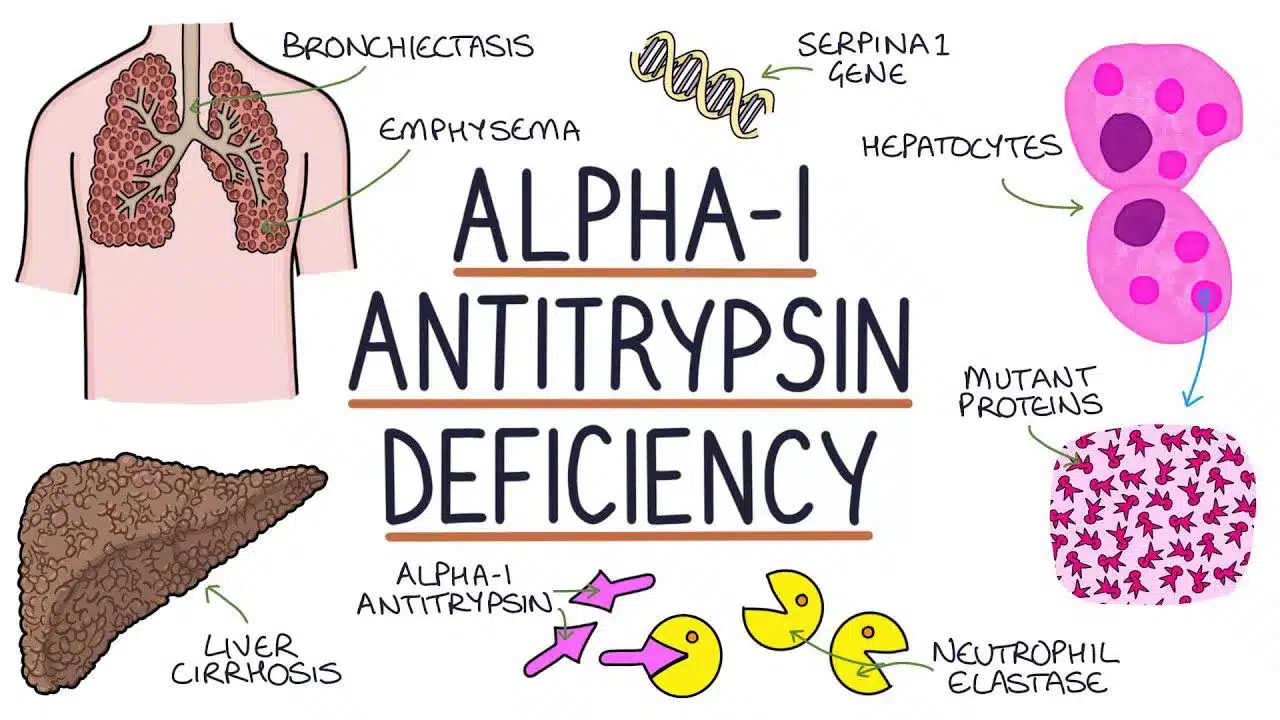
Imagine your lungs as tiny air sacs that help you breathe. Your body produces a special protein called alpha-1 antitrypsin (or A1AT for short), which acts like a bodyguard protecting these air sacs from damage. But what happens when your body doesn’t make enough of this protective protein? That’s exactly what happens in a condition called Alpha-1 Antitrypsin Deficiency, or AATD for short. Alpha-1 Antitrypsin Deficiency is a rare genetic disease. This means you are born with it because of genes you inherited from your parents. People with AATD don’t produce enough of the protective protein that guards their lungs and liver. Without this protein shield, harmful chemicals and substances can damage these important organs over time. The disease is so uncommon that many doctors don’t immediately think of it when patients first become sick, which is why it often takes years to diagnose.
How Do Your Genes Cause This Problem?
To understand AATD, we need to talk about genetics a little bit. Your body is made up of trillions of tiny cells, and inside each cell is something called DNA. DNA is like an instruction manual that tells your body how to work. These instructions are divided into segments called genes. Some genes tell your body to make certain proteins, like alpha-1 antitrypsin. When both of your parents pass you genes that don’t work properly, your body may not be able to make enough alpha-1 antitrypsin. Think of it like a recipe: if both your parents give you an incomplete recipe, you can’t make the dish properly. This is an inherited condition, meaning if both your parents carry the faulty gene, you might develop AATD. Scientists have identified different types of this condition based on how much protein your body can make.
What Happens to Your Lungs?
The main target of AATD is your lungs. The alpha-1 antitrypsin protein is supposed to protect the air sacs in your lungs from enzymes that can break them down. When you don’t have enough of this protein, these enzymes attack your lung tissue without anyone stopping them. Over time, the air sacs get damaged and destroyed, creating larger holes. This condition is called emphysema, and it makes it harder and harder to breathe. People with AATD might start coughing frequently, especially in their thirties or forties. They may feel short of breath even after light activities like climbing stairs or walking. Some people get frequent chest infections because their damaged lungs are more vulnerable to germs. Smokers with AATD suffer even worse damage because tobacco smoke speeds up the destruction of lung tissue. Even people who have never smoked can develop severe lung problems from AATD, but smoking makes everything much worse and much faster.
The Liver Can Be Affected Too
While the lungs get most of the attention, AATD can also damage your liver. The alpha-1 antitrypsin protein is made in your liver, so when your liver can’t make enough, the unused proteins sometimes stick together and build up inside liver cells. This buildup causes inflammation and scarring of the liver, a condition called cirrhosis. This can eventually lead to liver failure if left untreated. In children with AATD, liver problems can appear quite early. Some babies are born with jaundice (yellowing of skin) or develop liver disease before they turn one year old. Others may not show liver symptoms until they are older. Adults with AATD sometimes discover liver damage accidentally when getting tested for other reasons. The liver damage progresses differently in different people, which makes AATD very unpredictable.
How Do Doctors Diagnose AATD?
Many people with AATD go undiagnosed for years because symptoms look similar to other lung diseases like regular emphysema or asthma. Doctors should suspect AATD in patients who develop emphysema before age 45, or those who have never smoked but still get serious lung disease. To diagnose AATD, doctors order a blood test that measures how much alpha-1 antitrypsin protein is in your blood. If the blood test shows low levels, doctors may do additional tests called genetic testing or PI (protease inhibitor) typing to identify exactly which type of AATD you have. These tests help doctors understand how serious your condition might be. Chest X-rays and CT scans can show how much damage has already happened to your lungs. Liver ultrasounds or other imaging can check if your liver has been affected. Finding AATD early is important because it helps doctors start treatment before too much damage occurs.
What Treatment Options Exist?
Unfortunately, there is no cure for Alpha-1 Antitrypsin Deficiency yet. However, doctors can slow down the disease and help people live better lives. The most important step is for people with AATD to stop smoking immediately if they smoke. Smoking with AATD is extremely dangerous and speeds up lung damage by decades. For some patients, doctors can give augmentation therapy, which means giving patients the missing protein through intravenous infusion (a needle in the vein). This extra protein acts as a replacement bodyguard, protecting lungs from further damage. This treatment is not available for everyone and must be done regularly, usually every week or every month. Other treatments focus on managing symptoms, like medicines to help breathing or treatments for infections. People with AATD also need to avoid environments with air pollution, dust, or chemical fumes, because their lungs are already damaged and cannot handle extra irritants. Regular exercise, a healthy diet, and vaccinations against pneumonia and flu are all important parts of staying as healthy as possible.
Living With AATD
Being diagnosed with AATD can feel scary, but many people with this condition live long and meaningful lives. The key is catching it early and following doctor’s advice carefully. Family members of someone with AATD should also get tested, since the condition runs in families. Support groups and counseling can help people cope with the emotional side of having a lifelong condition. Research into AATD is ongoing, and scientists are working on new treatments that might help in the future. Gene therapy, which could potentially fix the faulty genes, is being studied in laboratories around the world. These new approaches give hope that better treatments might become available within the next decade.
Frequently Asked Questions About Alpha-1 Antitrypsin Deficiency
FAQ 1: Can children be born with Alpha-1 Antitrypsin Deficiency and when do symptoms appear? Yes, AATD is a genetic condition you are born with because it is passed down through your parents’ genes. However, symptoms often don’t appear until adulthood, usually in the thirties, forties, or fifties. Some babies show liver symptoms early on, but lung problems typically develop much later in life. Early diagnosis through genetic testing helps doctors monitor the condition and prevent serious damage before it becomes too severe. If your parents have AATD or your family has a history of lung disease, it’s important to get tested as a child.
FAQ 2: Is Alpha-1 Antitrypsin Deficiency contagious and can you catch it from other people? The good news is that AATD is not contagious at all. It is a genetic disease passed down through families via genes, not through germs or viruses like a cold or flu. You cannot catch it from someone else, and you cannot spread it to others no matter how much time you spend together. It only develops if you inherit the faulty genes from your parents, making it a family condition rather than something you can get from other people. You can safely live, work, and go to school with people who have AATD without any risk of getting the disease yourself.
FAQ 3: What is the difference between AATD and regular emphysema caused by smoking? Regular emphysema usually develops from smoking or air pollution over many years of exposure, typically affecting older adults who have smoked for decades. AATD is a genetic condition where your body simply cannot make enough protective protein from birth. People with AATD can develop emphysema much younger and even without smoking, which is one major difference. The underlying causes are completely different: one is genetic and one is environmental. However, both conditions damage the lungs and make breathing difficult, so people with AATD should especially avoid smoking since it will make their condition much worse.
FAQ 4: Can people with AATD live a normal lifespan and what is their life expectancy? The answer gives hope to patients and their families because many people with AATD do live normal or near-normal lifespans, especially if diagnosed early and treated properly. Treatment options and lifestyle changes can slow disease progression significantly, allowing people to live productive lives. Life expectancy depends on many factors including whether someone smokes, how much lung damage exists at the time of diagnosis, and how well they follow medical treatment plans recommended by their doctors. People who quit smoking, receive proper medical care, and make healthy lifestyle choices can have life expectancies similar to people without AATD.
FAQ 5: Are there any new treatments or breakthroughs in treating Alpha-1 Antitrypsin Deficiency? The answer is very encouraging because scientists around the world are researching gene therapy and new augmentation therapy methods that could change how we treat this disease. Some new medicines are being tested that could help the liver and lungs differently than current treatments work. Gene therapy in particular shows great promise because it could potentially fix the faulty genes that cause AATD. While these treatments are not yet widely available to everyone, continued research offers real hope for better options in the coming years as medical technology advances. Clinical trials are ongoing, and more treatment options may become available within the next five to ten years.
References and Further Reading
For more information about Alpha-1 Antitrypsin Deficiency, you can visit several trusted sources. The World Health Organization at WHO.int provides comprehensive information about genetic disorders and rare diseases that affect people worldwide. The Alpha-1 Foundation at Alpha1.org offers excellent patient education resources and support for those living with this condition. MedlinePlus, a service of the National Library of Medicine at MedlinePlus.gov, has detailed medical information about Alpha-1 Antitrypsin Deficiency written in language that patients can understand. The National Heart, Lung, and Blood Institute (NHLBI) at NHLBI.nih.gov provides government-backed information about this lung and heart disease. Finally, the American Lung Association at Lung.org provides resources, support, and information specifically for patients with lung conditions including those with Alpha-1 Antitrypsin Deficiency. The five main reference links are: 1) WHO.int – Genetic Disorders, 2) Alpha-1 Foundation, 3) MedlinePlus – Alpha-1 Antitrypsin Deficiency, 4) National Heart, Lung, and Blood Institute, and 5) American Lung Association.
Disclaimer
This article adapts publicly available information from WHO’s Alpha-1 Antitrypsin Deficiency page. This content is for informational and educational purposes only and does not constitute medical advice. ObserverVoice.com is a news and information platform — not a healthcare provider. If you or someone you know has symptoms of lung or liver disease, please consult with qualified healthcare professionals for proper diagnosis and treatment. For more information, visit WHO.int and ObserverVoice.com.
Observer Voice is the one stop site for National, International news, Sports, Editor’s Choice, Art/culture contents, Quotes and much more. We also cover historical contents. Historical contents includes World History, Indian History, and what happened today. The website also covers Entertainment across the India and World.

