

AI Sparks Tech Backlash in U.S. Classrooms

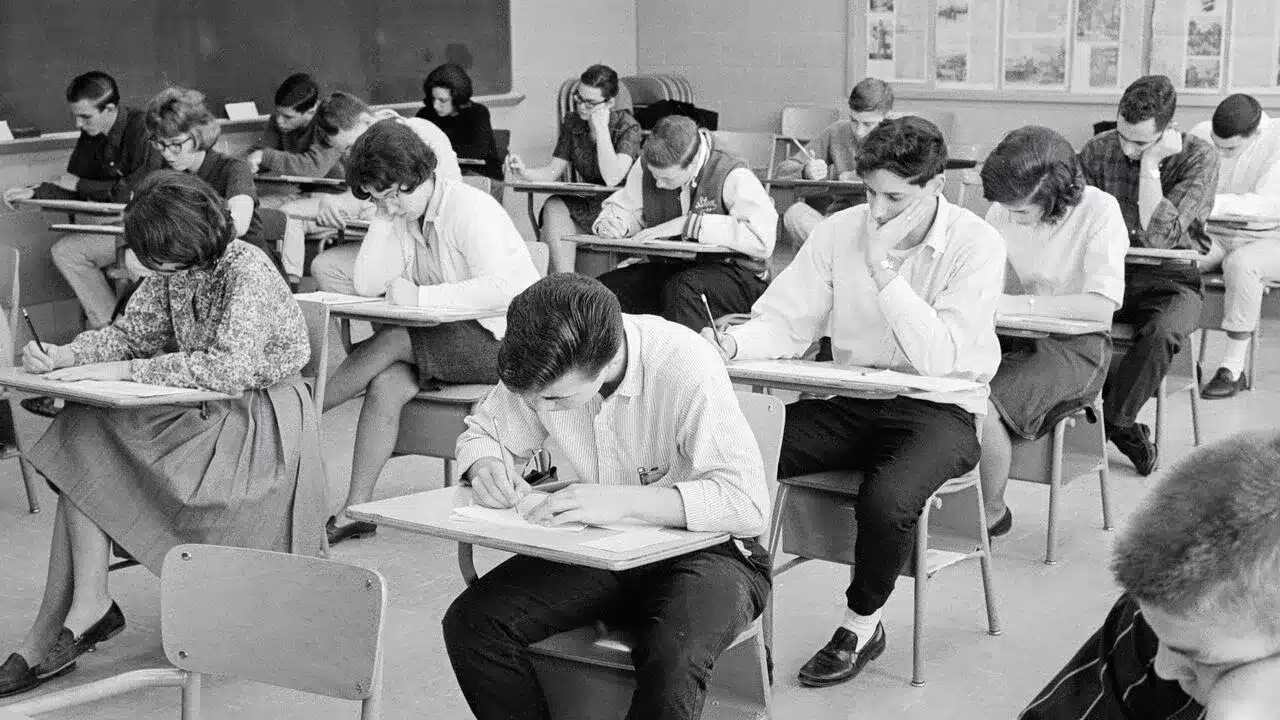
A resurgence of traditional examination methods is taking place in American classrooms as educators respond to the challenges posed by modern technology. After years of reliance on digital tools, many teachers are now reverting to handwritten assignments and oral presentations to combat cheating and distractions. Sales of blue books, once a bane for students, have more than doubled from 2022 to 2024, signaling a shift back to pen-and-paper assessments. This trend reflects a broader movement among educators to prioritize engagement and integrity in learning environments.
Teachers Adapt to New Challenges
In response to the rise of technology that facilitates cheating, teachers across the United States are implementing innovative strategies to ensure academic honesty. Laura Lomas, a literature professor at Rutgers University, has introduced a unique requirement for her students: attending a play with a different ending each night. This approach not only confirms attendance but also encourages active engagement. Additionally, she has replaced traditional PowerPoint presentations with oral assignments, minimizing the potential for AI-assisted work. Similarly, Sara Brock, a high school English teacher in Port Washington, New York, mandates that students complete writing exercises by hand during class.
The impact of AI tools like ChatGPT is significant, prompting a shift in assignment formats. A 2023 survey by Intelligent revealed that 66% of high school and college instructors are altering their assignments due to these technologies. Among those making changes, 76% are requiring handwritten work, while 87% are incorporating oral presentations. Furthermore, a separate survey by EdWeek Research Centre found that 43% of educators believe students should solve math problems using pencil and paper to demonstrate their understanding without AI assistance.
Global Trends in Education Technology
The debate surrounding classroom technology is not limited to the United States; it is a global issue. Isabel Dans Álvarez de Sotomayor, an education scholar from the University of Santiago de Compostela in Spain, notes that while wealthier nations are restricting classroom tech, poorer countries are racing to digitize their educational systems. For instance, Sweden has recently banned digital tools for young children, opting instead for physical textbooks and a focus on handwriting and reading. Similar trends are observed in Denmark and Finland, where educators are prioritizing traditional learning methods.
The concerns driving these changes extend beyond cheating. Many educators are also worried about the distractions posed by digital devices. According to a 2025 EdWeek Research Centre survey, 56% of teachers identified laptops and tablets as significant sources of distraction in the classroom. At Bowdoin College in Maine, the dean reported that many faculty members had already designated their classrooms as device-free spaces, even before the rise of AI technologies.
The Impact of Cheating on Education
Cheating has long been a concern in education, but the advent of advanced AI has transformed the landscape. A study conducted a decade ago found that 87% of high school students admitted to cheating at least once in the previous month. While this percentage has decreased, the nature of cheating has evolved dramatically. Justin Reich from MIT highlights that many students now rely on generative AI for their assignments, with some even fabricating citations from non-existent papers.
Despite the challenges posed by technology, there is growing recognition of the cognitive benefits of handwriting. Research indicates that handwriting can enhance retention and critical thinking skills, prompting some educators to reintegrate it into their curricula. For example, a computer science teacher at Hunter College High School in New York has reinstated handwriting for coding assignments, recognizing its advantages in learning.
Rethinking Classroom Dynamics
The shift away from technology in the classroom raises important questions about the purpose of educational time. At Hunter College, an 11th-grade English teacher assigned five literature responses to be completed by hand, each taking an entire class period. This approach, once deemed inefficient, is now seen as a valuable use of time in an age where digital distractions are pervasive. As educators navigate this evolving landscape, they are increasingly focused on providing students with quiet, undistracted time to foster deeper learning experiences.
Observer Voice is the one stop site for National, International news, Sports, Editor’s Choice, Art/culture contents, Quotes and much more. We also cover historical contents. Historical contents includes World History, Indian History, and what happened today. The website also covers Entertainment across the India and World.

