

Addison’s Disease: The Adrenal Insufficiency That Caused JFK’s Famous Health Struggles

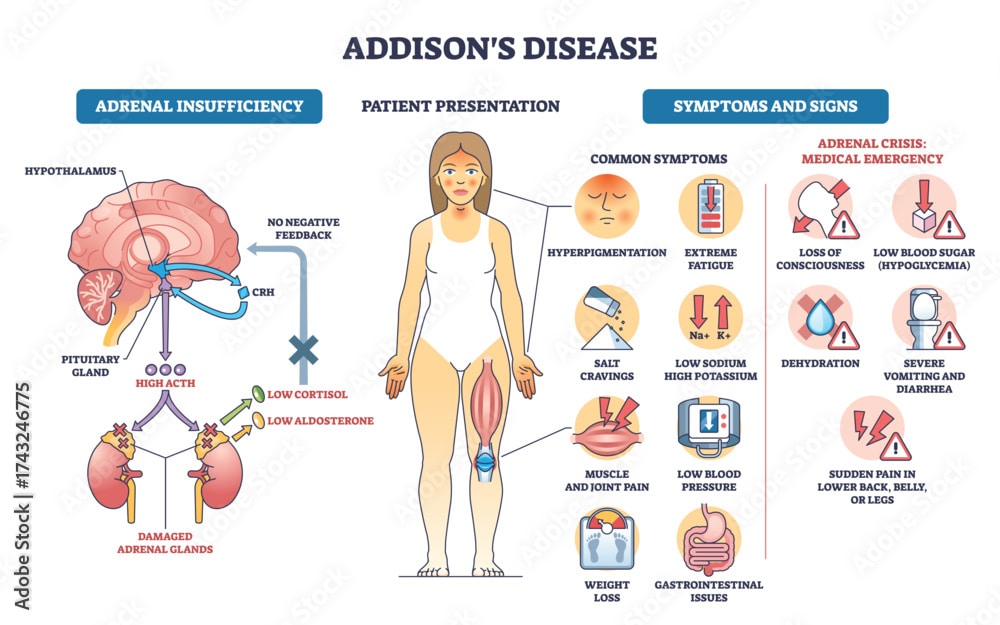
Addison’s Disease is a rare autoimmune disorder where the immune system attacks the adrenal glands, causing them to produce insufficient amounts of essential hormones. The adrenal glands are small glands located on top of the kidneys that produce several important hormones including cortisol and aldosterone. Cortisol helps manage stress, regulates blood pressure, controls inflammation, and affects metabolism. Aldosterone controls salt and potassium balance in the body. In Addison’s Disease, the immune system produces antibodies that attack the adrenal gland tissue. This immune attack gradually destroys the ability of the adrenal glands to produce hormones. When at least ninety percent of the adrenal gland has been destroyed, adrenal insufficiency develops. Addison’s Disease affects approximately one to four people per million worldwide, making it a rare disorder. The disease is named after Thomas Addison, a British physician who first described the condition in 1855. Addison’s Disease is also called primary adrenal insufficiency to distinguish it from secondary adrenal insufficiency caused by problems with the pituitary gland. Addison’s Disease is most commonly caused by autoimmune destruction of the adrenal glands, accounting for about ninety percent of cases in developed countries. However, other causes exist. Tuberculosis was historically the most common cause of Addison’s Disease but is now uncommon in developed countries. Fungal infections, certain medications, and rarely, malignancy can damage the adrenal glands. Addison’s Disease is a lifelong condition requiring permanent hormone replacement therapy. However, with appropriate treatment, people with Addison’s Disease can live normal, healthy lives. The disease received widespread attention when it was revealed that President John F. Kennedy had Addison’s Disease, which caused his significant health struggles. Kennedy’s case increased public awareness of this rare condition. Early diagnosis and appropriate treatment are crucial because untreated Addison’s Disease can cause life-threatening complications called Addisonian crisis. Understanding Addison’s Disease helps with early recognition and appropriate management.
How Does Autoimmune Attack Damage the Adrenal Glands?
To understand Addison’s Disease, we need to learn about the immune system and how it normally protects the body. The immune system has specialized cells called B cells and T cells that normally fight infections and protect against foreign invaders. However, the immune system has safeguards to prevent it from attacking the body’s own tissues. These safeguards are called immune tolerance. In autoimmune diseases like Addison’s Disease, these safeguards fail. The immune system loses tolerance to the body’s own tissues and produces antibodies and immune cells that attack the body’s own cells. In Addison’s Disease, the immune system produces antibodies against enzymes called 21-hydroxylase and 17-alpha-hydroxylase. These enzymes are necessary for the adrenal glands to produce cortisol and other hormones. The antibodies attack cells in the adrenal glands that contain these enzymes. In addition to antibodies, T cells of the immune system infiltrate the adrenal gland tissue and attack the gland cells directly. This combined antibody and T cell attack gradually destroys the adrenal gland. Over months to years, as more and more of the adrenal gland is destroyed, hormone production decreases. When approximately ninety percent of the adrenal gland has been destroyed, cortisol production falls below the level needed for normal body function. At this point, symptoms of adrenal insufficiency develop. The autoimmune attack occurs gradually in most cases. People may have positive antibodies against adrenal tissue for years before symptoms develop. This preclinical autoimmune state is sometimes called autoimmune adrenalitis. Not everyone with positive antibodies develops clinical Addison’s Disease, though most eventually do. The reason why the immune system loses tolerance and starts attacking adrenal tissue is not completely understood. Genetic factors appear important. Addison’s Disease is more common in people with certain genetic profiles. Environmental factors may trigger the autoimmune attack. Infections have been proposed as potential triggers. Some medications may trigger autoimmune attacks. Addison’s Disease frequently occurs with other autoimmune diseases. People with autoimmune thyroiditis, celiac disease, type 1 diabetes, or other autoimmune conditions are at increased risk of developing Addison’s Disease. This association suggests common genetic susceptibility to autoimmune disease. The progressive destruction of the adrenal gland causes gradually increasing hormone deficiency. The body’s ability to respond to stress decreases. Blood pressure regulation deteriorates. Electrolyte balance becomes abnormal. Without treatment, progressive symptoms develop until adrenal crisis occurs.
What Are the Main Symptoms and Signs of Addison’s Disease?
Addison’s Disease causes progressive symptoms that develop over weeks to months as the adrenal glands lose function. Early symptoms are often nonspecific and may be attributed to other conditions, leading to delayed diagnosis. Fatigue is one of the most characteristic and prominent symptoms. Patients describe profound exhaustion that is different from normal tiredness. The fatigue worsens over time and can become severely limiting. Activity intolerance makes even simple tasks exhausting. Weakness and malaise accompany the fatigue. Hypotension, or low blood pressure, develops. Blood pressure becomes abnormally low. Dizziness and lightheadedness occur, particularly when standing from sitting or lying down. Fainting may occur with exertion or positional changes. The low blood pressure results from inadequate cortisol and aldosterone production. Weight loss occurs despite normal appetite or sometimes increased appetite. Weight loss is progressive and can be significant. Loss of muscle mass occurs. Gastrointestinal symptoms are common. Nausea and vomiting occur. Loss of appetite develops. Abdominal pain occurs. Diarrhea or constipation may develop. These symptoms often lead to incorrect diagnoses of gastrointestinal disorders. Hyperpigmentation, or darkening of the skin, is a characteristic physical finding in Addison’s Disease. Dark patches appear on exposed skin areas including face, neck, and hands. Hyperpigmentation may occur in skin creases and on lips. The darkening results from elevated ACTH levels stimulating melanin production. This is a useful diagnostic clue. Salt cravings are characteristic. Patients intensely crave salty foods. Salt cravings result from loss of aldosterone, which normally controls salt balance. Patients may consume unusually large amounts of salt. Mood and cognitive changes occur. Depression is common. Anxiety may develop. Cognitive dysfunction affects memory and concentration. Irritability increases. Personality changes may be noticed by family members. Menstrual irregularities occur in women. Amenorrhea, or loss of menstruation, may develop. Irregular cycles may occur. Decreased libido occurs in both men and women. Sexual dysfunction results from hormonal deficiencies. Muscle and joint pain may occur. Pain in large joints or muscles develops. Pain may limit activity. Headaches are common. Dizziness accompanies the headaches. Visual disturbances may occur. These symptoms develop gradually, and people may not realize how sick they are becoming. The gradual onset contributes to delayed diagnosis. Some people are diagnosed only after developing a severe Addisonian crisis with acute symptoms.
How is Addison’s Disease Detected and Diagnosed?
Addison’s Disease is often misdiagnosed initially because symptoms are nonspecific and mimic many other conditions. Diagnosis requires clinical suspicion and specific biochemical tests. Clinical history of progressive fatigue, weakness, hypotension, weight loss, gastrointestinal symptoms, and hyperpigmentation should raise suspicion for Addison’s Disease. History of other autoimmune diseases increases likelihood. Physical examination reveals characteristic findings. Hyperpigmentation on sun-exposed areas, skin creases, and mucous membranes is very suggestive. Low blood pressure may be measured. The person may appear ill or wasted. Orthostatic hypotension, where blood pressure drops further on standing, may be demonstrated. Baseline cortisol level is measured. In Addison’s Disease, cortisol is low. However, a single cortisol measurement is not sufficient for diagnosis because cortisol levels vary throughout the day. ACTH level is measured. In Addison’s Disease, ACTH is elevated because the anterior pituitary increases ACTH production attempting to stimulate the failing adrenal glands to produce more cortisol. Elevated ACTH with low cortisol is characteristic of primary adrenal insufficiency. Cosyntropin stimulation test is the definitive diagnostic test. Cosyntropin is synthetic ACTH. A dose of cosyntropin is given and cortisol level is measured thirty and sixty minutes later. In healthy people, the adrenal glands respond to ACTH stimulation by increasing cortisol production. In Addison’s Disease, the damaged adrenal glands cannot respond adequately. Failure of cortisol to rise appropriately after cosyntropin is diagnostic. Aldosterone and renin levels may be measured. Low aldosterone with elevated renin indicates aldosterone deficiency. Electrolytes including sodium and potassium are measured. Hyponatremia, or low sodium, is common. Hyperkalemia, or elevated potassium, is common. Dehydration may be evident from elevated hemoglobin and hematocrit. Antibody testing for 21-hydroxylase antibodies and other anti-adrenal antibodies can identify autoimmune Addison’s Disease. Positive antibodies support autoimmune etiology. Negative antibodies don’t rule out Addison’s Disease but suggest other causes. Tuberculosis testing should be done to rule out TB as a cause of adrenal insufficiency. Imaging of the adrenal glands with CT scan may show atrophy or other abnormalities. Imaging is not required for diagnosis but may be helpful in some cases. Early diagnosis is important so that treatment can be started before an Addisonian crisis occurs. Diagnostic delay is common because the disease is rare and often not initially considered.
What Causes Addison’s Disease?
The underlying cause of Addison’s Disease determines the type and informs treatment decisions. Autoimmune destruction accounts for about ninety percent of Addison’s Disease cases in developed countries. The autoimmune form develops when the immune system produces antibodies against adrenal enzymes and T cells attack adrenal tissue. This progressive autoimmune destruction gradually destroys the adrenal glands over months to years. Why autoimmune disease develops is not completely understood, though genetic and environmental factors both play roles. Genetic susceptibility appears important. Addison’s Disease is associated with specific genetic patterns. People with family members who have autoimmune disease are at higher risk. Certain HLA genetic types increase risk. Environmental triggers may precipitate autoimmune disease in genetically susceptible people. Infections have been proposed as potential triggers. No specific infection has been definitively linked. Some medications including interferon-alpha and checkpoint inhibitor immunotherapies can trigger or exacerbate autoimmune Addison’s Disease. Addison’s Disease frequently coexists with other autoimmune diseases. This polyautoimmunity suggests shared genetic susceptibility. Tuberculosis was historically the most common cause of Addison’s Disease, accounting for about ninety percent of cases. With effective tuberculosis treatment and control, TB-related Addison’s Disease is now rare in developed countries. TB remains an important cause in developing countries. TB destroys the adrenal glands through chronic infection. Fungal infections including histoplasmosis, blastomycosis, and cryptococcosis can damage the adrenal glands. These infections are more common in immunocompromised people. Malignancy can damage the adrenal glands through primary cancer of the adrenal gland or through metastatic cancer from elsewhere. Adrenocortical carcinoma is rare but can cause Addison’s Disease. Medications including some antiretrovirals used for HIV and some antifungal medications can damage the adrenal glands. Mitotane, used to treat adrenocortical carcinoma, intentionally suppresses adrenal function. Hemorrhage into the adrenal glands from severe infection, trauma, or anticoagulation can cause acute adrenal failure. Sepsis can cause adrenal hemorrhage and acute failure. Amyloidosis, sarcoidosis, and other infiltrative diseases can damage the adrenal glands. These are rare causes. In developed countries, autoimmune destruction is by far the most common cause. Prompt identification of the underlying cause guides appropriate treatment of the primary condition while managing adrenal insufficiency.
What Health Complications Do People with Addison’s Disease Face?
People with Addison’s Disease face serious health complications if the disease is not diagnosed and treated. Without appropriate hormone replacement, complications can be life-threatening. Addisonian crisis is the most acute and dangerous complication. Addisonian crisis is acute adrenal failure where cortisol levels become dangerously low. Crisis can be triggered by stress including infection, surgery, trauma, or severe illness. Physical stress activates the body’s stress response normally controlled by cortisol. Without adequate cortisol, the stress response fails catastrophically. Severe hypotension develops. Hypovolemic shock with inadequate blood perfusion develops. Loss of consciousness can occur. Multi-organ failure can develop. Death can result if not treated immediately. Addisonian crisis is a medical emergency requiring immediate hospitalization and IV cortisol replacement. Many people with newly diagnosed Addison’s Disease are first discovered during an Addisonian crisis. Chronic complications develop from prolonged cortisol deficiency. Hypertension paradoxically can develop from aldosterone deficiency despite the concurrent low blood pressure. Cardiovascular disease risk is increased. Osteoporosis develops in some. Hypoglycemia, or low blood sugar, can develop, particularly after fasting or exertion. The low blood sugar results from cortisol deficiency impairing glucose regulation. Severe hypoglycemia can cause loss of consciousness. Salt depletion develops from aldosterone deficiency. Sodium wasting causes hyponatremia. Hyponatremia causes confusion, seizures, and coma if severe. Potassium retention develops from aldosterone deficiency. Hyperkalemia causes cardiac arrhythmias which can be fatal. Anemia develops in some people. Fertility problems and sexual dysfunction result from hormonal deficiencies. Men may experience erectile dysfunction. Women may have menstrual irregularities and reduced fertility. Pregnancy complications can occur though pregnancy is generally possible with appropriate management. Depression and cognitive problems occur from cortisol deficiency. Psychiatric symptoms improve with adequate cortisol replacement. Infection risk may be increased. Cortisol is immunosuppressive, so very high doses for stress coverage may increase infection risk. However, without adequate cortisol, immune function is impaired. Rarely, other autoimmune endocrine diseases develop. Autoimmune thyroiditis is common. Type 1 diabetes occurs in some. Multiple autoimmune polyendocrine syndrome, or MAPS, occurs in some. With appropriate hormone replacement, most of these complications are prevented. The key to preventing complications is early diagnosis and appropriate, consistent treatment.
What Treatments Help People with Addison’s Disease?
Treatment for Addison’s Disease involves lifelong hormone replacement therapy to replace the hormones that the adrenal glands can no longer produce. Treatment must be individualized based on the specific hormones deficient and the person’s response to treatment. Glucocorticoid replacement therapy replaces cortisol. Hydrocortisone is the most physiologic glucocorticoid replacement. The standard dose is usually ten to fifteen milligrams daily divided into divided doses. Morning dose is larger than afternoon dose to mimic the body’s natural cortisol rhythm. Prednisone can be used if hydrocortisone is unavailable or too expensive. Other glucocorticoids may be used in specific situations. The dose of glucocorticoid must be individualized. Too little cortisol causes persistent symptoms of adrenal insufficiency. Too much cortisol causes complications of cortisol excess. Patients and physicians must balance symptom control with avoiding excessive replacement. Mineralocorticoid replacement therapy replaces aldosterone. Fludrocortisone is the standard mineralocorticoid replacement. Fludrocortisone helps maintain blood pressure and electrolyte balance. Usual dose is zero point one milligrams daily. Mineralocorticoid replacement is essential for blood pressure control and electrolyte balance. Some people with autoimmune Addison’s Disease have pure glucocorticoid deficiency and may not require mineralocorticoid replacement. However, most people require both. Dose adjustment is necessary during stress. Normal daily dose is for basal cortisol replacement. However, during physical stress like infection, surgery, or severe illness, cortisol requirements increase dramatically. Patients need higher doses during stress to prevent Addisonian crisis. Before surgery, increased cortisol coverage is given. During acute illness, increased doses may be necessary. Patients are educated to increase their own doses during illness if they cannot reach their physician. Hydrocortisone injection kits should be prescribed for emergency use. If a patient becomes unable to take oral medication due to vomiting or unconsciousness, the injection kit allows an immediate IM dose of hydrocortisone to prevent crisis. Patients and family members should be trained in how to use the injection kit. Medical alert identification including information about Addison’s Disease and cortisol replacement should be worn. This alerts emergency personnel to administer cortisol if the patient is in crisis. Treatment of the underlying autoimmune disease is not routinely done. The autoimmune attack cannot be reversed once the adrenal glands are destroyed. Immunosuppressive therapy is not standard because the benefit does not outweigh the risks. However, if other autoimmune diseases develop, those are treated. Management of complications is important. Hypertension if it develops is managed with antihypertensive medications in addition to appropriate hormone replacement. Electrolyte abnormalities are corrected with appropriate dose adjustment of hormone replacement. Bone health is monitored and osteoporosis is treated if it develops. Psychological support helps patients adapt to chronic disease management. Regular monitoring and follow-up are necessary. Cortisol and electrolyte levels are checked periodically. Blood pressure is monitored. Symptom assessment guides dose adjustments. Regular follow-up with endocrinologists experienced in Addison’s Disease management ensures optimal treatment.
Living with Addison’s Disease
Living with Addison’s Disease requires daily medication management and awareness of the need for dose adjustment during stress. However, with appropriate treatment, people with Addison’s Disease can lead normal, active lives. For people newly diagnosed with Addison’s Disease, the diagnosis can be overwhelming. Learning about a lifelong condition requiring permanent treatment is initially difficult. However, understanding that the disease is manageable and treatable offers reassurance. Patient education about the condition, medication management, stress coverage, and emergency protocols is crucial. Patients need to understand the importance of never stopping medications and the need to adjust doses during stress. Medication adherence is essential. Patients must take their replacement hormones daily without interruption. Missing doses or skipping medication can precipitate Addison’s crisis. Establishing a routine of taking medications at the same time daily helps ensure adherence. Using a pill organizer or reminder system helps prevent missed doses. Cost and access issues can affect medication adherence. Ensuring patients have affordable access to medications is important. Stress management becomes important. Physical stress including surgery, infections, and illnesses require dose adjustments. Patients need education about recognizing when they have an illness requiring dose increases. Emotional stress also triggers symptoms. Stress management techniques including relaxation, exercise within tolerance, and counseling help manage emotional stress. Exercise and activity are generally encouraged. Regular moderate exercise helps maintain fitness and mental health. However, patients need to be aware that unusual exertion may trigger symptoms and require rest recovery. Heat intolerance may occur. Patients may not tolerate heat well and should avoid excessive heat exposure. Air conditioning and cool environments help. Dehydration worsens symptoms so adequate fluid intake is important. Work and school adjustments may be necessary initially while adjusting to the diagnosis and medication. Most people eventually can work normally with appropriate treatment. School-age children can attend school and participate in activities with appropriate management. Explaining Addison’s Disease to teachers and school officials helps coordinate appropriate care during school hours. Medical alert identification is crucial. Medical alert bracelets or cards should be worn and carried. This alerts healthcare providers and first responders to the diagnosis and the need for cortisol. During travel, patients should carry their hydrocortisone injection kit, medications, and medical records. Time zone changes during travel may affect medication timing. Patients should discuss travel planning with their physicians. Dating and sexual relationships are possible. Explaining the condition to romantic partners helps them understand the need for medication adherence and stress coverage. Sexual function usually returns to normal with appropriate treatment. Pregnancy and parenthood are possible. Women with Addison’s Disease can become pregnant and carry pregnancies successfully. However, careful medical management during pregnancy is necessary. Cortisol requirements increase during pregnancy. Postpartum adjustment of doses is necessary. Breastfeeding is safe while taking appropriate doses of hydrocortisone. Parenting with Addison’s Disease requires careful management. Parents need to ensure reliable childcare and medication management during emergencies. Family education helps ensure family members understand the condition and can help during crises. Mental health support helps address psychological impacts of chronic disease. Depression and anxiety can occur. Counseling and support groups help. With appropriate treatment, consistent medication adherence, understanding of stress coverage requirements, emergency preparedness, and psychological support, people with Addison’s Disease can live normal, healthy, and fulfilling lives.
Frequently Asked Questions About Addison’s Disease
FAQ 1: Is Addison’s Disease hereditary? Addison’s Disease is not directly inherited. The autoimmune form develops due to loss of immune tolerance and does not follow simple inheritance patterns. However, genetic susceptibility to autoimmune disease runs in families. People with family members who have autoimmune diseases are at higher risk of developing autoimmune Addison’s Disease. Certain genetic profiles increase autoimmune disease risk. Environmental triggers in genetically susceptible people lead to disease development. If you have Addison’s Disease, your family members do not have a dramatically increased risk of developing it, but they should be aware of symptoms and seek evaluation if symptoms develop. Family members with other autoimmune diseases should know about Addison’s Disease. Genetic counseling is generally not necessary as inheritance is not straightforward.
FAQ 2: Can Addison’s Disease be cured? Addison’s Disease cannot be cured once the autoimmune destruction of the adrenal glands has occurred. The destroyed adrenal gland tissue cannot regenerate. Therefore, permanent lifelong hormone replacement is necessary. However, Addison’s Disease can be very effectively managed with appropriate hormone replacement therapy. With proper treatment, people with Addison’s Disease have normal life expectancy and quality of life. The disease is very manageable with daily medication. The key to managing Addison’s Disease is consistent medication adherence, appropriate dose adjustment during stress, and regular medical follow-up. While not curable, Addison’s Disease is entirely treatable and compatible with a normal, healthy life.
FAQ 3: What causes Addison’s Disease to develop? The exact cause of autoimmune Addison’s Disease is not completely understood. Genetic factors make some people susceptible to autoimmune disease. Environmental triggers in genetically susceptible people lead to disease development. Infections have been proposed as potential triggers. Some medications may trigger disease. Why the immune system loses tolerance and starts attacking adrenal tissue is an area of active research. Non-autoimmune causes of Addison’s Disease include tuberculosis, fungal infections, malignancy, medications, and adrenal hemorrhage. In developed countries, autoimmune disease accounts for ninety percent of cases. In developing countries, tuberculosis remains an important cause.
FAQ 4: How quickly does Addison’s Disease develop? Autoimmune Addison’s Disease develops relatively slowly. The immune attack gradually destroys adrenal gland tissue over months to years. People may have positive anti-adrenal antibodies for years before symptoms develop. Once ninety percent of the gland is destroyed, symptoms become apparent. Symptoms develop gradually and are often nonspecific, contributing to delayed diagnosis. However, once significant adrenal insufficiency is present, symptoms worsen progressively. Untreated Addison’s Disease eventually leads to Addisonian crisis with acute, life-threatening symptoms. Early recognition and treatment prevent crisis. Non-autoimmune causes like tuberculosis or infection may progress more rapidly or slowly depending on the underlying cause.
FAQ 5: Are there new treatments being developed for Addison’s Disease? Current treatment with glucocorticoid and mineralocorticoid replacement is very effective. However, research is ongoing to improve treatment. Extended-release hydrocortisone formulations that better mimic normal cortisol rhythm are under development. DHEA supplementation is being studied as potentially beneficial. Immunotherapy approaches to prevent or slow autoimmune destruction are being researched. Gene therapy to restore adrenal function is being explored as a future possibility. Better understanding of autoimmune mechanisms may lead to preventive therapies. As research continues, treatment options may improve. Current medication-based replacement therapy remains the standard and very effective treatment.
References and Further Reading
For more information about Addison’s Disease, you can visit several trusted and authoritative sources that provide detailed information for patients and families dealing with this rare adrenal disorder. The World Health Organization at WHO.int provides comprehensive information about adrenal disorders and rare endocrine diseases including Addison’s Disease. The National Adrenal Diseases Foundation at NADF.us offers excellent patient education, family resources, support communities, information about treatments, and updates about research developments in Addison’s Disease. The Pituitary Foundation at PituitaryFoundation.org also provides resources for adrenal disorders and endocrine diseases. MedlinePlus, a service of the National Library of Medicine at MedlinePlus.gov, has detailed medical information about Addison’s Disease written in language that patients and families can easily understand without specialized medical knowledge. The National Institutes of Health at NIH.gov provides scientific information about Addison’s Disease research, ongoing clinical trials, and the latest discoveries about adrenal function and autoimmune disease. The five main reference links are: 1) WHO.int – Adrenal Disorders, 2) National Adrenal Diseases Foundation, 3) Pituitary Foundation, 4) MedlinePlus – Addison’s Disease, and 5) National Institutes of Health.
Disclaimer
This article adapts publicly available information from WHO’s Addison’s Disease and adrenal disorder information pages. This content is for informational and educational purposes only and does not constitute medical advice. ObserverVoice.com is a news and information platform — not a healthcare provider. If you or someone you know has been diagnosed with Addison’s Disease or shows signs of this condition including progressive fatigue, weakness, hypotension, weight loss, hyperpigmentation, gastrointestinal symptoms, salt cravings, or mood changes, please consult immediately with qualified healthcare professionals, endocrinologists, and adrenal disorder specialists for proper diagnostic evaluation with cortisol and ACTH testing, cosyntropin stimulation testing, antibody testing, and appropriate hormone replacement therapy initiation. For more information, visit WHO.int and ObserverVoice.com.
Observer Voice is the one stop site for National, International news, Sports, Editor’s Choice, Art/culture contents, Quotes and much more. We also cover historical contents. Historical contents includes World History, Indian History, and what happened today. The website also covers Entertainment across the India and World.

