

GST Council Eliminates Arrest Powers for Tax Officers and Simplifies Refund Regulations

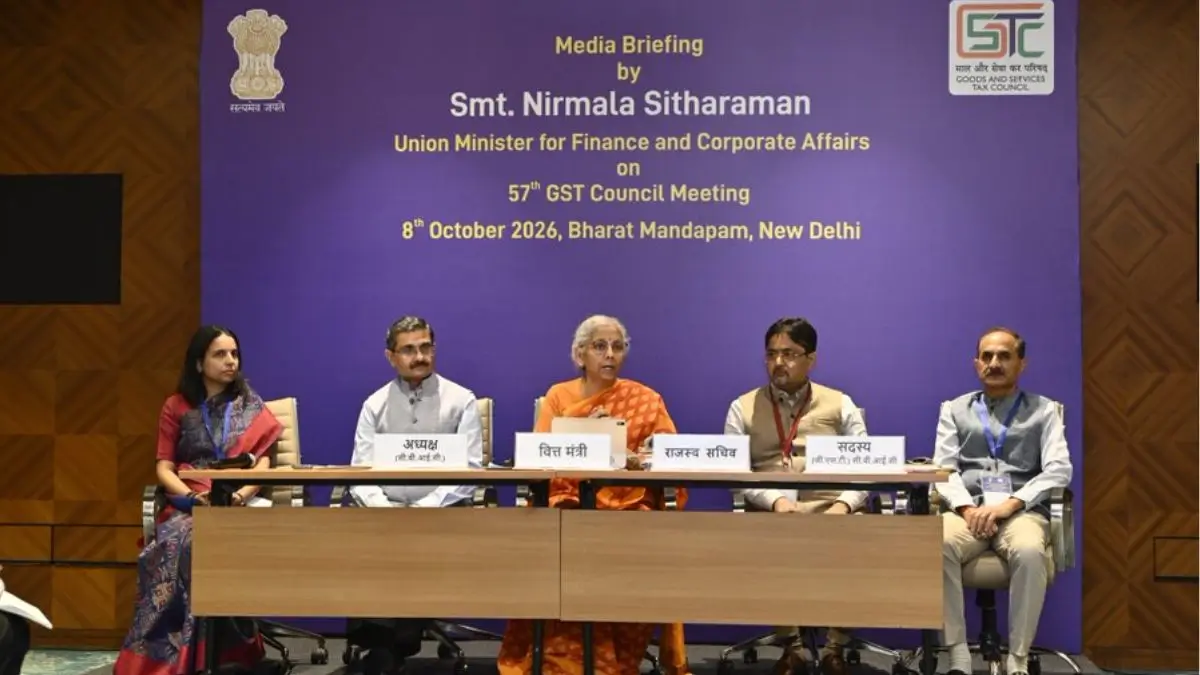
NEW DELHI: The Goods and Services Tax (GST) Council has announced a significant procedural overhaul aimed at streamlining business operations across India. This reform, termed GST 2.0, will facilitate easier tax refunds and credits, reduce truck stoppages, and eliminate the arrest powers of tax officers. The changes are set to be implemented from April, following a six-hour meeting chaired by Union Finance Minister Nirmala Sitharaman.
The council completed the second phase of GST 2.0, which includes amendments to existing laws and a revamp of the tax system. While there was broad agreement on most issues, two proposals were deferred for further review. One proposal involves restricting input tax credit (ITC) only to entities that have collected but not deposited tax, which will be examined by a panel of officers over the next three months.
Focus on Faster Decisions and Lower Compliance Costs
Prime Minister Narendra Modi expressed support for the council’s recommendations, emphasizing the removal of arrest provisions and the simplification of procedures. He stated that these changes would lead to faster decision-making, lower compliance costs, and a more transparent administration. Sitharaman noted that the reforms aim to create a trust-based regime for taxpayers.
One of the key changes includes the removal of arrest powers under Section 69 of the Central GST Act. This power was often misused, despite not being part of the previous VAT regime. Additionally, the threshold for prosecution has been increased to Rs 5 crore, and penalties for non-fraud cases will be reduced. Notices will not be issued for tax disputes involving amounts under Rs 10,000, and ongoing cases will see notices withdrawn.
Streamlined Refund Processes and Simplified ITC Claims
The council aims to enhance the efficiency of tax refunds, targeting a processing time of 90% of claims within three days. The acknowledgment period for claims will also be shortened from 15 days to 10 days, with a new system for deemed acknowledgment. Furthermore, businesses will be able to claim refunds on accumulated input tax credits related to capital goods over a period of 60 months, benefiting long-term projects.
Several simplifications have been introduced for the services sector, particularly to aid exports. Small businesses with a turnover of up to Rs 5 crore will be allowed to file annual returns. Additionally, sellers on e-commerce platforms will no longer need to register in multiple states, which will assist 90% of such sellers. The council has also streamlined the registration process, aiming for most businesses to complete registration within three days.
Observer Voice is the one stop site for National, International news, Sports, Editor’s Choice, Art/culture contents, Quotes and much more. We also cover historical contents. Historical contents includes World History, Indian History, and what happened today. The website also covers Entertainment across the India and World.

