

Penile Cancer: An Overlooked Malignancy and Its HPV Risk Factors

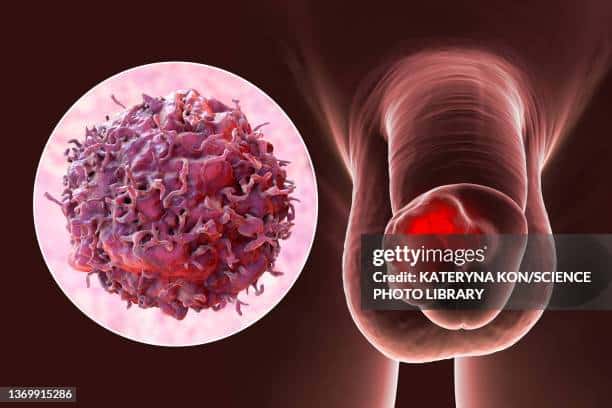
When 62-year-old Carlos noticed a small, warty growth on his penis that wouldn’t heal after three months, embarrassment kept him from seeking medical attention. By the time bleeding and pain finally drove him to his doctor, biopsy revealed advanced squamous cell carcinoma requiring partial penectomy. “My urologist said if I’d come in when the lesion first appeared, they could have removed just the growth and preserved my penis,” Carlos recalled bitterly. “The shame delayed my diagnosis by nine months—and cost me dearly.” Penile cancer is rare, with about 2100 cases and 500 deaths in the United States in 2024 and higher rates in regions such as South America. Human papillomavirus (HPV), particularly types 16 and 18, plays a role in etiology. Most penile cancers are squamous cell carcinomas; they usually occur in uncircumcised men, particularly those with poor local hygiene. Penile cancer is primarily a disease of the developing world, representing up to 10% of male cancers; within the United States though, this disease accounts for less than 1% of all malignancies in men. Furthermore, ≥95% of all penile cancers are squamous cell carcinoma. Understanding penile cancer’s risk factors—particularly the HPV connection and circumcision’s protective effect—reveals why this rare but devastating malignancy remains preventable in most cases. Merck ManualMassive Bio
The Geographic and Demographic Puzzle
The estimated age-standardized incidence rate of penile cancer in 2020 was 0.8 per 100,000 globally, with higher rates in South America, Southern Africa, and South Asia, where incidence can account for up to 10% of malignancies. In the United States, the incidence of penile cancer is 0.38 per 100,000 with a mean age of 67. The dramatic geographic variation reveals cultural and behavioral drivers. Brazil reports 5-10% of male cancers as penile cancer—among world’s highest. Paraguay, Uruguay, Uganda, India also show elevated rates. Overall, the incidence is increasing in the United States, particularly in the South and areas of low socioeconomic status. It occurs most commonly in men in their 60–70s. U.S. disparities mirror global patterns: Southern states, rural areas, low socioeconomic populations face higher incidence. Why the divide? The answer lies in circumcision practices, HPV prevalence, hygiene standards, and healthcare access. Israel—where neonatal circumcision approaches 100%—reports world’s lowest incidence: less than 0.1% of male malignancies. The stark contrast between Israel and Brazil (where circumcision rare) demonstrates circumcision’s protective power. Age distribution: most diagnoses occur 60s-70s, but 19-20% occur before age 40. The average incidence was 1.07 cases per year, with a mean age at diagnosis of 54.9 years. Notably, 19% of patients were under 40 years. Younger cases typically HPV-associated. PubMed Central + 2
The HPV Connection: Nearly Half of All Cases
Most penile cancers are of squamous cell origin with frequent association with the human papillomavirus (HPV). Consequently, penile squamous cell carcinoma is generally classified as being either HPV-associated or HPV-independent. HPV-associated penile cancers account for 38.5% of cases, with the HPV 16 serotype being the most common. In penile cancer, there is a 50.8% prevalence of HPV DNA. One study reported that HPV-associated penile cancers showed improved disease-specific 5-year survival rates. The mechanism mirrors cervical and oropharyngeal HPV cancer: persistent high-risk HPV infection (primarily HPV-16, also HPV-18) integrates into host cell DNA, producing viral oncoproteins E6 and E7 that inactivate tumor suppressor genes p53 and Rb. Over years to decades, this drives malignant transformation of squamous epithelium. HPV-associated tumors concentrate on glans and inner foreskin—mucosal surfaces where virus replicates. HPV-independent tumors arise from chronic inflammation, phimosis, lichen sclerosus—typically older men, different pathophysiology. A meta-analysis accumulating data from 1995 to 2022 found that the global pooled prevalence of HPV in men was 31%, with 21% being high-risk HPV. The prevalence varies between developing (42.2%) and developed (22.6%) countries. Sexual transmission drives HPV acquisition. Multiple lifetime partners, early sexual debut, and unprotected sex increase exposure. But most HPV infections clear spontaneously; only persistent infection progresses to cancer after long latency. The HPV-penile cancer link creates prevention opportunity: vaccination. Gardasil 9 protects against HPV-16/18 causing majority of HPV-associated penile cancers. Ideally administered ages 11-12 before sexual activity, but effective through age 26. PubMed Central + 2
The Circumcision Effect: Near-Total Protection
The lack of circumcision is a well-accepted risk factor for penile cancer. In fact, it provides a virtually absolute protection against the disease when performed in the neonatal period. The diagnosis of penile cancer in an adult circumcised as a neonate is so rare, it often warrants a case report. The protective effect of circumcision was first reported in 1932 in a large cohort study of penile cancer patients that revealed a stark demographic anomaly, as there were zero cases in the Jewish patients. A later report spanning the 1940s to 1990s, showed that out of 50,000 cases of penile cancer only 10 were in males with neonatal circumcisions; a ratio of uncircumcised to circumcised men of 5,000:1. The protective mechanisms: improved hygiene (removal of foreskin eliminates smegma accumulation under prepuce where bacteria, viruses, cellular debris collect), decreased HPV/HIV transmission (circumcision reduces genital HPV acquisition by 30-35%, possibly through removal of inner foreskin mucosal surface where virus replicates), reduced chronic inflammation and balanitis (inflammation of glans), and elimination of phimosis risk. The protective mechanisms of circumcision are thought to be owed to improved hygiene, decreased risk of HPV and HIV transmission, as well as reduced chronic inflammation and balanitis. Timing matters critically: neonatal circumcision provides near-total protection. Adult circumcision (performed after sexual activity begins, after HPV exposure) offers less protection. The 1930s Jewish population study remains striking—zero penile cancers among circumcised men. Modern data confirms: 100% of penile cancer patients in some studies were uncircumcised. Among the risk factors identified, lack of circumcision was the most common (100%) followed by HPV-16 infection (40.90%). PubMed Central + 3
Phimosis: The Dangerous Complication
Phimosis, the inability to retract the foreskin covering the glans of the penis, is a notable risk factor for the development of penile cancer. Phimosis was observed in 35.2% of penile cancer cases in comparison to 7.6% in the controls. Approximately 35% of men with penile cancer who had not been circumcised in childhood reported a history of phimosis compared to 7.6% of controls (OR = 7.4). Phimosis creates environment for cancer development: trapped smegma and secretions under non-retractable foreskin, chronic balanitis (inflammation), poor hygiene (inability to clean glans adequately), increased HPV persistence, and lichen sclerosus association. Phimosis can be congenital (present from birth) or acquired (develops later from recurrent infections, trauma, lichen sclerosus). Adult-onset phimosis particularly concerning—often reflects underlying pathology. The 7.4-fold increased risk associated with phimosis emphasizes importance of addressing this condition surgically (circumcision) rather than accepting it as benign anatomical variant. Men with phimosis should undergo circumcision not just for symptomatic relief but for cancer prevention. PubMed Centralnih
Additional Risk Factors
Smoking: Smoking has been identified as a risk factor for penile cancer. The American Cancer Society lists smoking as a risk factor that can be changed to help lower the chance of getting penile cancer. Tobacco carcinogens likely contribute to squamous cell transformation. Smokers face 3-4.5 fold increased risk. Poor genital hygiene: inadequate washing, smegma accumulation, and recurrent infections create chronic inflammation predisposing to cancer. Lichen sclerosus: chronic inflammatory skin condition affecting genital area, creates white, hardened patches on glans/foreskin. Strong association with penile cancer—some cases arise from preexisting lichen sclerosus. Obesity: may contribute through poor hygiene (difficulty maintaining genital cleanliness), increased inflammation, and hormonal factors. UVA phototherapy: used for treating skin conditions like psoriasis, associated with slightly increased risk—direct genitals exposure during treatment. Immunosuppression: HIV/AIDS, organ transplant recipients on immunosuppressants show elevated risk. Oncodaily
Recognizing Warning Signs
Consider penile cancer with any nonhealing sore, induration, or purulent or warty penile growth, particularly in uncircumcised men. Early symptoms: skin changes on penis (reddened area, white patches, thickening), growth or sore that doesn’t heal within 4 weeks, wartlike growth (resembles genital warts), crusty bump or ulcer, reddish velvety rash under foreskin, blue-brown flat growth, foul-smelling discharge, and bleeding. Advanced symptoms: penile lump or mass, enlarged inguinal lymph nodes (groin), pain or bleeding from penis, and difficulty retracting foreskin (new-onset phimosis in adult concerning for underlying cancer). The average interval between lesion onset and the first medical consultation was 11 months (range: 4–24 months). All patients presented with a visible penile lesion, either exophytic (68.18%) or ulcerative (31.82%) in nature. The median lesion size was 3.5 cm. The 11-month average delay reflects embarrassment, denial, fear, and stigma delaying medical care. Exophytic tumors (raised, cauliflower-like) more visible than flat ulcerative lesions but both require immediate evaluation. Merck Manualnih
Staging and Survival: Location Determines Outcome
Squamous cell carcinoma is the most common subtype of penile cancer, comprising approximately 95% of all cases. This malignancy originates in the squamous epithelial cells, with the glans and foreskin being the most frequently affected sites. Early-stage SCC confined to the penis has a 5-year survival rate exceeding 80%. However, when regional lymph nodes are involved, survival decreases to 50%, and for metastatic disease, it drops below 30%. Staging determines prognosis dramatically. Lymph node status is the driver of survival. Appropriate use of lymphadenectomy in intermediate and high-risk patients is an essential component of managing this disease. Localized (confined to penis, no lymph node involvement): 80%+ five-year survival—excellent prognosis with surgery alone often curative. Regional (spread to inguinal/pelvic lymph nodes): 50% five-year survival—requires surgery plus chemotherapy/radiation. Distant metastases (lung, liver, bone): under 30% five-year survival—palliative chemotherapy. Penile squamous cell carcinoma is a rare malignancy, with stage IV patients exhibiting a 2-year overall survival rate of 21% and a 5-year survival rate of 0%. The node-negative versus node-positive divide represents survival cliff. Inguinal lymph node dissection both stages disease and provides therapeutic benefit—removing microscopic metastases before distant spread. Oncodaily + 2
Treatment: The Penis-Preserving Revolution
For many cancers an aggressive approach may be taken to ensure complete cure and survival of the patient. In penile squamous cell carcinoma, however, this practice has significant detrimental effects on the patient’s psychosocial health. Penile preserving procedures generally lead to a better Quality of life for the patient as compared to partial or radical penectomy. Penile squamous cell carcinoma which is limited to the foreskin can be effectively treated with circumcision however additional therapies may be required if there is lymph node involvement. Historical approach: radical surgery (partial/total penectomy) for all invasive cancers—psychologically devastating. Modern approach: organ-sparing techniques when oncologically safe. Topical therapies (Tis, Ta—carcinoma in situ, noninvasive): 5-fluorouracil cream, imiquimod cream applied directly to lesion—effective for superficial disease. Circumcision: for cancers limited to foreskin, circumcision alone may cure. Glansectomy: removal of glans (tip of penis) preserving shaft—allows urination through urethra, maintains some sexual function. Mohs micrographic surgery: layer-by-layer tissue removal with immediate microscopic examination ensuring complete tumor removal while maximizing tissue preservation. Partial penectomy: removal of portion of penis when tumor extends into shaft—functional outcome depends on remaining length. Radical penectomy: complete penis removal with perineal urethrostomy (urine exits between legs)—reserved for extensive disease. Lymph node dissection: inguinal lymphadenectomy for intermediate/high-risk cancers or palpable nodes. Radiation therapy: external beam or brachytherapy (radioactive implants) preserves penis but risk of urethral stricture, tissue fibrosis. Chemotherapy: platinum-based regimens for advanced/metastatic disease. The HERCULES trial investigated pembrolizumab in combination with platinum-based chemotherapy as a first-line treatment for advanced penile squamous cell carcinoma. Among 33 evaluable patients, the overall response rate was 39%, with 1 complete response and 12 partial responses. Median progression-free survival was 5.4 months, and median overall survival was 9.6 months. Immunotherapy shows promise in HPV-associated tumors. American Cancer SocietyOncodaily
Prevention Strategies
Circumcision: neonatal circumcision provides near-total protection. Adult circumcision (for phimosis, recurrent balanitis, personal choice) reduces risk substantially. HPV vaccination: Gardasil 9 for boys/men ages 11-26 prevents HPV-16/18 infection. Protects against penile, anal, oropharyngeal cancers plus genital warts. Good genital hygiene: daily washing, retract foreskin and clean beneath (if uncircumcised), prompt treatment of balanitis or infections. Smoking cessation: reduces risk along with other cancer types. Safe sexual practices: limiting partners, condoms (reduce but don’t eliminate HPV transmission). Early evaluation of lesions: any penile skin change, growth, sore not healing within 3-4 weeks warrants urologic evaluation. Treatment of lichen sclerosus: topical steroids manage inflammatory condition, surveillance for malignant transformation.
Frequently Asked Questions
Q1: I’m uncircumcised and in my 30s. Should I get circumcised now to prevent penile cancer?
The decision involves weighing modest cancer risk reduction against surgical risks/recovery. Neonatal circumcision provides near-total protection because it precedes HPV exposure and chronic inflammation. Adult circumcision after sexual activity offers less protection—you may already have been exposed to HPV. However, if you have phimosis, recurrent balanitis, lichen sclerosus, or difficulty maintaining hygiene, adult circumcision makes medical sense for multiple reasons including modest cancer risk reduction. Most urologists don’t recommend routine adult circumcision solely for cancer prevention in asymptomatic men with good hygiene. Instead: practice meticulous hygiene, get HPV vaccination if under 26, avoid smoking, perform monthly self-exams checking for skin changes/growths, and promptly evaluate any lesions.
Q2: How do I know if a penile lesion is cancer versus something benign like a wart or irritation?
You can’t reliably distinguish without medical evaluation. Genital warts (caused by low-risk HPV types) can resemble early penile cancer. Other benign conditions mimicking cancer: pearly penile papules (normal anatomical variants around corona), Fordyce spots (enlarged oil glands), lichen sclerosus (white patches), balanitis (inflamed glans). Key concern features: lesion persisting beyond 3-4 weeks without healing, progressive growth over weeks/months, bleeding or ulceration, hardness or induration, and foul-smelling discharge. Don’t self-diagnose or delay due to embarrassment. Urologists and dermatologists evaluate penile lesions routinely—it’s not unusual or shameful. Biopsy provides definitive diagnosis. Early evaluation allows organ-sparing treatment; delays result in more extensive surgery.
Q3: If diagnosed with penile cancer, will I definitely lose my penis?
Not necessarily. Treatment depends on stage, location, and depth of invasion. Many early-stage cancers treated with organ-preserving approaches: cancers limited to foreskin often cured by circumcision alone; superficial lesions treated with topical chemotherapy, laser ablation, or Mohs surgery; and glans-confined cancers treated with glansectomy (removing tip while preserving shaft). Surgical management of penile squamous cell carcinoma remains the mainstay treatment, and less invasive surgery is associated with noninferior or improved 5-year overall survival regardless of disease stage and grade. Modern oncologic focus: achieve cure while maximizing function and quality of life. Partial/total penectomy reserved for advanced disease where organ-sparing techniques risk incomplete removal. Even with partial penectomy, remaining penis may allow standing urination and some sexual function. The message: early detection enables preservation; delays necessitate radical surgery. nih
Q4: Can penile cancer spread even if treated early?
Yes, though risk depends on tumor characteristics. Even small, early-stage tumors can metastasize to inguinal lymph nodes if high-grade or showing lymphovascular invasion. This is why pathologic examination critical—tumor grade, depth of invasion, and vascular involvement guide need for lymph node dissection. Low-grade, superficial tumors rarely spread; high-grade tumors invading deeply into corpora cavernosa show higher metastatic potential even when small. Sentinel lymph node biopsy or prophylactic inguinal lymphadenectomy considered for intermediate/high-risk tumors even without palpable nodes. Close surveillance with physical exams and imaging detects recurrence or nodal metastases early when still treatable.
Q5: Does penile cancer affect sexual function and fertility?
Impact depends on treatment. Topical therapies, circumcision, or small excisions minimally affect function. Glansectomy preserves erectile tissue allowing erections, though orgasm sensation may diminish slightly and cosmetics change. Partial penectomy: remaining length determines function—penetrative intercourse possible if sufficient length remains; orgasm and ejaculation typically preserved. Total penectomy: no penetrative intercourse possible, though orgasm can still occur through stimulation of remaining genital structures; fertility requires sperm extraction and assisted reproduction. Radiation therapy can cause erectile dysfunction, urethral stricture. Chemotherapy may impair fertility temporarily or permanently—sperm banking before treatment recommended. Psychological impact often exceeds physical—depression, anxiety, relationship strain common. Penile prosthetics and sexual counseling help many men adapt.
Disclaimer
This article adapts publicly available information from reputable cancer research organizations and medical databases. This content is for informational and educational purposes only and does not constitute medical advice. ObserverVoice.com is a news and information platform — not a healthcare provider. Decisions about penile cancer prevention, screening, diagnosis, and treatment should be made in consultation with qualified physicians, urologists, and oncologists who can evaluate your individual symptoms, risk factors, and health status. If you notice penile skin changes or symptoms concerning for penile cancer, please consult with your healthcare team promptly.
References
- PMC. Updates on the epidemiology and risk factors for penile cancer. https://pmc.ncbi.nlm.nih.gov/articles/PMC5673812/
- PMC. HPV and Penile Cancer: Epidemiology, Risk Factors, and Clinical Insights. https://pmc.ncbi.nlm.nih.gov/articles/PMC11434800/
- Merck Manual. Penile Cancer – Genitourinary Disorders. https://www.merckmanuals.com/professional/genitourinary-disorders/genitourinary-cancers/penile-cancer
- PMC. Penile cancer in French Guiana: Epidemiology, histopathology and clinical aspects. https://pmc.ncbi.nlm.nih.gov/articles/PMC12521786/
- OncoDaily. Penile Cancer: Symptoms and Causes, Stages, Diagnosis and Treatment. https://oncodaily.com/oncolibrary/cancer-types/penile-cancer
Observer Voice is the one stop site for National, International news, Sports, Editor’s Choice, Art/culture contents, Quotes and much more. We also cover historical contents. Historical contents includes World History, Indian History, and what happened today. The website also covers Entertainment across the India and World.

