

White House Factsheet Highlights US Success in India Trade Deal, Leaving Key Questions Unaddressed

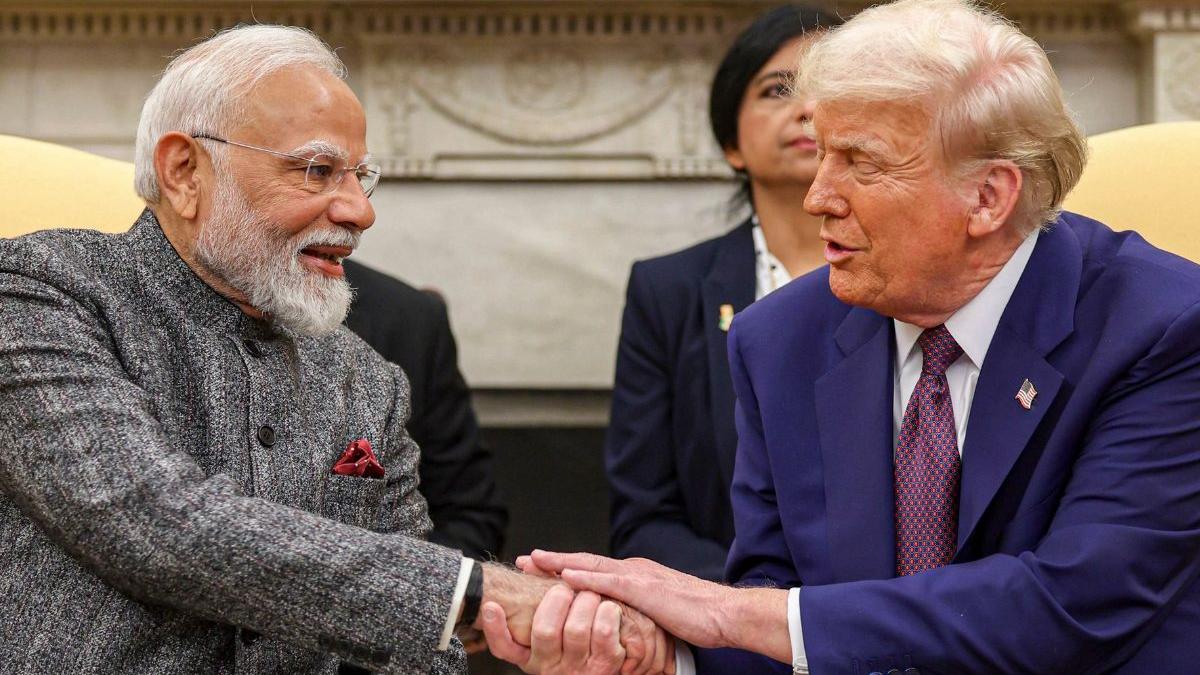
A recent fact sheet released by the White House has announced what it describes as a “historic” trade deal with India, highlighting India’s intention to purchase up to $500 billion worth of U.S. goods. However, the document lacks clarity on the time frame for these purchases and whether this figure represents a binding commitment or an aspirational target. While the announcement is being framed as a significant political achievement, it underscores the provisional nature of the agreement, which remains far from a finalized trade pact.
Details of the Trade Agreement
The White House fact sheet aims to translate a broad U.S.-India framework agreement into tangible outcomes. It emphasizes India’s commitment to improve access to the U.S. market by agreeing to “reduce or eliminate” tariffs on various American industrial and agricultural products. This aligns with longstanding U.S. demands to address perceived trade imbalances and regulatory barriers that American firms face in India. However, the document does not provide a clear timeline for the proposed $500 billion in purchases, leaving many questions unanswered regarding the nature of this commitment.
The fact sheet also indicates that both countries are still operating under an interim arrangement as they negotiate a more comprehensive bilateral trade agreement. While the language used in the document is assertive, it reveals that many contentious trade issues have been deferred for future discussions, indicating that the agreement is still a work in progress.
Implications for India
For India, the most significant outcome of the trade deal appears to be the rollback of punitive tariffs imposed by the U.S. in recent months. This change is expected to restore predictability for Indian exporters in key sectors such as textiles, pharmaceuticals, and engineering goods. Although the current tariffs are higher than pre-Trump levels, the reduction from the punitive rates imposed during the previous administration is seen as a positive development.
Despite these gains, the fact sheet presents India’s tariff reductions as reciprocal concessions rather than meaningful relief for its export-driven industries. The document acknowledges that India has agreed to lower tariffs on selected U.S. products, but it does not emphasize the benefits for Indian exporters as prominently as the advantages for U.S. businesses.
Compromises and Challenges Ahead
Both the U.S. and India have made compromises in the negotiations, but the balance of these concessions remains a point of contention. India has committed to discussions on regulatory practices and digital trade, areas that are typically sensitive in domestic political contexts. Meanwhile, the U.S. has eased some trade pressures, signaling the strategic importance of its relationship with India.
However, the fact sheet highlights several unresolved issues that could complicate future negotiations. Key topics such as services trade, data governance, intellectual property protection, and labor and environmental standards have been largely postponed. These areas have historically stalled U.S.-India trade discussions and reflect domestic constraints on both governments
Observer Voice is the one stop site for National, International news, Sports, Editor’s Choice, Art/culture contents, Quotes and much more. We also cover historical contents. Historical contents includes World History, Indian History, and what happened today. The website also covers Entertainment across the India and World.

