

Deputy Secretary-General Calls for Concrete Action and Clear Accountability at Partnership Forum to Achieve 2030 Agenda

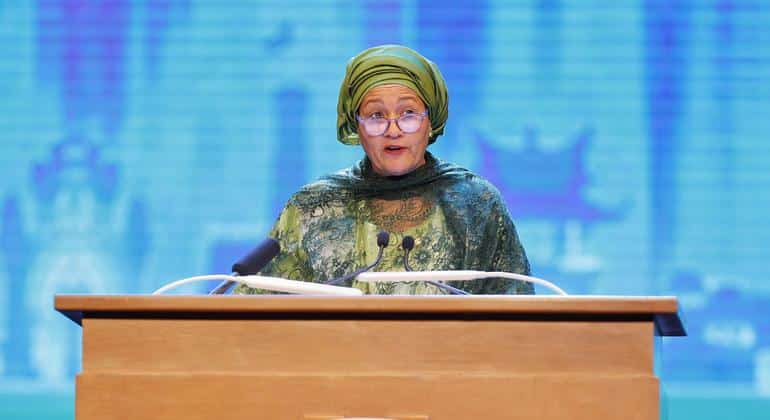
It was a momentous occasion as UN Deputy Secretary-General Amina Mohammed addressed the 2026 Economic and Social Council Partnership Forum in New York. Emphasizing the critical need for collaboration, she highlighted that achieving the ambitious goals of the 2030 Agenda requires the concerted efforts of governments, civil society, and the private sector. With alarming statistics underscoring the urgency of the situation, Mohammed called for innovative partnerships to tackle pressing global challenges, including poverty, hunger, and access to essential services.
The Importance of Partnerships
In her opening remarks, Amina Mohammed underscored the necessity of partnerships in achieving the 2030 Agenda. She noted that the scale of the challenges we face cannot be addressed by any single entity alone. The Economic and Social Council has recognized this need for collaboration since its inception 80 years ago. Over the decades, it has played a pivotal role in fostering partnerships that bring together diverse stakeholders, including governments, NGOs, and the private sector. This collaborative spirit has been instrumental in drafting significant documents like the Universal Declaration of Human Rights and advancing the Millennium Development Goals.
Mohammed pointed out that nearly 6,500 non-governmental organizations now hold accreditation with the Economic and Social Council. This broad representation ensures that a variety of voices contribute to the decision-making processes that affect global communities. The legacy of these partnerships is particularly relevant today, as the world faces numerous challenges that threaten to derail progress on the 2030 Agenda.
Current Challenges and the Path Forward
Despite the progress made, Amina Mohammed expressed concern over the alarming statistics that indicate a regression in achieving the Sustainable Development Goals (SDGs). She highlighted that 2.2 billion people still lack access to safe drinking water, and extreme poverty levels remain stagnant since 2015. Additionally, global hunger has surged, and Africa bears a disproportionate share of the global electricity deficit. The Deputy Secretary-General warned that the goal of gender equality is likely to be missed, with millions unable to afford adequate housing.
The financing gap for achieving the SDGs in developing countries exceeds $4 trillion annually. However, recent commitments, such as the Sevilla Commitment on Financing for Development and the Doha Political Declaration, signal a renewed focus on addressing these gaps. Mohammed emphasized that closing these gaps requires transparent, country-led partnerships that are accountable and results-driven.
Success Stories and Future Goals
Amina Mohammed shared encouraging success stories that demonstrate the power of partnerships. Since 2015, significant strides have been made, including increased access to electricity for 92% of the global population and a 50% reduction in AIDS-related deaths. More than 100 million children and youth have gained access to education, showcasing the impact of collaborative efforts toward shared goals.
At this year’s forum, participants will focus on four key areas: partnerships for the goals, clean water and sanitation, affordable energy, and sustainable cities. These foundational elements are crucial for advancing health, education, and climate action. The insights and partnerships formed during this forum will directly influence the upcoming Economic and Social Council Coordination Segment and the high-level political forum scheduled for July.
Call to Action for Member States
As the forum progresses, Amina Mohammed urged participants to consider specific improvements needed in partnership accountability, data collection, and the transition from commitment to implementation. The United Nations is already implementing these principles through its resident coordinators and country teams, which are working to align resources and support national priorities.
The Deputy Secretary-General concluded her remarks by emphasizing the importance of translating discussions into concrete actions. With five years remaining to make significant progress on the 2030 Agenda, she expressed optimism that clear roles, honest assessments of constraints, and a commitment to follow-through could lead to meaningful change. The collaborative efforts initiated at this forum could pave the way for a more sustainable and equitable future for all.
Observer Voice is the one stop site for National, International news, Sports, Editor’s Choice, Art/culture contents, Quotes and much more. We also cover historical contents. Historical contents includes World History, Indian History, and what happened today. The website also covers Entertainment across the India and World.
Follow Us on Twitter, Instagram, Facebook, & LinkedIn

