

The Brain Health Crisis You Haven’t Heard About
Your Brain's Health Matters More Than You Think: 11 Million People Die Each Year from Neurological Conditions

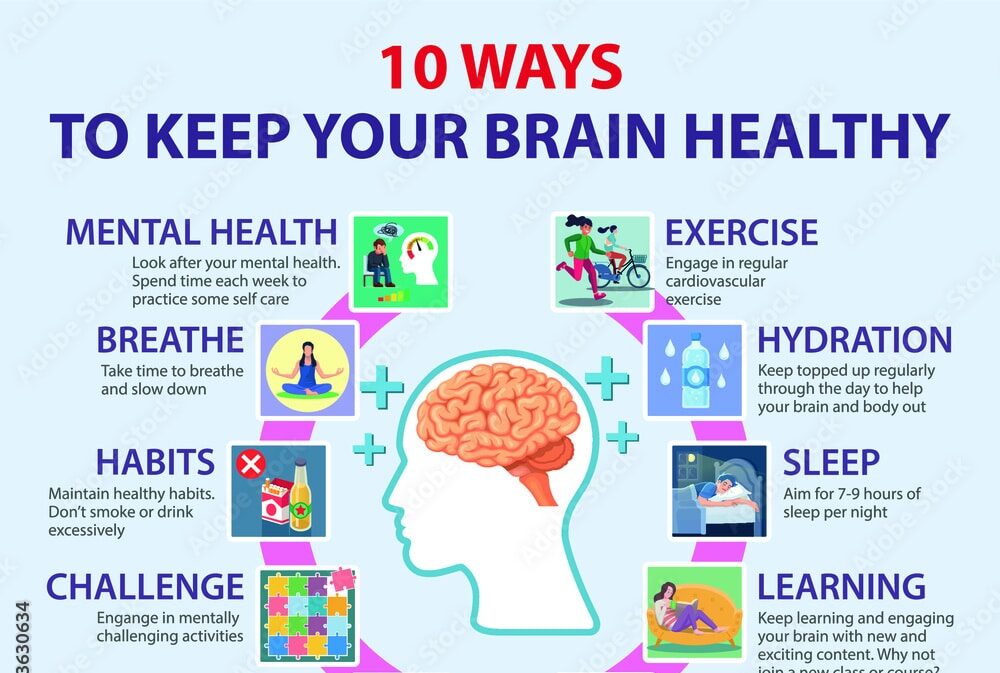
When was the last time you thought about your brain health? If you’re like most people, probably not recently. We worry about our heart, our weight, even our skin. But our brains? They’re just supposed to work, right?
Wrong. And here’s a sobering fact: neurological conditions – problems affecting the brain and nervous system – are now the leading cause of disability worldwide. They kill about 11 million people every year. That’s more than cancer. More than heart disease in some regions. Yet most of us know very little about keeping our brains healthy.
I recently dug into research from the World Health Organization on brain health, and what I discovered was both alarming and hopeful. Let me break it down for you in plain English.
What Exactly Is Brain Health?
First, let’s get clear on what we’re talking about. Brain health isn’t just about being smart or having a good memory. According to WHO, it’s about how well your brain functions across multiple areas: thinking and learning, sensing the world around you, feeling emotions and connecting with others, behaving and making decisions, and controlling your movements.
A healthy brain lets you live your best life – whether you’re 5 or 95, whether you have a neurological condition or not. That’s an important point: brain health isn’t just for “normal” brains. Even people living with conditions like epilepsy or Parkinson’s can optimize their brain health.
Your brain health depends on many things: the food you eat, the air you breathe, whether you feel safe in your neighborhood, whether you can go to school, whether you have friends and family who care about you, and whether you can see a doctor when you need one.
The Numbers That Should Wake Us Up
Here’s where things get serious. In 2016, researchers found that brain and nervous system problems were responsible for more disability than any other type of health condition. Let me put that in perspective with some numbers:
Stroke is the biggest problem, causing 42% of all neurological disability. That’s nearly half right there. Migraine headaches might not kill you, but they account for 16% of the disability burden – millions of people missing work, unable to care for their kids, living in pain. Dementia comes in at 10%, and this number is exploding as populations age. Meningitis (brain infection) causes nearly 8% of the burden, especially in poor countries. Epilepsy accounts for 5%, affecting 50 million people worldwide.
And here’s what really caught my attention: Parkinson’s disease is the fastest-growing neurological disorder in the world. Why? We’re all living longer, and Parkinson’s becomes more common as we age.
The Inequality Problem
If you live in a wealthy country, you probably take for granted that if you have a seizure, you can see a neurologist. But globally, the picture is completely different.
In poor countries, there are only three neurologists for every 10 million people. Read that again. Three doctors for 10 million people. In wealthy countries? There are about 500 neurologists for the same population. That’s 160 times more doctors.
The result? About 70% of all brain-related disability happens in poor countries. And in those countries, only 28% have any kind of national plan to deal with neurological diseases. Meanwhile, 64% of rich countries have such plans.
I spoke with people working in global health, and they told me stories that broke my heart. Children with epilepsy having 10 seizures a day because they can’t get medication that costs pennies. Pregnant women dying from eclampsia (seizures during pregnancy) in clinics that don’t have basic drugs. Stroke victims lying in beds for months without any rehabilitation because there are no physical therapists.
Different Problems at Different Ages
What’s fascinating about brain health is that different conditions hit at different life stages.
Babies and young children in poor countries face risks we’ve almost eliminated in wealthy nations. Problems during pregnancy and birth can damage developing brains. Infections like meningitis can kill or cause permanent disability. Malnutrition affects brain development. In Africa and South Asia, these preventable problems still cause enormous suffering.
Teenagers and young adults deal with mental health conditions, traumatic brain injuries from accidents, and the emergence of chronic conditions like epilepsy. This is also when many people with developmental conditions like autism need support transitioning to adult life.
Middle-aged adults start seeing strokes, brain tumors, and the early signs of Parkinson’s or multiple sclerosis. Migraine headaches peak during these productive years, causing massive economic losses.
Older adults face dementia, Parkinson’s disease, stroke, and age-related cognitive decline. With global populations rapidly aging, we’re heading toward a crisis. The number of people with dementia is expected to triple by 2050. Think about that – triple.
Why This Matters to You
You might be thinking, “This is depressing. Why should I care?” Here’s why:
First, it’s preventable. Many neurological problems can be prevented or their impact reduced. Don’t smoke – it increases stroke risk dramatically. Control your blood pressure and diabetes. Wear a helmet when cycling. Vaccinate your kids against meningitis. Get enough sleep. Exercise regularly. Stay socially connected. These simple things protect your brain.
Second, it’s treatable. Even in poor countries, basic treatments for epilepsy, stroke, and Parkinson’s can transform lives. The problem isn’t that we don’t know what works – it’s that too many people can’t access care.
Third, it affects everyone. Even if you’re lucky enough never to have a neurological condition, you probably know someone who does. Your grandmother with dementia. Your colleague with migraines. Your neighbor’s child with cerebral palsy. This isn’t someone else’s problem – it’s all of our problem.
What WHO Is Doing About It
In 2022, the world’s countries agreed on something remarkable: the Intersectoral Global Action Plan on Epilepsy and Other Neurological Disorders. It’s a mouthful of a title, but it’s actually a big deal.
For the first time ever, there’s a global plan to tackle neurological disorders. The goals are straightforward: make sure people with brain conditions can get diagnosed and treated, prevent conditions when possible, do better research to find new treatments, reduce the stigma and discrimination people face, and make sure governments actually pay attention to these problems.
The plan runs until 2031, and it focuses especially on helping poor countries build up their services. That means training regular nurses and doctors to recognize and treat common neurological problems, not just relying on specialists. It means making essential medicines available and affordable. It means building rehabilitation services so people can recover and live full lives after strokes or injuries.
WHO is also pushing countries to think about brain health across all government departments, not just health. After all, education affects brain development. Transportation safety prevents head injuries. Labor laws can reduce workplace exposures to brain-damaging chemicals. It takes a whole society to support brain health.
Small Changes, Big Impact
Here’s what gives me hope after researching this topic: we already know how to prevent many brain problems and treat many others. We’re not waiting for some miracle cure. We just need to actually do what we know works.
For stroke prevention, it’s mostly about controlling high blood pressure, not smoking, staying active, and eating reasonably well. Not rocket science.
For epilepsy, cheap medications can control seizures in 70% of people. The tragedy is that in poor countries, three-quarters of people with epilepsy get no treatment at all. Not because we don’t have the medicine – because health systems are broken.
For dementia, we’re learning that what’s good for your heart is good for your brain. Staying mentally and socially active, exercising, controlling diabetes and blood pressure, avoiding head injuries – these all reduce your risk.
For children’s brain development, making sure pregnant women get good nutrition and prenatal care, helping babies survive birth safely, vaccinating against meningitis, and ensuring kids go to school all make enormous differences.
The Bottom Line
Brain health isn’t a luxury – it’s fundamental to human life and dignity. Our brains make us who we are. They let us think, feel, connect, create, and love. When brain health fails, everything else becomes harder.
The good news? Much of brain disease is preventable. Most is treatable. And for the first time, the world has a coordinated plan to tackle these conditions.
But plans only work if countries actually implement them. That means investing money, training health workers, making medicines available, building accessible health facilities, and challenging the stigma that too often surrounds neurological and mental health conditions.
The WHO’s new global action plan runs until 2031. That’s just a few years away. The question is: will we rise to the challenge? Will we finally give brain health the attention it deserves?
Your brain is reading these words right now, making sense of them, maybe feeling concerned or curious or motivated. It’s an incredible organ that deserves your care and protection. And the millions of people worldwide living with neurological conditions deserve health systems that can help them live full, dignified lives.
The brain health crisis is real. But unlike many global health challenges, we already have many of the solutions. We just need the will to implement them.
For more information:
- WHO Brain Health Overview
- Global Action Plan on Neurological Disorders
- Optimizing Brain Health Across the Life Course
Disclaimer: This article is an adaptation of publicly available information from WHO’s Brain Health
health topic page (WHO, Geneva. Licence: CC BYNC-SA 3.0 IGO). WHO is not responsible for the
content or accuracy of this adaptation. This content is for informational and educational purposes
only and does not constitute medical advice. ObserverVoice.com is a news and information platform
— not a healthcare provider.
Observer Voice is the one stop site for National, International news, Sports, Editor’s Choice, Art/culture contents, Quotes and much more. We also cover historical contents. Historical contents includes World History, Indian History, and what happened today. The website also covers Entertainment across the India and World.

