

Understanding eSIM: Key Differences, Functionality, and Advantages

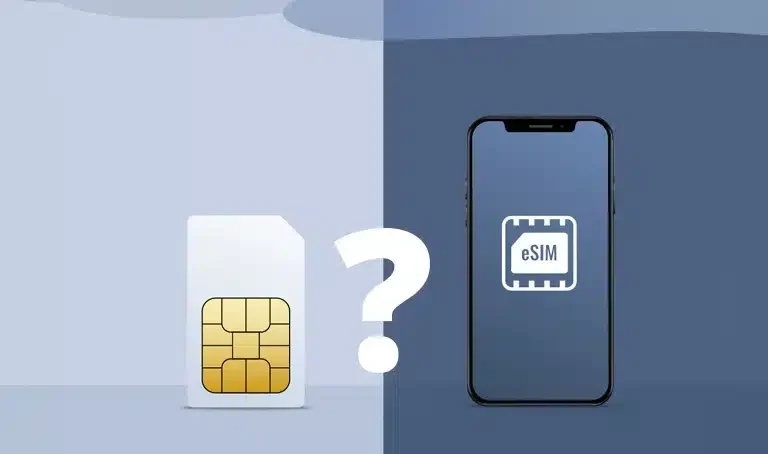
The landscape of mobile connectivity is evolving with the rise of e-SIM technology, which is gradually replacing traditional plastic SIM cards. This innovative approach allows users to activate their mobile numbers digitally, eliminating the need for physical SIM cards. With major telecom providers in India, such as Jio, Airtel, and Vodafone-Idea, supporting e-SIM services, many smartphone users are curious about how this technology works and its advantages over conventional SIM cards.
Understanding e-SIM Technology
An e-SIM, or Embedded Subscriber Identity Module, is integrated directly into a smartphone, allowing users to set up their mobile service through the device’s settings without the need to access a SIM tray. Functionally, it performs the same tasks as a physical SIM card, enabling voice calls, messaging, and mobile data connectivity. The embedded nature of e-SIMs frees up internal space within smartphones, which manufacturers can utilize to enhance battery capacity or incorporate additional hardware features. As e-SIM adoption grows, users are increasingly seeking clarity on its functionality and benefits.
Convenience and Flexibility
One of the standout benefits of e-SIM technology is its convenience. Users can switch network providers digitally without needing to visit a store or physically change SIM cards. Many devices support multiple e-SIM profiles, allowing users to easily switch networks based on signal strength or when traveling internationally. This digital approach minimizes the risk of losing or damaging a physical SIM card. Additionally, the absence of a SIM tray enables manufacturers to design smartphones that are better sealed against dust and water, enhancing overall durability.
Limitations of e-SIMs
Despite their advantages, e-SIMs come with certain limitations. Unlike physical SIM cards, which can be easily removed and transferred to another device if a phone malfunctions, e-SIMs are embedded within the device. If a smartphone with an e-SIM becomes damaged, users must undergo a digital transfer or reactivation process with their telecom provider to restore their mobile number. While cloud backups can facilitate data recovery, the transition may not always be instantaneous. Additionally, some users express concerns about privacy, fearing that the software-based nature of e-SIMs could potentially make tracking easier in specific situations.
Security Considerations
When it comes to security, e-SIMs are regarded as secure as traditional SIM cards. In fact, cellular networks utilizing 3G, 4G, and 5G technologies are generally more secure than public Wi-Fi networks commonly found in airports, hotels, and cafes. Data transmitted over mobile networks is encrypted, making it more challenging for hackers to intercept. Therefore, from a security perspective, using an e-SIM does not inherently increase vulnerability compared to a physical SIM card. Ultimately, the choice between an e-SIM and a physical SIM depends on individual preferences and needs, with each option offering distinct advantages and considerations.
Observer Voice is the one stop site for National, International news, Sports, Editor’s Choice, Art/culture contents, Quotes and much more. We also cover historical contents. Historical contents includes World History, Indian History, and what happened today. The website also covers Entertainment across the India and World.
Follow Us on Twitter, Instagram, Facebook, & LinkedIn

