

Unveiling Airport Wi-Fi Risks: Essential Safety Tips for Travelers

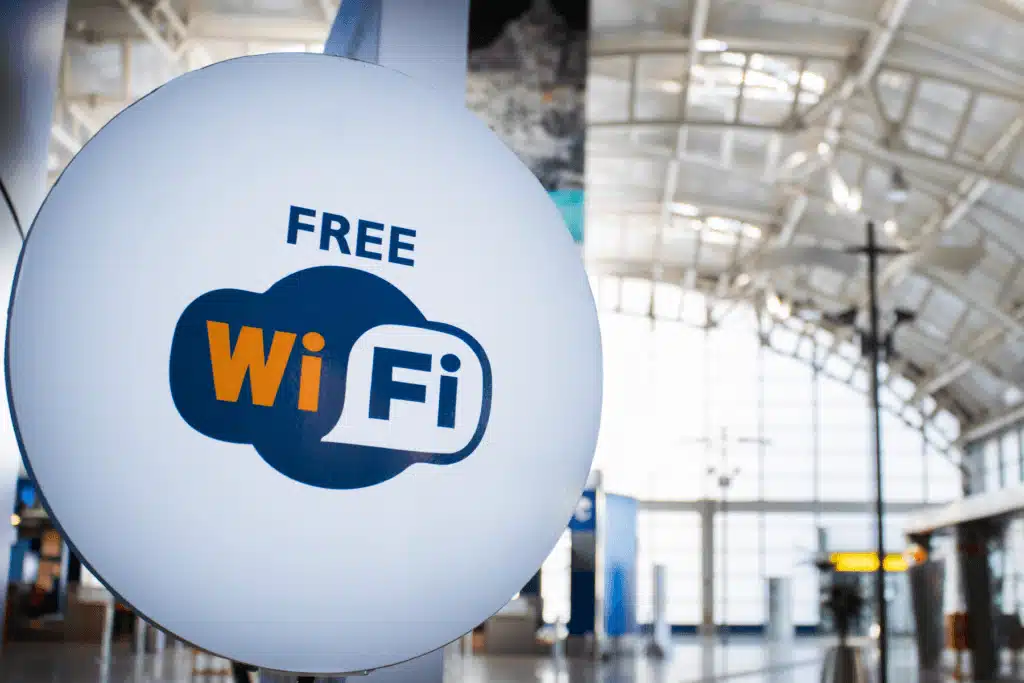
Travellers seeking a quick internet connection at airports often overlook the potential dangers associated with free Wi-Fi. A recent survey by Kinetic Business revealed that over half of respondents express distrust towards public Wi-Fi networks, and their concerns are justified. Many airport hotspots lack encryption, making them vulnerable to cyberattacks. As travellers connect to these networks, they may unknowingly expose their personal information to malicious actors.
Evil Twin Hotspots
One prevalent threat in airport environments is the use of cloned hotspots, commonly referred to as “Evil Twin” attacks. In this scenario, hackers create a fake access point that mimics the official airport Wi-Fi network. Unsuspecting travellers may connect to this fraudulent network, believing it to be legitimate due to its familiar name. These counterfeit hotspots often emit a stronger signal, enticing users to connect without verifying their authenticity.
Once a traveller is connected, the attacker can monitor their online activities, capture sensitive login information, or redirect them to phishing sites designed to harvest personal data. The simplicity of setting up a fake hotspot with basic equipment has led to the proliferation of this threat in busy travel hubs. To mitigate the risks, travellers are advised to use a Virtual Private Network (VPN) and disable the auto-connect feature on their devices. Additionally, relying on a personal mobile hotspot can provide an extra layer of security.
Man-in-the-Middle Risks
Another significant risk associated with airport Wi-Fi is the potential for man-in-the-middle attacks. In this scenario, cybercriminals position themselves between the user and the network, allowing them to intercept data transmitted during the connection. Public Wi-Fi networks often lack robust encryption, making it easier for attackers to execute this tactic.
Hackers may employ techniques such as spoofing to deceive devices into believing they are connecting to the legitimate network. This allows them to observe sensitive activities, including email communications and login attempts. To safeguard against these threats, travellers should prioritize using HTTPS websites, enable VPNs, and refrain from conducting sensitive transactions, such as banking, while connected to public networks.
Malware and Session Hijacking
Open Wi-Fi hotspots also pose a risk of malware infections. Attackers can exploit unsecured connections to push malicious files onto unsuspecting devices. These files may install automatically if users access unsecured web pages. To reduce the likelihood of infection, it is crucial for travellers to keep their antivirus software updated and exercise caution when clicking on unknown links.
Additionally, cybercriminals can steal session tokens that keep users logged into various websites. With these tokens, attackers can gain access to accounts without needing to know the actual passwords. To prevent session hijacking, users should ensure they are using websites with secure session controls, enable multi-factor authentication, and only visit HTTPS pages. By adopting these precautions, travellers can better protect their personal information while using public Wi-Fi networks at airports.
Observer Voice is the one stop site for National, International news, Sports, Editor’s Choice, Art/culture contents, Quotes and much more. We also cover historical contents. Historical contents includes World History, Indian History, and what happened today. The website also covers Entertainment across the India and World.

