

Doha World Summit Opening Panel Urges Action on Poverty Eradication, Employment, and Social Inclusion

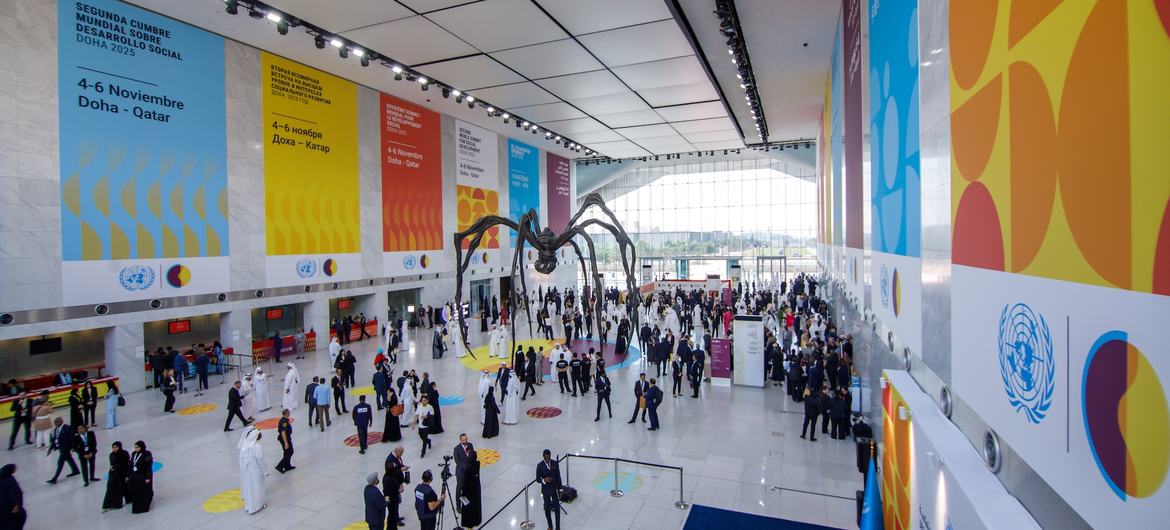
Speakers at the Second World Summit for Social Development in Doha, Qatar, emphasized the urgent need for global commitment to the three pillars of social development: poverty eradication, full and productive employment, and social inclusion. The opening panel highlighted the importance of translating the Doha Political Declaration into actionable strategies. Key figures, including Juan Somavia, Chair of the Preparatory Committee, acknowledged the progress made but warned that significant work remains to achieve the goals set out in the 2030 Agenda.
Global Commitment to Social Development
The panel discussion, co-chaired by Jakov Milatović, President of Montenegro, and Edil Baisalov, Deputy Chairman of the Cabinet of Ministers of Kyrgyzstan, focused on strengthening the three pillars of social development. Juan Somavia delivered the keynote address, praising the Doha Declaration as a significant achievement. He noted that while the declaration is a strong foundation, much work is needed to fulfill the promises of the 2030 Agenda. Somavia urged nations to align their strategies with their unique development needs and realities, emphasizing the importance of sustained involvement from all stakeholders.
The discussion was moderated by Gilbert Houngbo, Director-General of the International Labour Organization (ILO), and featured a diverse panel of experts, including ministers from various countries and representatives from international organizations. Their collective insights underscored the necessity for collaborative efforts to address social challenges effectively.
Decent Work as a Pathway Out of Poverty
Mariëlle Paul, Minister for Social Affairs and Employment of the Netherlands, highlighted that decent work is essential for escaping poverty. She stressed that while having a job is crucial, it must also provide a living wage and a safe, non-discriminatory environment. Paul called for enhanced collaboration among governments, civil society, and the private sector to promote decent work for all individuals.
Abdeijabbar Er-Rachidi, speaking on behalf of Minister Naima Ben Yahia of Morocco, outlined the country’s comprehensive social protection strategy. This includes mandatory health insurance benefiting 20 million people, monthly cash transfers to vulnerable families, and initiatives aimed at empowering marginalized groups. These efforts have significantly reduced extreme poverty in Morocco, lifting over one million people out of poverty.
Investment and Coordination for Poverty Eradication
Diana Pokie, Minister for Social Affairs and Housing of Suriname, emphasized that effective poverty eradication requires adequate investment and inter-ministerial coordination. She pointed out that successful policy actions depend on the allocation of financial resources across various government sectors, including health, education, and labor. Strengthening institutions and establishing clear mandates are vital for implementing effective policies.
Luc Triangle, General Secretary of the International Trade Union Confederation, welcomed the Doha Declaration as a strategic tool for future social development. He advocated for structural reforms to address inequality through fair taxation and a global tax cooperation framework. Triangle argued that equitable tax systems are essential for funding social development and called for investments in lifelong learning to help workers adapt to changing job markets.
Addressing Inequality and Marginalization
Amitabh Behar, Executive Director of Oxfam International, raised concerns about the growing wealth gap between the rich and the poor. He noted that while billionaires have seen their fortunes double in the past decade, millions continue to live in extreme poverty. Behar stressed the need to tackle the structural causes of poverty, including unjust tax systems and wage inequality, urging governments to focus on taxing the wealthy and reinvesting in public services.
Esther Nagtey, Youth Fellow of the International Disability Alliance, highlighted the challenges faced by persons with disabilities, who are disproportionately affected by poverty and lack access to healthcare. She called for their meaningful participation in policy-making and adequate funding for their organizations. Nagtey concluded by asserting that youth with disabilities are not just future leaders but active changemakers today, emphasizing the need for inclusive development strategies.
Observer Voice is the one stop site for National, International news, Sports, Editor’s Choice, Art/culture contents, Quotes and much more. We also cover historical contents. Historical contents includes World History, Indian History, and what happened today. The website also covers Entertainment across the India and World.
Follow Us on Twitter, Instagram, Facebook, & LinkedIn

