

Taliban Minister Engages with Indian Female Journalists Amid Rising Controversy

It’s often said that a picture can convey a thousand words, and a striking image in Indian newspapers on Monday morning certainly did just that. The photo depicted female journalists occupying front-row seats at a press conference held by Amir Khan Muttaqi, the Afghan Taliban’s foreign minister, in Delhi. This event followed significant backlash over the exclusion of women from a previous press meeting just two days prior. During the conference, Muttaqi claimed that the earlier exclusion was unintentional, attributing it to logistical issues rather than a deliberate act.
Press Conference Controversy
The press conference on Sunday marked the second event held by Muttaqi at the Afghan embassy in a short span of time. The first meeting, which took place on Friday, drew criticism for the absence of female journalists. In response to the uproar, Muttaqi stated that the exclusion was not intentional, explaining that the initial press event was organized on short notice with a specific list of journalists invited. He emphasized that there was no ulterior motive behind the decision, labeling it a “technical issue.” However, the United Nations has condemned the situation in Afghanistan as “gender apartheid,” highlighting the severe restrictions placed on women and girls, including bans on education and public activities.
The Taliban, which regained control of Afghanistan in 2021, has claimed to respect women’s rights in line with their interpretation of Afghan culture and Islamic law. However, international observers argue that the Taliban’s actions contradict these claims, as the suppression of women’s rights under their regime is among the most severe globally. As the Taliban seeks international recognition, the situation remains complex, with countries like India maintaining informal relations while not formally recognizing the Taliban government.
India’s Diplomatic Engagement
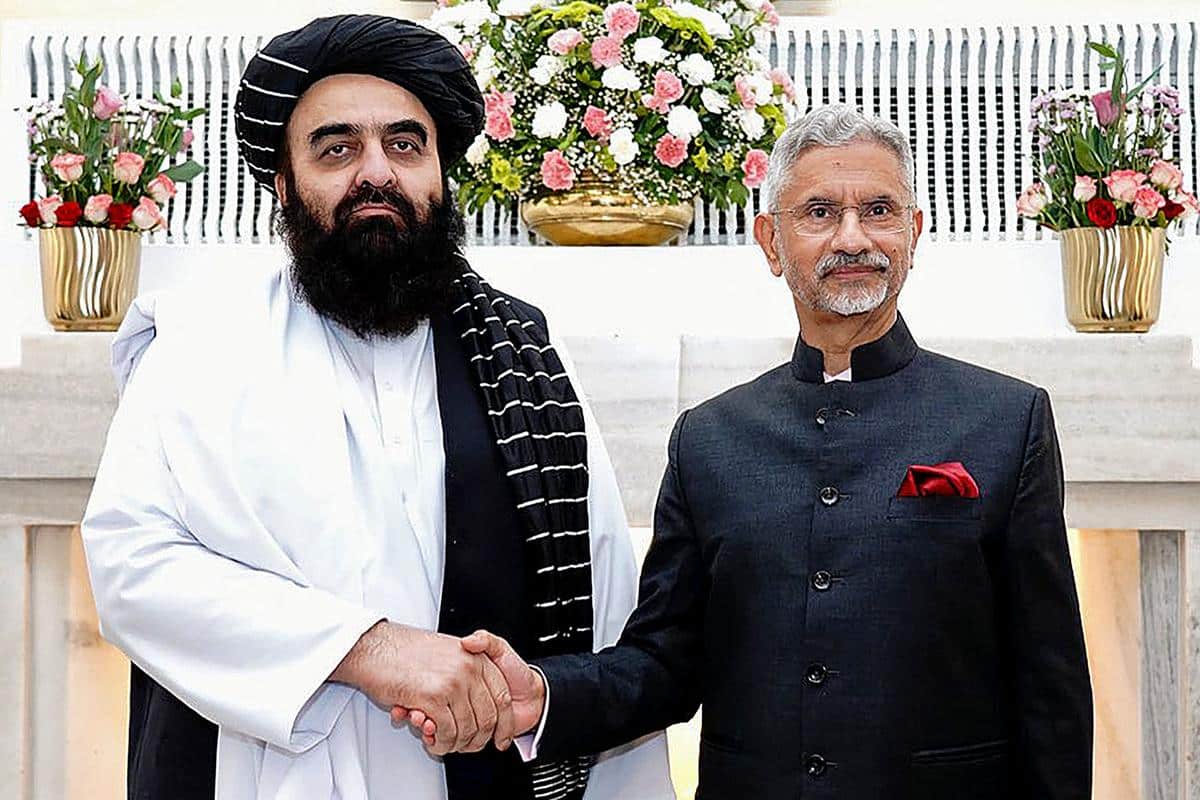
Muttaqi’s visit to India is seen as a significant step in enhancing diplomatic relations between the two nations. His arrival coincided with high-level discussions with Indian officials, including Foreign Minister S. Jaishankar, who announced plans to reopen India’s embassy in Kabul, which had been closed following the Taliban’s return to power. While India has not officially recognized the Taliban, it continues to engage diplomatically, providing humanitarian aid and maintaining a small mission in Kabul. This evolving relationship is crucial for both parties: the Taliban seeks legitimacy on the global stage, while India aims to bolster its strategic interests in the region.
Despite the Afghan embassy’s autonomy in organizing the press events, the exclusion of female journalists sparked outrage among Indian politicians and media organizations. Critics, including opposition leader Rahul Gandhi, condemned the Indian government for allowing such discrimination to occur on its soil. The Editors Guild of India, along with other media groups, issued statements denouncing the exclusion as discriminatory and called for the government to uphold the rights of female journalists.
Response to Gender Discrimination
In light of the backlash, the Taliban’s team sent out new invitations for a subsequent press conference, branding it as an “inclusive” event. This move was perceived as a response to the growing outrage over the initial exclusion of women. The second conference was well-attended, with journalists pressing Muttaqi on the reasons behind the earlier exclusion and the broader issue of women’s rights in Afghanistan. In his responses, Muttaqi claimed that millions of students, including over 2.8 million women and girls, were still receiving education, although many questioned the veracity of his statements given the Taliban’s track record since taking power.
Journalists at the conference challenged the minister’s assertions, citing the numerous restrictions imposed on women’s education and employment opportunities over the past two years. The Taliban’s recent actions, such as banning girls over the age of 12 from attending school and removing books authored by women from universities, further fueled skepticism regarding their commitment to women’s rights. While some attendees noted that the mere organization of the second press conference and the minister’s willingness to address gender issues could be seen as progress, the overall situation remains dire for Afghan women.
Ongoing Challenges for Afghan Women
The challenges faced by women in Afghanistan under the Taliban regime have drawn widespread condemnation from international organizations and human rights advocates. The restrictions on education, employment, and public life have led to what many describe as a systematic erasure of women’s rights. The UN and various human rights groups continue to monitor the situation, labeling it as one of the most severe forms of gender discrimination in the world today.
As the Taliban seeks to navigate its international relations, the treatment of women remains a critical issue that could impact its quest for recognition. The recent events in India highlight the complexities of diplomatic engagement with a regime that has faced global criticism for its policies toward women. The ongoing dialogue surrounding women’s rights in Afghanistan is essential, as it not only affects the lives of millions of Afghan women but also shapes the international community’s response to the Taliban’s governance.
Observer Voice is the one stop site for National, International news, Sports, Editor’s Choice, Art/culture contents, Quotes and much more. We also cover historical contents. Historical contents includes World History, Indian History, and what happened today. The website also covers Entertainment across the India and World.
Follow Us on Twitter, Instagram, Facebook, & LinkedIn

