

Why Doing a Favor Makes You Like Someone More: The Surprising Ben Franklin Effect

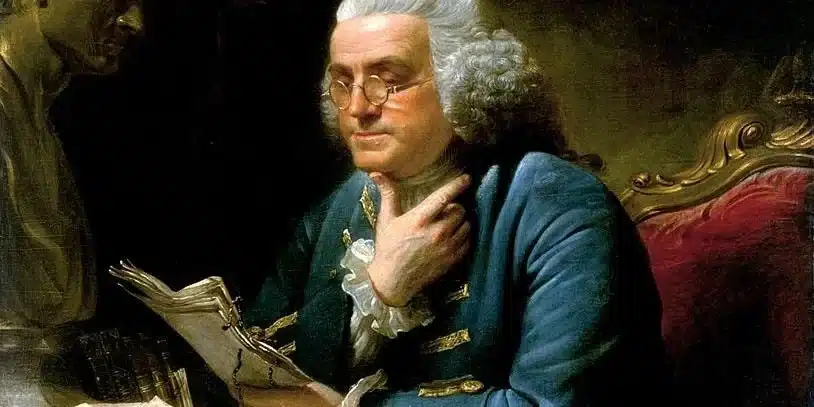
Imagine this: You reluctantly help a classmate with their math homework. You didn’t really want to. But a week later, you notice something strange — you actually like them more than before. How did that happen? You did them a favor, not the other way around. This, dear reader, is the magic of the Ben Franklin Effect — one of psychology’s most delightful and counterintuitive secrets.
The Story Behind the Name
Benjamin Franklin was not just a man who flew kites in thunderstorms. He was a diplomat, a writer, an inventor, and — as it turns out — a genius at reading human nature.
In the 1730s, Franklin was serving in the Pennsylvania state legislature. A rival politician openly disliked him and stood in his way at every turn. Instead of flattering the man or sending him gifts, Franklin did something unexpected. He sent the rival a polite letter asking to borrow a rare book from his personal library.
The rival, flattered by the request, sent the book. Franklin returned it with a thank-you note. From that day on, the two men became lifelong friends. As Franklin himself wrote in his autobiography:
“He that has once done you a kindness will be more ready to do you another than he whom you yourself have obliged.”
In other words — get someone to do you a favor, and they’ll start to like you. It sounds backwards. But it works.
What Psychology Says About It
For nearly 200 years, people treated Franklin’s observation as folk wisdom. Then, in 1969, psychologists Jon Jecker and David Landy put it to the test. In their study at the University of California, participants who were asked to return money to a researcher — doing him a favor — ended up liking that researcher significantly more than participants who kept the money.
The science confirmed what Franklin knew by instinct.
But why does this happen? The answer lies in something called cognitive dissonance — a concept pioneered by psychologist Leon Festinger at Stanford. Our brain hates contradiction. If you do something nice for someone you don’t particularly like, your brain feels uncomfortable — “Why did I help someone I dislike?” To resolve this discomfort, your brain quietly rewrites your feelings: “Maybe I helped them because I actually do like them.” And just like that, you do.
It’s your mind telling itself a story to stay consistent — and you end up believing it.
Folklore and Wisdom That Knew This All Along
Interestingly, many ancient cultures carried this wisdom long before modern psychology gave it a name.
In old Indian villages, elders would advise young people: “Ask a favour of someone you wish to befriend — it gives them dignity and draws them close.” Asking someone for help signals that you trust them, that you value their ability. It’s an act of quiet respect.
In Japanese culture, there’s a concept called “Meiwaku” — the idea that being a burden is shameful. Yet paradoxically, allowing someone to help you actually strengthens social bonds. The helper feels needed, valued, and connected.
Even Aesop, the ancient Greek fabulist, hinted at this in tales where characters who extended effort for others grew emotionally attached to the outcome. We love what we work for.
How the Ben Franklin Effect Works in Real Life
This isn’t just a classroom curiosity. The Ben Franklin Effect shows up in surprisingly practical places:
In school: Ask a quiet classmate to explain a concept to you. Chances are, they’ll feel more warmly toward you afterward — and you might gain a study partner.
In the workplace: Managers who occasionally ask employees for advice — instead of always giving it — build stronger loyalty. Research from Harvard Business School confirms that seeking advice makes leaders appear more competent, not less.
In relationships: Asking a friend for a small favour — “Can you help me pick a book?” — deepens bonds more than doing everything yourself.
In marketing: Brands that ask customers to participate — write a review, vote on a new flavour, name a product — create deeper emotional loyalty. You’ve invested effort, so you care more.
Observervoice.com has explored similar psychological phenomena in human behaviour, showing how small social cues dramatically shape our everyday relationships.
A Word of Caution — Don’t Abuse the Effect
Like any tool, this one can be misused. Con artists and manipulators sometimes deliberately ask for small favours to build false trust before exploiting someone. It’s important to be aware of this dynamic, especially online or in new relationships. As the American Psychological Association notes, healthy relationships are built on mutual care — not psychological tricks.
Use this knowledge with honesty and good intent.
FAQs About the Ben Franklin Effect
Q1. Is the Ben Franklin Effect scientifically proven? Yes. It was demonstrated in a 1969 study by Jecker and Landy and has since been supported by research in cognitive dissonance theory. Psychology Today has a detailed breakdown of the science behind it.
Q2. Does it work every time? Not always. The favor needs to feel voluntary and meaningful. If someone feels forced to help you, the effect may not apply or could even backfire.
Q3. Can I use this to make new friends? Absolutely — and it’s one of the most natural ways. Asking someone for a small, genuine favour signals trust and opens the door to a real connection.
Q4. What is cognitive dissonance, in simple terms? It’s the mental discomfort you feel when your actions and beliefs don’t match. Your brain tries to fix this by changing one or the other — usually your beliefs.
Q5. Did Ben Franklin really invent this idea? He didn’t invent it — he observed it. But his famous personal story made it memorable enough that psychologists named the phenomenon after him.
The Takeaway
Benjamin Franklin lived in a world without smartphones, psychology labs, or self-help books. Yet he understood something that modern science took centuries to confirm: human beings don’t just love those who are kind to them — they love those for whom they have been kind.
Next time you want to build a bridge with someone, don’t shower them with gifts. Ask them for a favour. Let them feel useful. Let them feel seen.
Your brain will do the rest.
Observer Voice is the one stop site for National, International news, Sports, Editor’s Choice, Art/culture contents, Quotes and much more. We also cover historical contents. Historical contents includes World History, Indian History, and what happened today. The website also covers Entertainment across the India and World.

