

M/T Nasha: Iran’s Urgent Oil Storage Strategy with ‘Ghost Ship’ as Kharg Island Approaches Capacity

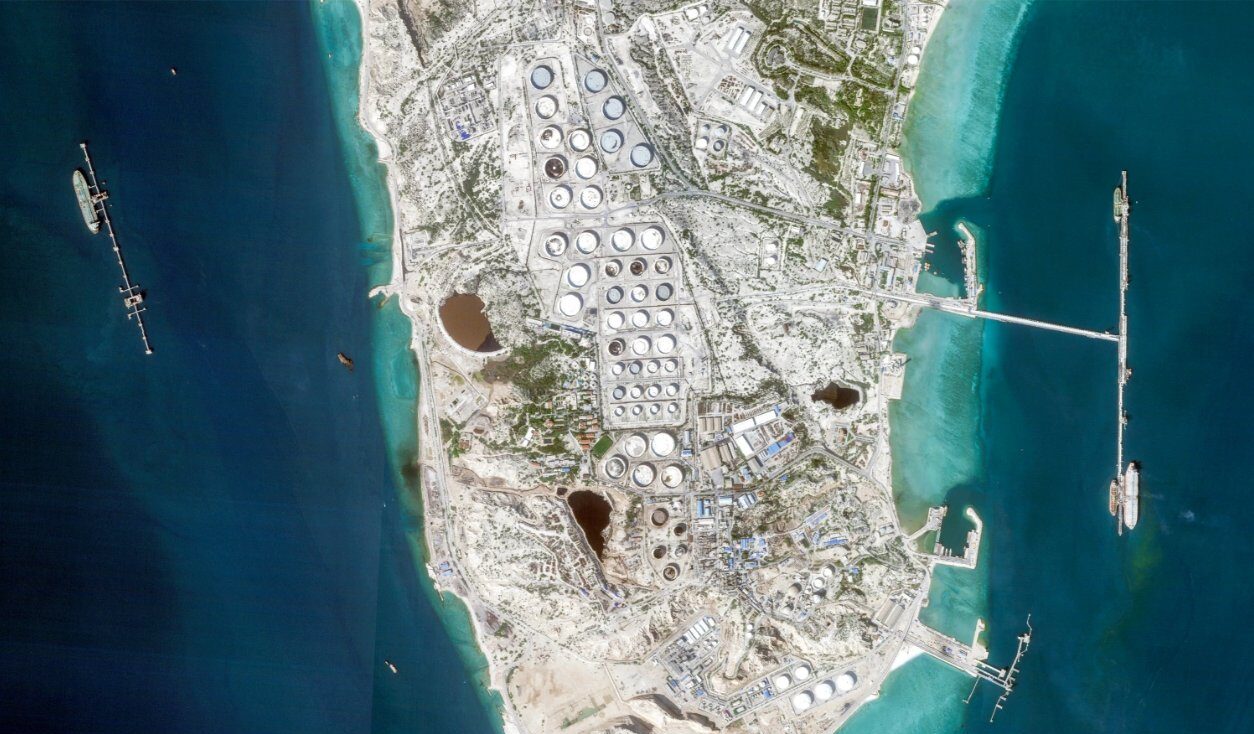
As the United States intensifies its blockade on Iranian oil exports, Iran is grappling with an oversupply of crude oil, particularly at its key export terminal, Kharg Island. With storage capacities nearing their limits, Tehran is taking steps to expand its storage capabilities by reactivating the aging crude carrier M/T Nasha. This move highlights the mounting pressure on Iran’s oil infrastructure as sanctions continue to disrupt its export activities.
Challenges at Kharg Island
Kharg Island is vital to Iran’s oil economy, responsible for nearly 90 percent of the country’s crude exports. Situated in the Persian Gulf, the island’s deep waters accommodate large supertankers that transport oil primarily to Asian markets. The terminal processes crude from significant offshore fields, including Aboozar, Forouzan, and Dorood, making it essential for Iran’s production and export operations. However, the current situation is precarious, as estimates indicate that only about 13 million barrels of spare onshore storage remain. With inflows of crude oil continuing at a rate of approximately 1.0 to 1.1 million barrels per day, the remaining capacity could be depleted within two weeks, pushing the terminal towards saturation.
To alleviate the pressure, Iran has turned to floating storage solutions, utilizing oil tankers like the M/T Nasha to hold excess crude offshore. This strategy allows Iran to manage its surplus without relying solely on land-based facilities. However, analysts warn that floating storage is a temporary fix. It is limited in capacity and costly, and cannot fully replace the need for extensive onshore infrastructure.
The Role of M/T Nasha
The M/T Nasha is a very large crude carrier (VLCC) that was built in 1996 and sails under the Iranian flag. Measuring over 330 meters in length, the vessel had been largely inactive for years before being reactivated to assist with Iran’s current storage challenges. While this tanker can provide some relief, experts caution that it is not a sustainable long-term solution. Floating storage cannot adequately substitute for the large-scale onshore facilities that are essential for managing Iran’s oil exports effectively.
As the situation evolves, the reliance on floating storage may lead to further complications. If the blockade on Iranian oil exports continues, Iran may face the difficult choice of either cutting production, which could lead to economic losses, or maintaining output and risking storage bottlenecks that could disrupt the entire oil supply chain.
Implications of the U.S. Blockade
The current strain on Iran’s oil infrastructure coincides with intensified U.S. efforts to limit Iranian oil exports. U.S. officials have indicated that waivers allowing Iranian crude shipments are unlikely to be extended, tightening the blockade even further. Despite these challenges, Iran has managed to keep crude oil flowing through Kharg Island, with tankers continuing to load oil even amid security risks and reported strikes in the region.
However, the ongoing reliance on floating storage does not address the fundamental issue of restricted exports. If the blockade persists and shipments remain constrained, Iran may ultimately have to implement deeper production cuts. Such cuts could have long-term repercussions for its oil infrastructure, potentially damaging reservoirs and reducing future production capacity. This precarious situation presents a significant challenge for Tehran as it navigates the complexities of international sanctions and domestic economic pressures.
Observer Voice is the one stop site for National, International news, Sports, Editor’s Choice, Art/culture contents, Quotes and much more. We also cover historical contents. Historical contents includes World History, Indian History, and what happened today. The website also covers Entertainment across the India and World.

