

Labor Unions Demand Reversal of Recent Major Policy Changes

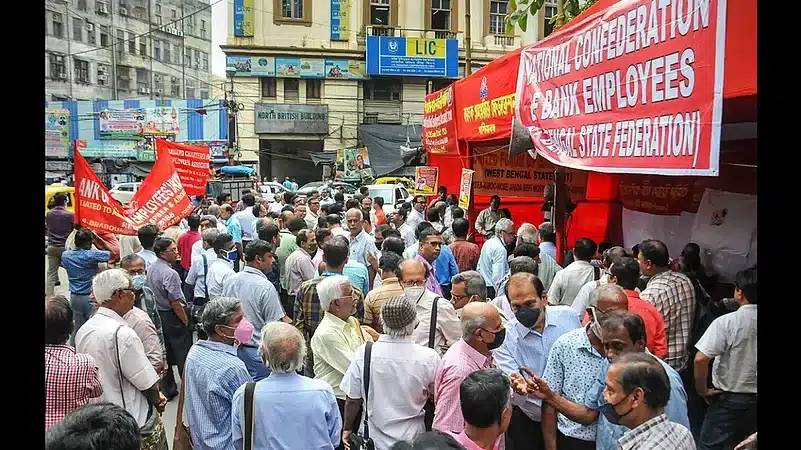
Last week, India unveiled a significant overhaul of its labor laws, marking what many are calling the most extensive economic reforms in decades. The government has consolidated 29 federal labor regulations into four streamlined codes, reducing the total number of rules from over 1,400 to approximately 350. This reform aims to ease the regulatory burden on businesses, but it has sparked widespread protests from trade unions, who argue that the changes undermine workers’ rights.
Streamlining Labor Regulations
The new labor codes, which received parliamentary approval in 2020, are set to be implemented nationwide after a five-year delay. The reforms are designed to simplify compliance for businesses, significantly reducing the number of forms required from 180 to 73. Companies have long criticized India’s labor regulations as overly restrictive, claiming they hinder growth in the manufacturing sector. The government hopes these changes will attract foreign direct investment (FDI) and integrate India into global value chains. Nomura, a financial services firm, noted that this move signals the government’s commitment to facilitating business operations in India.
However, the reforms have not been without controversy. Trade unions have voiced strong opposition, labeling the new codes as the most aggressive erosion of workers’ rights since India’s independence. Demonstrations have erupted across the country, with hundreds gathering in Delhi to protest the changes. Workers fear that the new laws will primarily benefit employers, leaving them vulnerable to exploitation.
Worker Protections and Concerns
The government asserts that the reforms aim to modernize outdated labor laws while enhancing worker protections. Notable provisions include mandatory appointment letters, uniform minimum wages, and free annual health check-ups for employees over 40. Additionally, the new codes recognize India’s growing gig economy, providing legal acknowledgment for gig workers for the first time. Experts believe these measures could help formalize the vast informal sector in India, which has long been a challenge for the economy.
Despite these positive changes, two contentious aspects of the reforms have raised alarms among labor advocates. The new rules make it easier for companies to terminate employees and impose stricter requirements on workers wishing to strike. Previously, companies with 100 or more employees needed government approval to lay off workers; this threshold has now increased to 300. Critics argue that these changes will weaken workers’ bargaining power and further marginalize a significant portion of the workforce.
Economic Implications and Future Outlook
Economists have mixed views on the potential impact of the new labor codes. Some, like Arvind Panagariya, an economist at Columbia University, argue that the previous restrictions on layoffs were detrimental to India’s competitiveness. They believe that a more flexible labor market is essential for attracting investment and fostering economic growth. Nomura’s analysts echo this sentiment, suggesting that the increased threshold for layoffs could encourage companies to expand their operations, ultimately creating more jobs.
Conversely, other experts caution that simply relaxing labor laws will not resolve deeper issues affecting India’s economy, such as low demand and inadequate private investment. They warn that weakening workers’ rights could have adverse effects, especially in a landscape where technology is displacing jobs and unemployment remains a concern.
Challenges Ahead for Implementation
As India embarks on this ambitious reform journey, the transition to the new labor codes is expected to present challenges for businesses. Organizations will need to adapt their wage structures, human resources systems, and compliance protocols to align with the new regulations. The dual compliance requirements stemming from both state and central labor laws may complicate matters further, as employers navigate the evolving landscape.
While the government aims to address the outdated and complex nature of previous labor codes, resistance from trade unions suggests that the path forward may be fraught with difficulties. The long-term effects of these reforms on India’s manufacturing sector and overall economic growth remain uncertain, but the immediate focus will be on managing the transition and addressing the concerns of workers and unions alike.
Observer Voice is the one stop site for National, International news, Sports, Editor’s Choice, Art/culture contents, Quotes and much more. We also cover historical contents. Historical contents includes World History, Indian History, and what happened today. The website also covers Entertainment across the India and World.
Follow Us on Twitter, Instagram, Facebook, & LinkedIn

