

Kavach: Exploring the Unique Indigenous Technology of Indian Railways

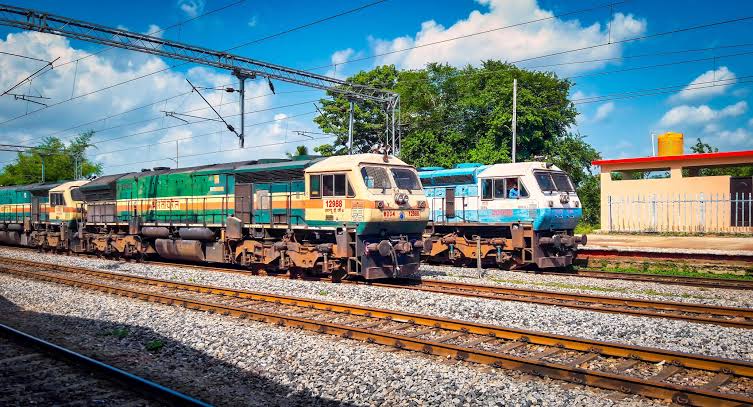
Indian Railways is advancing its safety measures with the implementation of Kavach, an indigenously designed Automatic Train Protection (ATP) system. Launched as the National Automatic Train Protection System in July 2020, Kavach aims to enhance train operations by reducing human error and operational constraints. The system has been successfully commissioned on 2,633 route kilometers, including key corridors like Delhi-Mumbai and Delhi-Howrah.
What is Kavach and How Does It Work?
Kavach provides real-time signalling information to locomotive pilots, including target speed, distance, and signal aspects. This is crucial for maintaining safety at high speeds, particularly above 120 km/h. The system is designed to prevent incidents such as Signal Passing at Danger (SPAD), overspeeding, and train collisions. By combining continuous monitoring with automated intervention, Kavach enhances safety across India’s busy railway network.
The technology operates through real-time communication between trackside systems and locomotives, utilizing Ultra High Frequency radio antennas and RFID tags. These tags help determine the precise location of trains, while trackside units transmit signals and collect live data on track occupancy and signal status. If a train crosses a red signal or exceeds the speed limit, Kavach automatically applies the brakes, ensuring a higher level of safety.
Global Benchmarks, Cost Advantage & Other Benefits
Kavach addresses the risks associated with human judgement in train operations, which have historically relied on manual signal observation. By providing continuous situational awareness and enforcing safety parameters automatically, the system aims to significantly reduce accidents. Certified to Safety Integrity Level 4 (SIL-4), Kavach meets one of the highest international safety standards for railway signalling.
The cost of implementing Kavach is estimated at Rs 50 lakh per kilometer, significantly lower than comparable global systems like the European Train Control System (ETCS), which can cost up to Rs 2 crore per kilometer. Experts believe that Kavach can enhance operational efficiency while reducing accident risks, making it a strategic safety platform for Indian Railways.
Challenges to Rollout
Despite its advantages, the rollout of Kavach faces significant challenges, primarily due to the scale of implementation required. Each kilometer of track must have all components in place for the system to function effectively. While modern train sets are equipped with Kavach, the entire route must also be enabled for the system to deliver its full benefits.
Experts emphasize that the successful deployment of Kavach requires optical fiber connectivity, telecom towers, and RFID tags at every station and locomotive. Building the necessary vendor capacity to meet Indian Railways’ extensive requirements is a current challenge. Progress has been made, with Kavach 4.0 now operational on major corridors, but experts call for faster execution to maximize its potential.
Observer Voice is the one stop site for National, International news, Sports, Editor’s Choice, Art/culture contents, Quotes and much more. We also cover historical contents. Historical contents includes World History, Indian History, and what happened today. The website also covers Entertainment across the India and World.

