

India’s Tariff Implications Following US Supreme Court Ruling and Trump’s 10% Global Duty: Insights from the White House

India is set to face a 10 percent tariff on imports, as confirmed by the White House following an executive order signed by President Donald Trump. This decision comes in the wake of a significant ruling by the US Supreme Court, which deemed Trump’s previous global tariffs illegal. The new tariff will remain in effect until further notice, with officials emphasizing the need for all trade partners to adhere to their agreements.
Details of the New Tariff
The recent announcement from the White House indicates that India, along with other countries, will be subject to a 10 percent tariff on imports. This move follows a 6-3 ruling by the US Supreme Court that invalidated Trump’s earlier global tariffs. A White House official clarified that the 10 percent tariff will replace previous tariffs imposed under the International Emergency Economic Powers Act (IEEPA) and will remain in place until another authority is invoked. This tariff is part of Trump’s broader protectionist trade agenda, which aims to tackle balance-of-payments issues and perceived unfair trade practices. The executive order was signed by Trump, who stated that all existing national security tariffs and Section 301 tariffs would continue to be enforced alongside the new global tariff.
Trump’s Stance on Trade with India
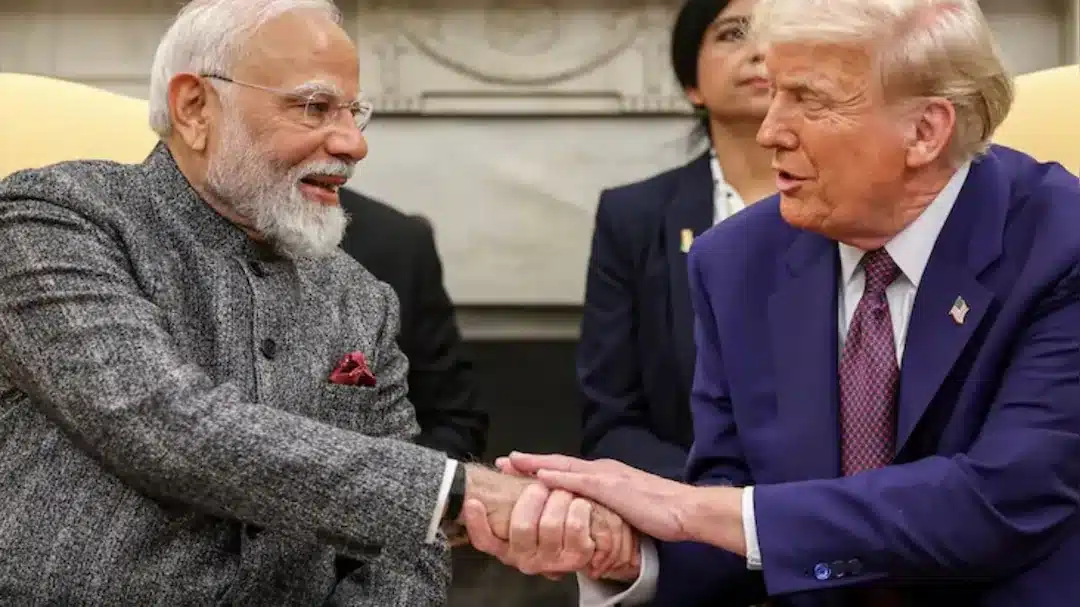
In a statement made earlier, President Trump asserted that the trade deal with India would not change despite the new tariffs. He emphasized that India would continue to pay tariffs while the US would not incur additional charges. Trump described the arrangement as a reversal of previous terms, suggesting that India had previously benefited at the expense of the United States. He praised Indian Prime Minister Narendra Modi, calling him a “great gentleman” but also indicated that the trade dynamics had shifted in favor of the US. This statement aligns with the ongoing discussions between the two nations, as a delegation from India is expected to travel to the US soon to finalize an interim trade deal.
Legal Challenges and Future Implications
The imposition of the new tariff follows a significant legal setback for President Trump, as the Supreme Court’s ruling challenged the legality of his global tariffs. Trump labeled the court’s decision as a “terrible ruling” and responded by invoking Section 122 of the Trade Act of 1974, which allows for temporary import surcharges to address balance-of-payments deficits. The executive order he signed aims to impose a 10 percent global tariff, effective immediately, in addition to existing tariffs. This move is seen as part of Trump’s ongoing efforts to reshape US trade policy and address what he perceives as imbalances in international trade agreements.
Next Steps for US-India Trade Relations
As the situation unfolds, the US and India are poised to engage in further discussions regarding their trade relationship. The recent announcement of a trade deal between Trump and Modi indicates a willingness to negotiate and find common ground. The upcoming visit by an Indian delegation to the US is anticipated to be a critical step in solidifying the interim trade agreement. Both nations will need to navigate the complexities introduced by the new tariffs while seeking to enhance their economic partnership. The outcome of these negotiations will likely have significant implications for trade dynamics between the two countries in the future.
Observer Voice is the one stop site for National, International news, Sports, Editor’s Choice, Art/culture contents, Quotes and much more. We also cover historical contents. Historical contents includes World History, Indian History, and what happened today. The website also covers Entertainment across the India and World.
Follow Us on Twitter, Instagram, Facebook, & LinkedIn

