

Indian Railways Launches Major Projects to Enhance Connectivity

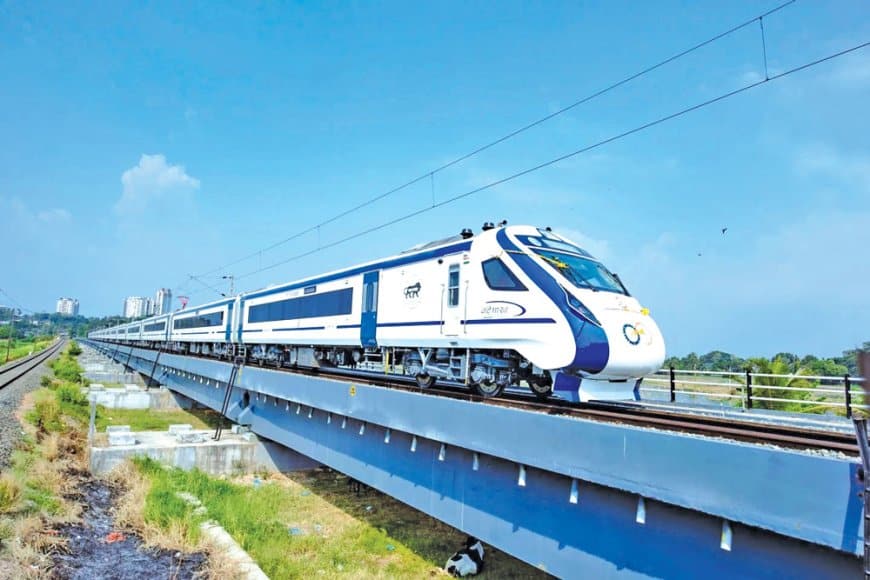
In a significant move to bolster India’s railway network and improve regional connectivity, Indian Railways has approved several key infrastructure projects. These initiatives, which include the construction of third lines, doubling of existing tracks, and implementing bypass alignments, are aimed at enhancing operational efficiency, improving safety, reducing travel times, and promoting economic growth. By doing so, Indian Railways is set to benefit millions of passengers and facilitate seamless mobility across vital transport corridors.
Third Line Between Aunrihar and Varanasi City
The North Eastern Railway has received a boost with the approval of a dedicated third line stretching 31.36 kilometers between Aunrihar and Varanasi City, with an investment of ₹497.07 Crore. This busy route currently experiences heavy passenger and freight traffic, particularly for essential commodities such as cement, coal, food grains, iron, steel, and industrial materials. The introduction of a third line will allow for an increase of 7.13 trains in each direction daily and accommodate a freight traffic growth of 1.99 million tons per annum (MTPA). With this project, the line’s capacity will be raised from 87.93% to an impressive 102%, alleviating congestion and enhancing punctuality for the millions who rely on this corridor. The upgrade will also significantly improve logistics efficiency for local industries, thereby reinforcing trade corridors throughout eastern Uttar Pradesh and neighboring regions.
Doubling of the Ringas-Sikar Line
In a parallel effort, ₹470.34 Crore has been sanctioned for the doubling of the Ringas–Sikar line in Rajasthan under North Western Railway. This upgrade, covering 50.06 kilometers, will enhance capacity on this vital route, allowing for an additional five trains in each direction daily and an increased freight traffic of about 2.36 MTPA. The new work will enhance reliability and speed for both passenger and freight services, improving connectivity across Rajasthan’s industrial zones and pilgrimage sites, including key destinations like Khatu Shyamji and Salasar Balaji. With current capacity utilization at 77%, the project is projected to elevate this to a staggering 210% by 2029–30, accommodating future traffic growth and supporting local businesses and employment.
Ujjain Bypass Line Development
Lastly, a new bypass line connecting Naikheri to Chintaman Ganesh in Madhya Pradesh has been approved at a cost of ₹189.04 Crore. This 8.60 km Ujjain bypass project under Western Railway will enable a critical diversion that eliminates the necessity for train reversals at Ujjain Junction. This change will significantly boost sectional capacity and operational efficiency. The process is especially important as it will cater to the substantial religious and tourist traffic, particularly in light of the upcoming Simhastha Kumbh Mela in 2028. By facilitating smoother train movements for the thousands of devotees visiting Mahakaleshwar Jyotirlinga and other holy places, the elimination of train reversals will help reduce delays, especially during peak times. Local commuters, tourists, and freight services will all benefit from improved reliability and faster travel.
Collectively, these projects illustrate Indian Railways’ unwavering commitment to fostering inclusive and sustainable transport development. By bridging existing connectivity gaps and enhancing service reliability, the Indian Railways is taking significant strides towards creating a modern, efficient, and citizen-focused railway system.
Observer Voice is the one stop site for National, International news, Sports, Editor’s Choice, Art/culture contents, Quotes and much more. We also cover historical contents. Historical contents includes World History, Indian History, and what happened today. The website also covers Entertainment across the India and World.
Follow Us on Twitter, Instagram, Facebook, & LinkedIn

