

Impact of Tariffs on US Economy: Analyzing Donald Trump’s ‘America First’ Strategy

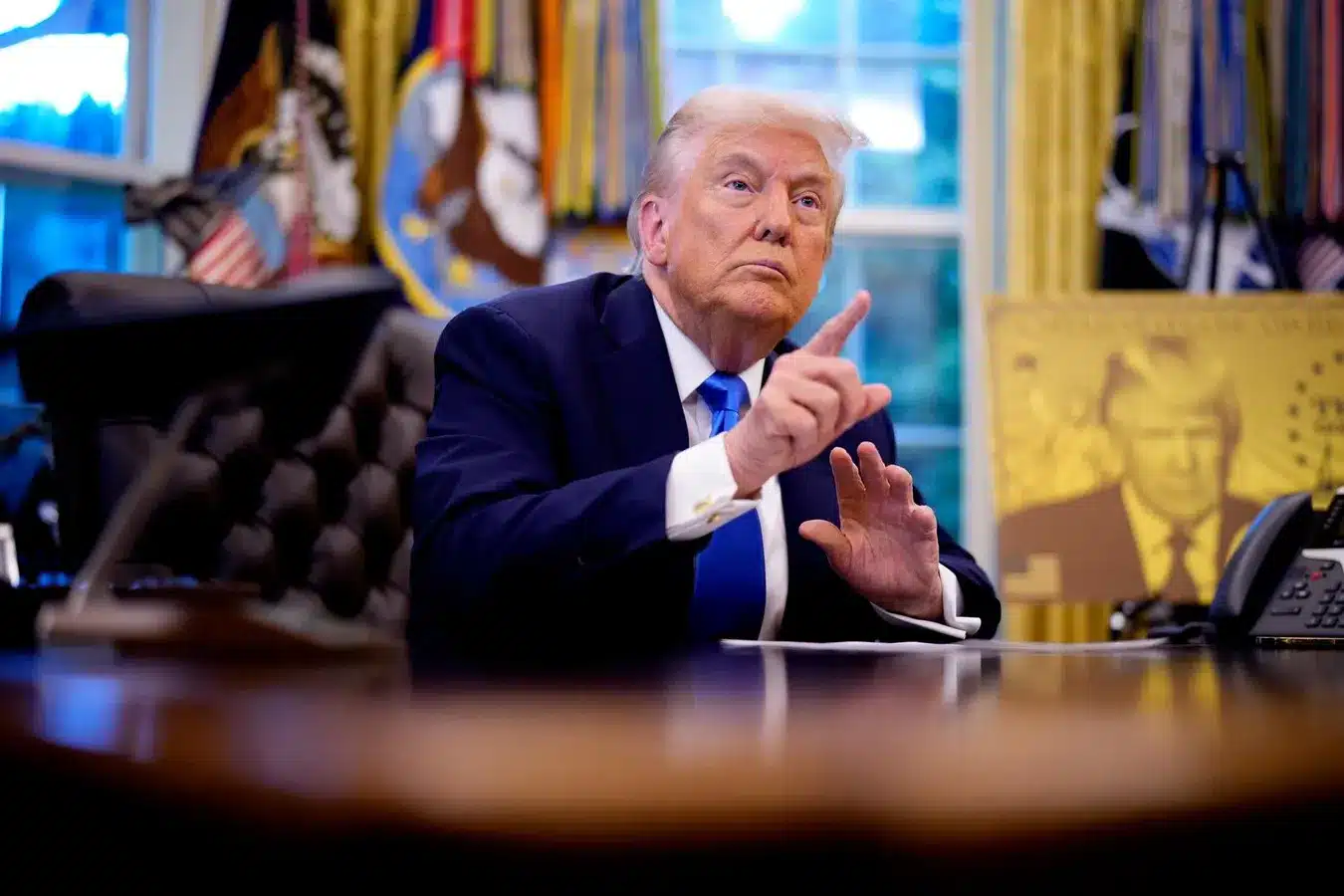
US President Donald Trump has positioned his expansive tariff policy as a vital measure to safeguard American workers and bolster domestic manufacturing, framing it as a key element of his “America First” agenda. Since his return to office this year, the Trump administration has witnessed an unprecedented rise in tariff revenues, with collections reaching $215.2 billion in Fiscal Year 2025. The surge continued into October, which alone saw a record intake of $34.2 billion. However, while the administration touts these figures as a success, economic analyses suggest a disconnect between the intended benefits of tariffs and their actual impact on American consumers and businesses.
The Economic Logic of Tariffs: A Closer Look
At the heart of Trump’s tariff strategy lies the assumption that foreign producers will bear the majority of the costs. However, the reality is more complex. Tariffs function as a tax on imports, and unless foreign exporters significantly reduce their prices, the financial burden tends to shift to American consumers and businesses. This phenomenon, known as tax incidence, reveals that in the current global supply chain, the costs of tariffs are largely absorbed domestically.
Data from Goldman Sachs indicates that by mid-2025, American consumers were shouldering about 22% of the tariff costs, while businesses faced approximately 64%. Foreign exporters contributed a mere 14%. Projections suggest that by the end of the year, consumers could be responsible for around 55% of these costs, with businesses taking on 22% and foreign exporters slightly increasing their share to 18%. This trend underscores the reality that, contrary to political assertions, the economic weight of tariffs predominantly falls on American households.
Understanding the Pass-Through Mechanism
The Federal Reserve’s analysis of tariffs implemented in early 2025 provides insight into how these costs permeate the economy. A study focused on tariffs on imports from China revealed that the costs were quickly passed on to consumer goods prices, often within two months of implementation. The Federal Reserve predicted that a 10 percentage-point increase in tariffs would lead to price hikes across various goods, with many categories experiencing at least a 1% increase.
By August 2025, the cumulative impact of these tariffs was significant, contributing to 0.5 percentage points of annual inflation. Former IMF Deputy Managing Director Gita Gopinath noted that while tariff revenues have increased, they have done so at the expense of American businesses and consumers, leading to higher prices on everyday items. A comprehensive analysis from Yale Budget Lab estimated that the tariffs would result in a 1.2% increase in consumer prices, translating to an average income loss of approximately $1,700 per household in 2025.
Consumer Reactions and Economic Scenarios
The imposition of tariffs has led to varied consumer responses, primarily characterized by acceptance of higher prices. For instance, the Yale Budget Lab found that tariffs significantly impacted clothing and textiles, with prices for shoes and apparel soaring by 40% and 36%, respectively. This regressive impact disproportionately affects lower-income households, which allocate a larger portion of their income to essential goods.
Additionally, economic uncertainty stemming from tariff increases has been shown to suppress consumer spending, leading to a temporary demand shock. The San Francisco Federal Reserve’s analysis indicated that unemployment rates could rise by approximately 0.5-0.6 percentage points due to these tariff hikes. Over time, however, the economy tends to adjust, with inflation peaking three years after the initial tariff changes, highlighting the delayed consequences of such policies.
The Supply Chain Complications and Future Implications
Tariffs on imported components have created significant challenges for American manufacturers who rely on these inputs for production. A World Bank analysis of the US-China trade conflict illustrated that tariffs on Chinese intermediate goods adversely affect US exports, output, and employment. This situation leads to cascading cost increases, as companies face tariffs on essential production inputs like semiconductors and steel, which they cannot easily replace with domestic alternatives.
Despite the surge in tariff revenues, the economic implications suggest a troubling trade-off. While the government benefits from increased revenue, the overall economic output and consumer welfare are adversely affected. As the administration grapples with these contradictions, the sustainability of its “America First” narrative may hinge on its ability to address the growing economic costs imposed on American households.
Observer Voice is the one stop site for National, International news, Sports, Editor’s Choice, Art/culture contents, Quotes and much more. We also cover historical contents. Historical contents includes World History, Indian History, and what happened today. The website also covers Entertainment across the India and World.
Follow Us on Twitter, Instagram, Facebook, & LinkedIn

