

Farmers Raise Concerns Over Animal Feed and Soybean Oil Imports in India-US Trade Deal

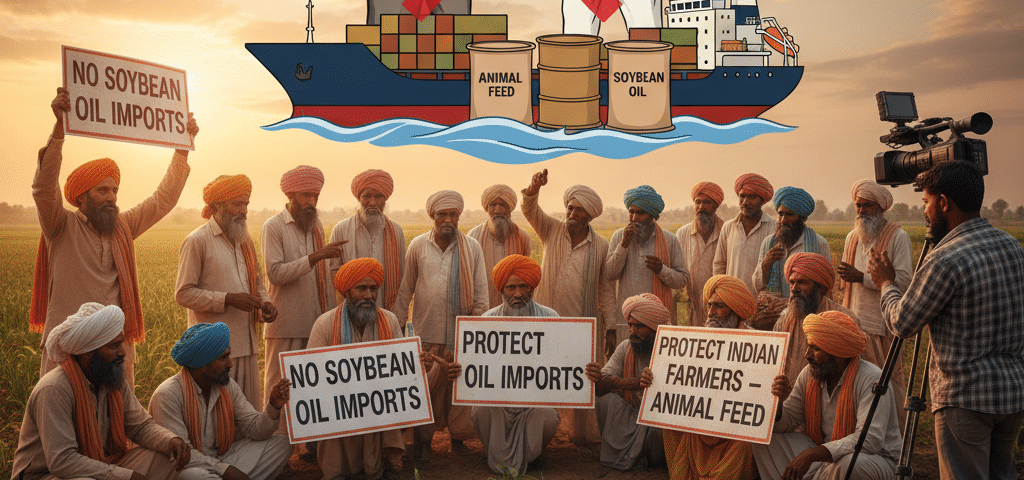
India has made a significant decision regarding its agricultural imports, allowing the importation of dried distillers’ grains (DDGs) and red sorghum for animal feed while maintaining its protection on genetically modified (GM) corn and soybean from the United States. This move, aimed at benefiting the livestock sector, has sparked controversy among farm organizations, which express concerns over the potential impact of these imports on local farmers and the agricultural landscape. The government insists that all crops remain safe and that the interests of Indian farmers are being prioritized.
Concerns Over Genetically Modified Imports
The recent approval for importing animal feeds, particularly DDGs and red sorghum, has raised eyebrows among various farm organizations in India. Critics argue that the DDGs will predominantly originate from genetically modified corn produced in the United States. In India, DDGs are typically derived from maize and rice, but the quality is often deemed unsuitable for feeding broiler chickens and dairy cattle. In contrast, the U.S. offers a higher quality and more affordable option, as DDGs are a byproduct of corn ethanol production. This disparity has led to fears that the introduction of U.S. DDGs could undermine local production and affect the livelihoods of Indian farmers.
Government’s Justification and Clarifications
Commerce and Industry Minister Piyush Goyal defended the decision to allow DDG imports, stating that the move was made at the request of the animal husbandry sector. However, farm groups have raised alarms over the inclusion of soybean oil in the import list, citing concerns about the transgenic varieties produced in the U.S. They argue that this could adversely affect millions of soybean farmers in India. The Bharatiya Kisan Sangh, linked to the Rashtriya Swayamsevak Sangh, has also called for clarification on the matter, expressing strong opposition to the import of GM food and feed products.
Goyal reassured the public that all traces of genetic modification are eliminated during the processing of these products. He emphasized that the agreement with the U.S. explicitly states that GM food will not be permitted in India. This assurance aims to alleviate concerns among farmers regarding the safety of their crops and the integrity of the agricultural sector.
Impact on Local Farmers and Agricultural Practices
The introduction of DDGs and red sorghum imports is expected to have a significant impact on local farmers who cultivate crops for animal feed. Organizations representing farmers have voiced concerns that these imports could diminish the incomes of those growing fodder and feed crops. Mohini Mohan Mishra, the all-India general secretary of the Bharatiya Kisan Sangh, has urged the government to clarify its position on these imports to ensure that the interests of local farmers are protected.
The government maintains that the agreement with the U.S. safeguards the interests of Indian farmers across various crops, including basmati rice, spices, and textiles. Agriculture Minister Shivraj Singh Chouhan reiterated that no genetically modified maize, wheat, rice, soybean, poultry products, milk, cheese, ethanol, fuel, or tobacco will be imported from the U.S. This statement aims to reassure farmers that their livelihoods will not be jeopardized by the new import policies.
Future Implications for Agricultural Trade
As India navigates its agricultural trade agreements, the recent decision to allow imports of DDGs and red sorghum reflects a balancing act between enhancing the livestock sector and addressing the concerns of local farmers. The ongoing debate highlights the complexities of agricultural policy in a country where farming is a vital part of the economy and culture. The government’s commitment to ensuring the safety of crops and the livelihoods of farmers will be crucial as it moves forward with these trade agreements. The outcome of this situation will likely shape the future of agricultural imports and the dynamics of the farming community in India.
Observer Voice is the one stop site for National, International news, Sports, Editor’s Choice, Art/culture contents, Quotes and much more. We also cover historical contents. Historical contents includes World History, Indian History, and what happened today. The website also covers Entertainment across the India and World.

