

Ezra Pound: Modernist poet and controversial figure

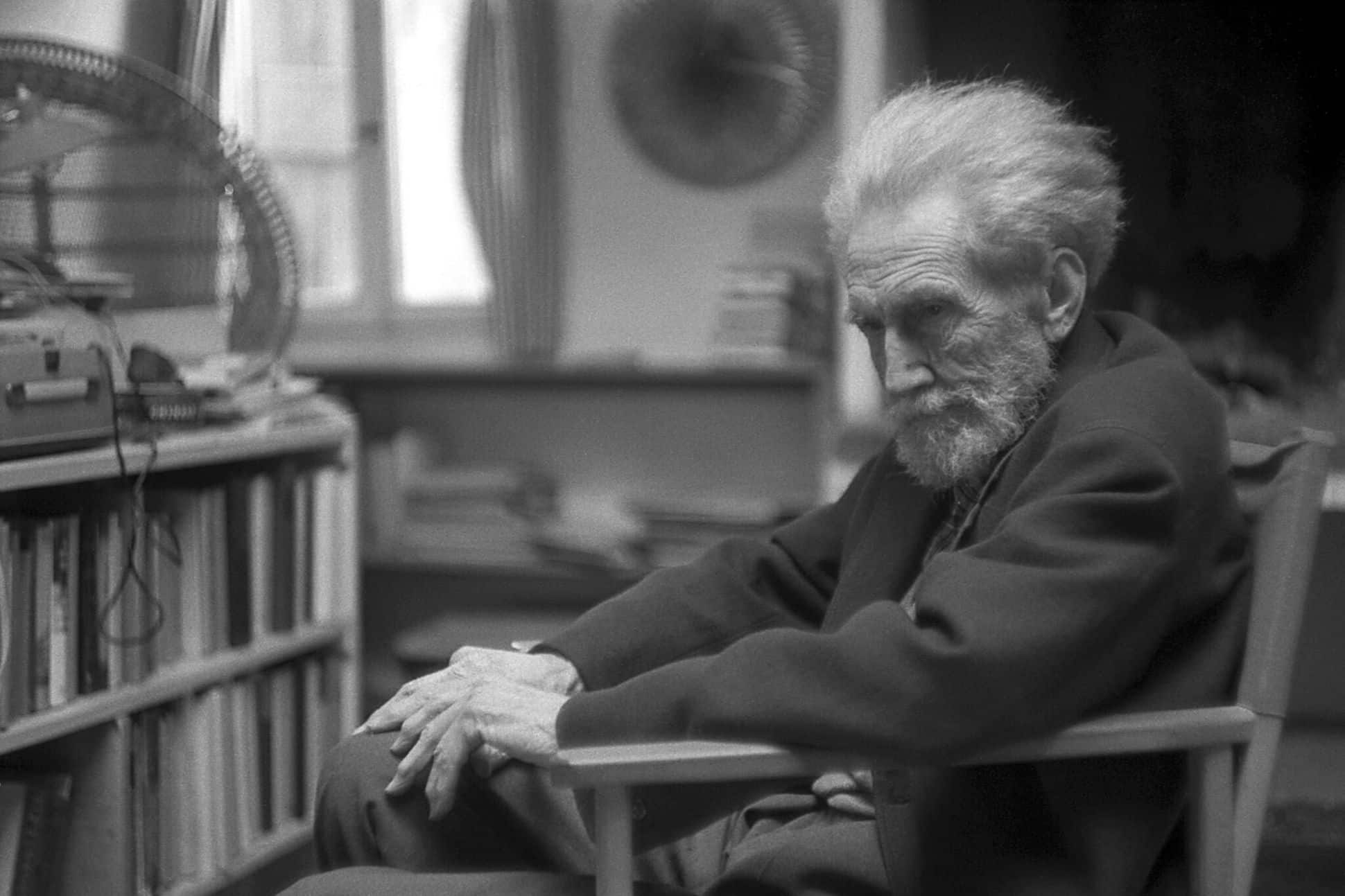
Ezra Weston Loomis Pound (30 October 1885 – 1 November 1972) was an American poet and critic who became a major figure in early modernist poetry. He is best known for his role in developing Imagism and for his long poem The Cantos, though his legacy remains deeply controversial due to his fascist activities during World War II.
Early Life and Education
Pound was born in Hailey, Idaho Territory, the only child of Homer Loomis Pound and Isabel Weston. His paternal grandfather, Thaddeus Coleman Pound, was a Republican member of the U.S. House of Representatives and the 10th lieutenant governor of Wisconsin. Both sides of Pound’s family traced their ancestry to 17th-century English immigrants.
When Pound was 18 months old, his mother took him to New York, and the family eventually settled in Jenkintown, Pennsylvania. His first publication appeared on 7 November 1896 in the Jenkintown Times-Chronicle—a limerick about William Jennings Bryan, written when he was 11 years old. He attended Cheltenham Military Academy from 1897 to 1900 and made his first overseas trip in 1898, visiting England, Belgium, Germany, Switzerland, Italy, Spain, and Morocco.
Pound was admitted to the University of Pennsylvania at age 15 in 1901, where he majored in Latin but earned mostly poor grades. He transferred to Hamilton College in Clinton, New York, in 1903 and graduated with a PhB in 1905. At Penn he fell in love with Hilda Doolittle (later known as H.D.) and hand-bound 25 of his poems for her as Hilda’s Book. After receiving his MA in Romance languages in 1906, he began doctoral work on jesters in the plays of Lope de Vega, but left without finishing his doctorate in spring 1907 after his fellowship was not renewed. From September 1907 he taught French and Spanish at Wabash College in Crawfordsville, Indiana, until he was dismissed in January 1908 after his landladies found a woman in his room.
Career and Achievements
Pound sailed for Europe in March 1908 and arrived in Gibraltar on 23 March. By the end of April he was in Venice, where he self-published his first poetry collection, A Lume Spento, in July 1908. The 72-page book contained 44 poems and was dedicated to a deceased university friend, William Brooke Smith.
Working in London as foreign editor of several American literary magazines, Pound became instrumental in shaping modernist poetry. He helped discover and develop the work of H.D., Robert Frost, T. S. Eliot, Ernest Hemingway, and James Joyce. He was responsible for the 1914 serialization of Joyce’s A Portrait of the Artist as a Young Man, the 1915 publication of Eliot’s “The Love Song of J. Alfred Prufrock,” and the serialization of Joyce’s Ulysses beginning in 1918. His contribution to poetry centered on developing Imagism, a movement emphasizing precision and economy of language. Hemingway wrote in 1932 that for poets of his generation, not to be influenced by Pound would be “like passing through a great blizzard and not feeling its cold.”
Pound’s published works include Ripostes (1912), Hugh Selwyn Mauberley (1920), and The Cantos, which he worked on from circa 1915 to 1962. Angered by World War I’s carnage, he blamed the war on finance capitalism, which he termed “usury.” He moved to Italy in 1924 and through the 1930s and 1940s promoted social credit economics, wrote for publications owned by British fascist Oswald Mosley, and embraced Benito Mussolini’s fascism and Adolf Hitler’s ideology.
During World War II, Pound recorded hundreds of paid radio propaganda broadcasts for the fascist Italian government and its later incarnation as a German puppet state. In these broadcasts he attacked the United States government, Franklin D. Roosevelt, Britain, international finance, the arms industry, Jews, and others, while urging American G.I.s to surrender. He also praised eugenics and the Holocaust in Italy.
In 1945, Pound was captured by the Italian Resistance and handed over to the U.S. Army’s Counterintelligence Corps. He spent months in a U.S. military detention camp near Pisa, including three weeks in an outdoor steel cage. While in custody, he continued work on The Cantos. Ruled mentally unfit to stand trial on a treason indictment, he was incarcerated for over 12 years at St. Elizabeths Hospital in Washington, D.C.
Notable Events and Milestones
The Pisan Cantos, new work Pound completed while in military custody in Italy, was published by New Directions in 1948. This publication led to his winning the Bollingen Prize for Poetry in 1949 from the American Library of Congress, a decision that provoked enormous controversy. After a campaign by fellow writers, he was released from St. Elizabeths in 1958 and returned to Italy. Upon his return, he posed for the press giving the Fascist salute and called the United States “an insane asylum.” Pound remained in Italy until his death in 1972.
Awards and Honors
Pound received the Bollingen Prize for Poetry in 1949 for The Pisan Cantos.
Additional Resources
More detailed information about Ezra Pound’s life, works, and controversial legacy is available through Wikipedia and other biographical archives, which document both his significant contributions to modernist literature and the complex historical record of his political activities.

