

Alfred Jarry: Pioneer of Absurdist Theatre

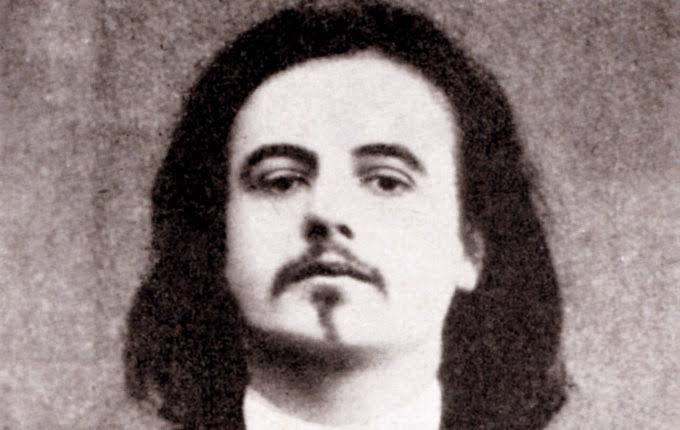
Alfred Jarry (8 September 1873 – 1 November 1907) was a French symbolist writer best known for his play Ubu Roi (1896), often cited as a forerunner of the Dada, Surrealist, and Futurist movements of the 1920s and 1930s and later the theatre of the absurd in the 1950s and 1960s. He also coined the term and philosophical concept of ‘pataphysics.
Early Life and Education
Jarry was born in Laval, Mayenne, France, though his mother was from Brittany. His father Anselme Jarry was a salesman who descended into alcoholism; his mother Caroline was interested in music and literature. In 1879 Caroline left Anselme and took the children to Saint-Brieuc in Brittany. The family moved to Rennes in 1888, where Jarry entered the lycée at 15.
At school, Jarry and his classmate Henri Morin wrote a play called Les Polonais featuring a character named Père Heb, a blunderer with a huge belly and misshapen body who would later develop into Ubu. At 17 Jarry passed his baccalauréat and moved to Paris to prepare for admission to the École Normale Supérieure, though he was not admitted. A collection of his work, Les minutes de sable mémorial, was published in 1893.
In 1893, Jarry contracted influenza. His mother died from the disease during his recovery, and his father perished from it two years later, leaving Jarry a small inheritance. Jarry discovered a passion for alcohol, which he called “my sacred herb” or, when referring to absinthe, the “green goddess.” When drafted into the army in 1894, his diminutive stature—less than five feet—meant the army could not issue him a properly fitting uniform. The sight of him in oversized military dress was so disruptively funny that he was excused from parades and marching drills, and he was eventually discharged for medical reasons. His military experience inspired his novel Days and Nights.
Career and Achievements
Jarry returned to Paris and devoted himself to writing, drinking, and the company of friends who appreciated his witty conversation. He became intensely involved with Remy de Gourmont in publishing L’Ymagier, a luxuriously produced art magazine devoted to symbolic analysis of medieval and popular prints. His play Caesar Antichrist (1895) drew on the Symbolist movement and introduced the character Père Ubu, who would become central to his most famous work.
In spring 1896, Ubu Roi was published in Paul Fort’s review Le Livre d’art. The play was a rewritten and expanded version of his school-day Les Polonais. Theatre director Aurélien-Marie Lugné-Poe produced it at his Théâtre de l’Œuvre on 10 December 1896. The opening night erupted in pandemonium when King Ubu (played by Firmin Gémier) intoned the opening word, “Merdre!”—outraged cries and booing from traditionalists countered by cheers from the avant-garde. Only the dress rehearsal and opening night were held; the play was not revived until after Jarry’s death.
The play brought fame to the 23-year-old Jarry, who immersed himself in the fiction he had created. Gémier had modelled his portrayal of Ubu on Jarry’s own staccato, nasal vocal delivery, and Jarry adopted this style permanently, along with Ubu’s ridiculous figures of speech—referring to himself using the royal we and calling the wind “that which blows” and his bicycle “that which rolls.”
With Franc-Nohain and Claude Terrasse, Jarry co-founded the Théâtre des Pantins, which in 1898 hosted marionette performances of Ubu Roi. Living in worsening poverty and drinking excessively, he wrote the novel Le Surmâle (The Supermale), partly a satire on the Symbolist ideal of self-transcendence. His fiction Exploits and Opinions of Dr. Faustroll, Pataphysician, unpublished until after his death, describes an antiphilosopher who travels through a hallucinatory Paris and subscribes to ‘pataphysics, which deals with “the laws which govern exceptions and will explain the universe supplementary to this one.” In ‘pataphysics, every event in the universe is accepted as an extraordinary event. In 1969, Paul McCartney used the word “pataphysical” in his song “Maxwell’s Silver Hammer.”
In his final years, Jarry became the interest of multiple young writers and artists of Paris, including Guillaume Apollinaire, André Salmon, Max Jacob, and Pablo Picasso. After Jarry’s death, Picasso acquired his revolver and wore it on nocturnal expeditions in Paris, later buying many of his manuscripts and executing a drawing of him.
Jarry died in Paris on 1 November 1907 of tuberculosis, aggravated by drug and alcohol abuse. When he could not afford alcohol, he drank ether. His last request was for a toothpick. He was interred in the Cimetière de Bagneux, near Paris.
Additional Resources
More detailed information about Jarry’s life, works, and influence on modern theatre and philosophy is available through Wikipedia and other biographical archives. The complete works of Alfred Jarry are published in three volumes by Gallimard in the collection Bibliothèque de la Pléiade.

