

Chronic Lymphocytic Leukemia (CLL): What to Expect After Diagnosis

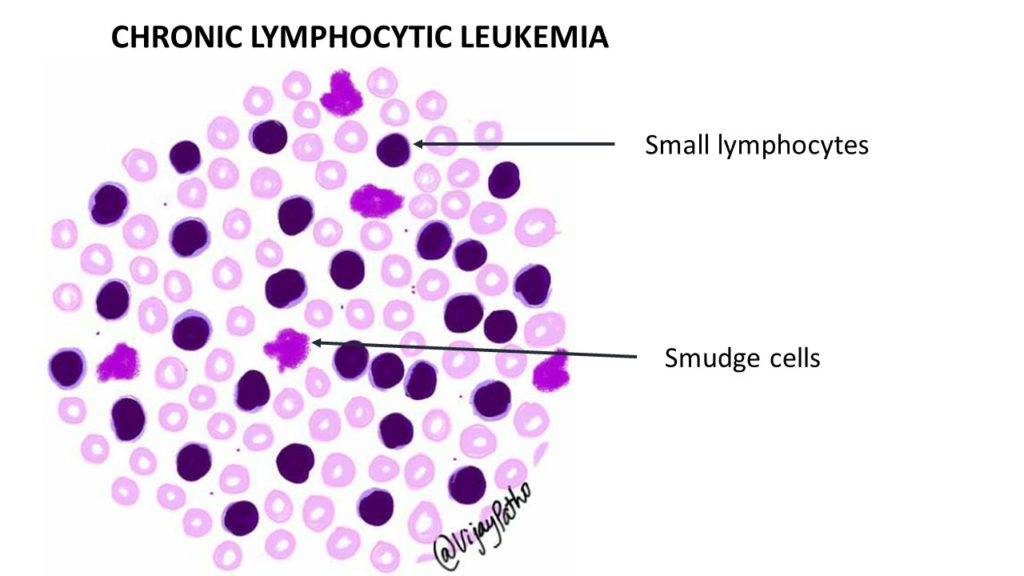
When 67-year-old Robert’s routine blood work showed elevated white blood cells, his doctor ordered additional tests. The diagnosis came back: chronic lymphocytic leukemia (CLL). “I panicked,” Robert recalled. “I thought I’d need chemotherapy immediately.” His oncologist surprised him: “We’re going to watch and wait. You don’t need treatment yet—maybe never.” This common scenario confuses many newly diagnosed patients who expect immediate intervention for cancer.
Chronic lymphocytic leukemia (CLL) is the most frequent type of leukemia. It typically occurs in older patients and has a highly variable clinical course. Only patients with active or symptomatic disease or with advanced Binet or Rai stages require therapy PubMednih.
It displays remarkable clinical heterogeneity, ranging from an indolent disease with no requirement for treatment in some patients to rapid disease progression and subsequent treatment refractoriness in others. Taking into account that the majority of patients do not require treatment at diagnosis but, rather, a ‘watch and wait’ strategy, the first main aim is to accurately assess the risk of developing a progressive disease in need of therapy nih.
Understanding The Watch-And-Wait Approach
Unlike acute leukemias that demand immediate treatment, CLL progresses slowly in most patients. Many live for years—even decades—without symptoms or need for therapy. The watch-and-wait strategy involves regular monitoring with physical exams and blood counts every 3-12 months, intervening only when the disease becomes active or symptomatic.
Treatment indicators include: worsening anemia or thrombocytopenia (low blood counts); rapidly enlarging lymph nodes or spleen causing discomfort; constitutional symptoms like drenching night sweats, unintentional weight loss exceeding 10% over 6 months, or severe fatigue; frequent infections from impaired immune function; or lymphocyte doubling time under 6 months indicating aggressive disease.
Eight hundred patients with untreated-stage Binet A disease were enrolled and assessed for four prognostic markers: lymphocyte doubling time <12 months, serum thymidine kinase >10 U/L, unmutated IGHV genes, and unfavorable cytogenetics. After median observation time of 55.6 months, event-free survival was significantly prolonged in early treatment compared with watch-and-wait patients. There was no significant overall survival benefit nih. Even high-risk early-stage patients showed no survival advantage with immediate treatment—validating watch-and-wait for asymptomatic disease.
The Treatment Revolution: Beyond Chemotherapy
For five decades, CLL treatment meant chemotherapy—often fludarabine, cyclophosphamide, and rituximab (FCR)—with significant toxicity and limited benefit in older patients. Then came targeted therapy. In the decade since FDA approval of the first-generation Bruton’s tyrosine kinase (BTK) inhibitor ibrutinib, the treatment landscape for chronic lymphocytic leukemia has transformed. Targeted agents, as monotherapy or in combination regimens, have decisively replaced chemoimmunotherapy as the standard of care. In national CLL guidelines updated from 2023 through 2025, chemoimmunotherapy is considered a treatment option in only exceptional cases Nature.
When treatment is indicated, several therapeutic options exist: combinations of the BCL2 inhibitor venetoclax with obinutuzumab, or venetoclax with ibrutinib, or monotherapy with one of the inhibitors of Bruton tyrosine kinase (BTK). Combinations of targeted agents now provide efficient therapies with a fixed duration that generate deep and durable remissions nih.
BTK inhibitors—ibrutinib, acalabrutinib, zanubrutinib—block a protein essential for CLL cell survival. Taken as continuous daily pills, they control disease for years. With a median follow-up of 60 months, progression-free survival estimates at 5 years: 70% with ibrutinib versus 12% with chemotherapy; overall survival estimates at 5 years: 83% versus 68%. Ibrutinib benefit was consistent in patients with high prognostic risk (TP53 mutation, 11q deletion, and/or unmutated IGHV) Nature.
Second-generation BTK inhibitors (acalabrutinib, zanubrutinib) offer similar efficacy with fewer cardiovascular side effects than ibrutinib—particularly lower rates of atrial fibrillation and hypertension.
Fixed-Duration Therapy: A Game-Changer
The newest advance combines venetoclax (a BCL-2 inhibitor that forces CLL cells into programmed death) with either obinutuzumab (an antibody) or BTK inhibitors for fixed 12-month treatment courses. Previously untreated CLL patients received three cycles of ibrutinib and then 12 cycles of combined ibrutinib plus venetoclax. After 12 cycles, best undetectable measurable residual disease response rates were 75% (peripheral blood) and 68% (bone marrow). Median follow-up was 31.3 months PubMed.
In the CLL14 trial, 926 fit patients were assigned to treatment arms including venetoclax/obinutuzumab. Three-year progression-free survival was 87.7% for venetoclax/obinutuzumab. Most patients achieved undetectable MRD after 1 year of treatment, and this persisted over time—even off therapy—and led to median progression-free survival of 76 months PubMed Central.
The advantage: patients stop therapy after one year if achieving deep remission (undetectable minimal residual disease), avoiding years of continuous medication, side effects, and cost. Many remain in remission for years without treatment. If disease returns, the same or different targeted therapy can be restarted.
Treatment Selection: Personalizing The Approach
The diagnosis is established by blood counts, blood smears, and immunophenotyping of circulating B-lymphocytes. Two clinical staging systems, Rai and Binet, provide prognostic information. Various biological and genetic markers provide additional prognostic information. Deletions of the short arm of chromosome 17 (del(17p)) and/or mutations of the TP53 gene predict a shorter time to progression with most targeted therapies nih.
Comprehensive testing identifies genetic features influencing treatment choice. TP53 disruption (occurring in 5-10% of previously untreated patients) confers resistance to chemotherapy and worse outcomes with some targeted therapies—these patients often receive continuous BTK inhibitor therapy. IGHV mutation status predicts disease aggressiveness: mutated IGHV portends slower progression; unmutated IGHV indicates more aggressive disease requiring earlier treatment.
Patient factors matter too. Older adults with comorbidities typically receive fixed-duration venetoclax-based regimens avoiding prolonged therapy. Younger, fit patients may choose continuous BTK inhibitor monotherapy or fixed-duration combinations. Cardiovascular disease history favors venetoclax combinations over BTK inhibitors prone to cardiac side effects.
The message: CLL diagnosis doesn’t mean immediate treatment. Many patients live normally for years under observation. When therapy becomes necessary, targeted agents—particularly fixed-duration combinations achieving deep remissions—have revolutionized outcomes while minimizing toxicity. From indefinite chemotherapy to one-year oral regimens achieving years-long remissions, CLL treatment has transformed completely.
References
- PMC. Chronic Lymphocytic Leukemia: 2025 Update on the Epidemiology, Pathogenesis, Diagnosis, and Therapy. https://www.ncbi.nlm.nih.gov/pmc/articles/PMC11803567/
- PMC. The Evolving Landscape of Chronic Lymphocytic Leukemia. https://www.ncbi.nlm.nih.gov/pmc/articles/PMC8151186/
- PMC. Early treatment with FCR versus watch and wait in CLL. https://www.ncbi.nlm.nih.gov/pmc/articles/PMC7387319/
- Blood Cancer Journal. First-line treatment for CLL in the era of targeted therapy. https://www.nature.com/articles/s41408-025-01434-2
- PMC. Chronic Lymphocytic Leukemia: Time-Limited Therapy. https://pmc.ncbi.nlm.nih.gov/articles/PMC10891251/
Observer Voice is the one stop site for National, International news, Sports, Editor’s Choice, Art/culture contents, Quotes and much more. We also cover historical contents. Historical contents includes World History, Indian History, and what happened today. The website also covers Entertainment across the India and World.

