

Report Highlights Need for Accelerated Growth and a Stronger Rupee for India to Achieve $20 Trillion Economy by 2036

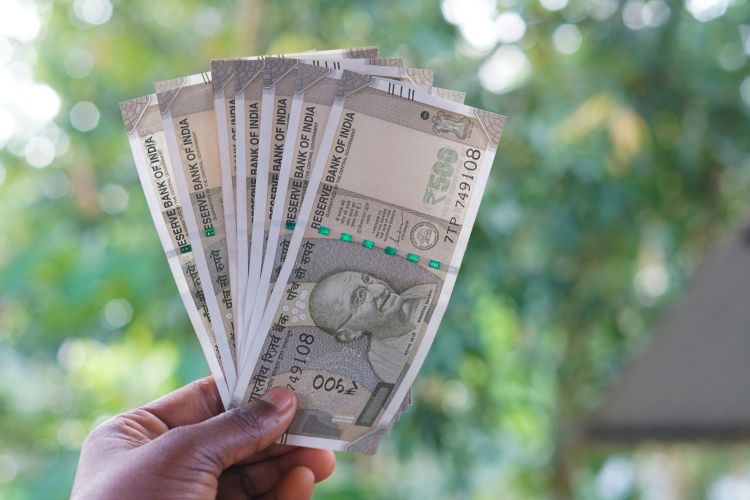
India could achieve a $20 trillion economy by 2036 if it raises underlying rupee growth to approximately 14.2% and maintains annual rupee appreciation of 3-3.6%, according to a report by domestic brokerage Equirus. The report outlines a 20-step reform agenda designed to enhance India’s growth trajectory, strengthen its external balance, and create favorable conditions for reaching this ambitious target. Currently, India’s economy is estimated at around $3.7 trillion, necessitating a roughly 5.5-fold expansion and sustained nominal dollar growth of about 18% annually, significantly above its historical trend of 10-11%.
Services need to drive India’s next phase of growth
Equirus emphasizes that the composition of India’s growth is as crucial as its pace, with services expected to be the primary driver of expansion. Currently, services contribute about 54% to GDP, but this figure must rise to over 65% as India approaches the $20 trillion milestone. The sector’s output would need to increase from roughly $2 trillion to more than $11 trillion. In contrast, manufacturing may face challenges due to a more protectionist global trade environment, while agriculture’s GDP share is projected to decline amid rapid urbanization.
India has already seen a notable acceleration in economic growth. It took 67 years post-independence to establish its first $2 trillion economy, while the economy nearly doubled in the decade following 2014.
20 reforms target taxes, capital markets and human capital
The proposed reform package encompasses various sectors, including the real economy, capital markets, human capital, services, and urban governance. Key measures suggested by Equirus include integrating fuel into the GST regime, establishing minimum capital-expenditure floors for states, listing the Railways, creating an Indian sovereign fund, expanding private education capacity, and revitalizing private-sector research and development.
The report also advocates for deeper corporate bond markets and strategies to alleviate tax-related working-capital pressures. Abolishing advance tax could potentially free up around Rs 10 trillion in working capital, while a shift to a flat 5% TDS could unlock an additional Rs 13.4 trillion. These reforms aim to boost economic activity and enhance the efficiency of capital deployment across the economy.
GCCs, tourism seen as major growth opportunities
The report highlights the potential of India’s services sector, particularly global capability centres (GCCs). A proposed National GCC policy could increase the number of GCCs in India from over 1,800 to 5,000, potentially generating an economic impact of $470-600 billion and creating 20-25 million jobs, according to Equirus.
Tourism is identified as another area with significant growth potential. Enhanced promotion of the sector could add approximately $21 billion annually in foreign exchange receipts. Overall, Equirus estimates that its reform package could yield about Rs 7.9 trillion in annual direct gains against costs of roughly Rs 3.4 trillion, resulting in an estimated net annual gain of Rs 4.5 trillion. The report cautions that achieving the $20 trillion target will depend on effective execution across multiple areas rather than any single policy measure.
Observer Voice is the one stop site for National, International news, Sports, Editor’s Choice, Art/culture contents, Quotes and much more. We also cover historical contents. Historical contents includes World History, Indian History, and what happened today. The website also covers Entertainment across the India and World.

