

What Is Biospecimen Collection and Why It Matters in Modern Research

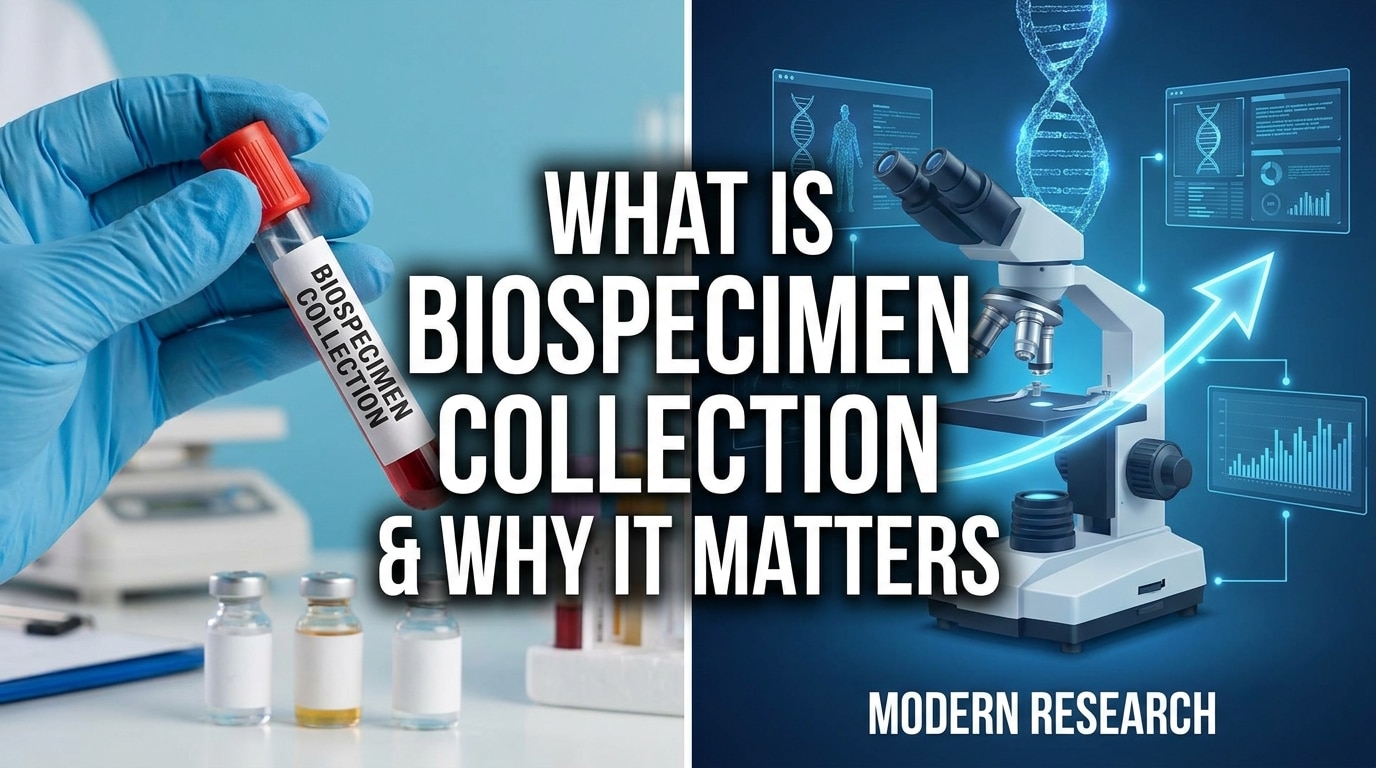
Modern biomedical research depends on access to high-quality human samples that accurately reflect real patient biology. From oncology and translational medicine to drug development and precision medicine, human biological materials remain the foundation of scientific discovery. This is where Biospecimen collection plays a critical role.
As healthcare research becomes increasingly personalized and data-driven, the demand for ethically sourced and clinically relevant biospecimens continues to grow worldwide.
Understanding Biospecimen Collection
Biospecimen collection refers to the process of obtaining, processing, documenting, and preserving biological materials collected from human donors for clinical and research applications.
Human biospecimens may include:
- blood and blood derivatives
- plasma and serum
- tumor tissues
- fresh frozen and FFPE samples
- PBMC and immune cell populations
- primary cells and cell cultures
- stem cells
- cerebrospinal fluid (CSF)
- saliva, urine, and other biological fluids
These materials are used extensively in biomedical studies to better understand disease mechanisms, identify biomarkers, develop diagnostics, and evaluate new therapies.
High-quality Biospecimens for Research provide scientists with access to real-world biological information that cannot be replicated by artificial systems alone.
Why Biospecimen Collection Matters
The success of many scientific programs depends directly on the quality and relevance of collected samples.
Poorly documented, improperly handled, or low-quality samples may affect study reproducibility and compromise research outcomes. In contrast, well-annotated and ethically sourced biospecimens improve the reliability of experimental data and accelerate scientific progress.
Today, biospecimen collection supports multiple research areas:
Oncology Research
Cancer research relies heavily on patient-derived materials such as tumor tissues, matched tumor and normal samples, blood biospecimens, and immune cell populations.
These samples help researchers:
- investigate tumor biology
- study the tumor microenvironment
- discover biomarkers
- evaluate therapeutic responses
- support precision oncology programs
Translational Research
Translational medicine bridges laboratory discoveries with clinical applications. Human biospecimens allow researchers to validate findings using real patient-derived materials and improve the relevance of preclinical studies.
Prospective and retrospective sample collection programs have become essential tools for translational research initiatives.
Drug Development
Pharmaceutical and biotechnology companies increasingly depend on human biospecimens during drug discovery and development.
Human samples support:
- target identification
- biomarker studies
- efficacy evaluation
- companion diagnostics development
- personalized medicine programs
Access to high-quality biological materials significantly improves decision-making during early-stage development.
Ethics and Quality Standards
Ethical sourcing has become one of the most important aspects of modern biospecimen programs.
Human samples should be collected through informed consent procedures and managed according to strict ethical and regulatory frameworks. Proper documentation, traceability, and quality control are essential to maintain research integrity.
Modern biospecimen programs often include:
- GCP-compliant workflows
- standardized SOPs
- sample traceability
- clinical annotation
- quality control procedures
- logistics management
These processes ensure that samples remain suitable for advanced biomedical applications.
The Future of Biospecimen-Based Research
The growing adoption of precision medicine, immunotherapy, and cell-based research continues to increase demand for high-quality human biospecimens.
Emerging fields such as biomarker discovery, regenerative medicine, immuno-oncology, and personalized therapeutics increasingly rely on human samples collected under robust scientific and ethical standards.
As biomedical innovation evolves, Biospecimen collection will remain a cornerstone of scientific progress by enabling access to reliable and clinically relevant materials.
Organizations providing Biospecimens for Research play an important role in supporting global research efforts by connecting clinical practice with scientific discovery and helping accelerate advances in healthcare worldwide.
Observer Voice is the one stop site for National, International news, Sports, Editor’s Choice, Art/culture contents, Quotes and much more. We also cover historical contents. Historical contents includes World History, Indian History, and what happened today. The website also covers Entertainment across the India and World.

