

Made-in-India Bullet Train Set to Operate on Ahmedabad-Mumbai Route by 2027

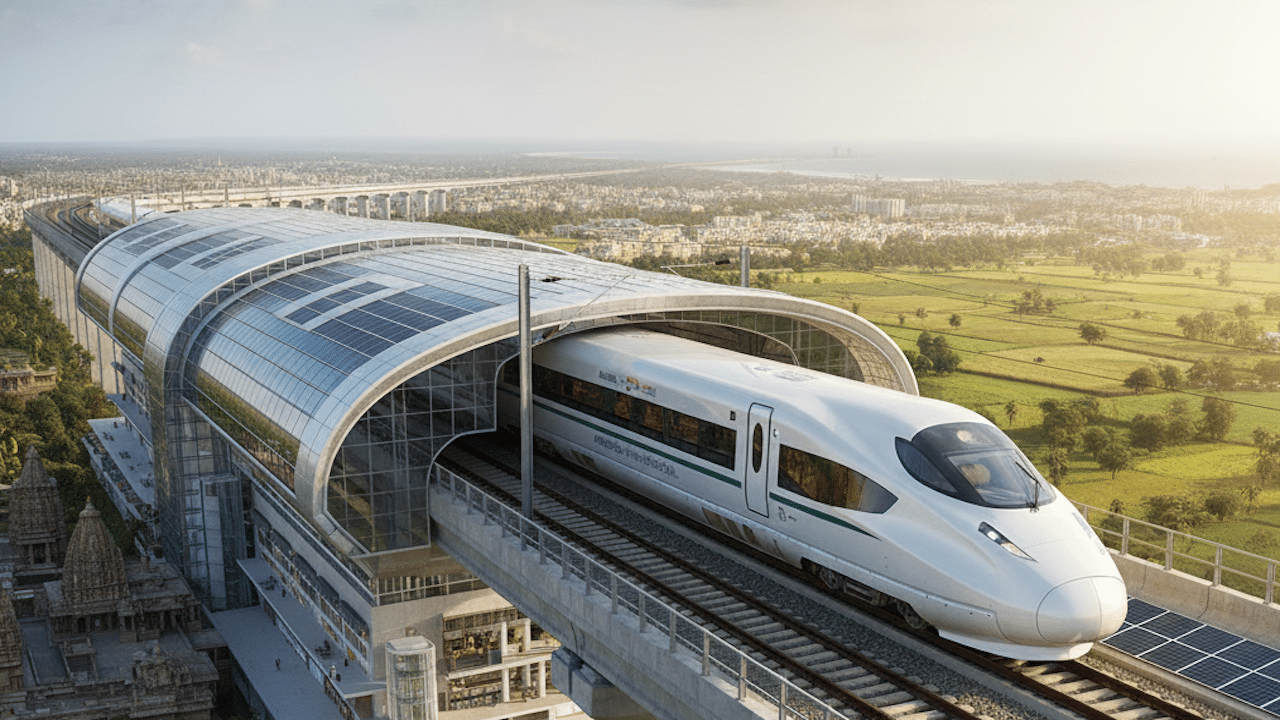
Now it’s official: the Indian Railways will operate the B28 bullet train on the first segment of the ambitious Ahmedabad-Mumbai bullet train project, set to launch in August 2027. The railway ministry has confirmed that the Surat to Vapi section, spanning 97 kilometers, will feature the domestically manufactured trainsets produced by BEML. This announcement comes from a parliamentary panel report that highlights the complexities and technological challenges of the Mumbai-Ahmedabad High-Speed Rail (MAHSR) project.
Operational Plans for the Bullet Train
The Indian Railways is gearing up to commence operations on the Surat to Vapi stretch of the bullet train project by August 2027. The parliamentary standing committee on railways received updates from the railway ministry, which emphasized the intricate nature of the MAHSR project. The ministry noted that the project involves significant technology transfer and procurement from Japan and other countries. While the development of the E10 series of Shinkansen trains is ongoing in Japan, the decision to utilize the B28 bullet trainset, which is being manufactured in India, has been finalized. This move reflects a commitment to bolster domestic manufacturing capabilities while advancing the high-speed rail initiative.
Progress on Project Components
In its report, the ministry informed the parliamentary panel that tenders for alternative signaling systems, specifically based on the European Train Control System Level 2 (ETCS L2), have been awarded, and work has already commenced. The manufacturing of the B28 trainsets is currently underway at BEML facilities. The ministry indicated that a clearer timeline for the project’s completion will emerge once all associated works—including civil structures, track installation, electrical systems, signaling, telecommunications, and trainset supply—are completed. The railway officials are optimistic about meeting the operational target for the Surat-Vapi section.
Cost Escalation Factors
The railway ministry also addressed concerns regarding the anticipated cost escalation of the project. Initially estimated at Rs 97,636 crore in December 2015, the project has faced significant increases due to various unforeseen factors. These include taxes and cess amounting to Rs 29,330 crore, utility shifting costs of Rs 2,625 crore, and expenses related to station approach development and power sourcing arrangements. The ministry highlighted that the rise in economic factors, such as inflation and increased land rates, has further contributed to the cost overruns. The revised cost estimate for the Mumbai-Ahmedabad High-Speed Rail Line is currently under sanction, reflecting the project’s evolving financial landscape.
Future Outlook
As the Indian Railways moves forward with the bullet train project, the focus remains on overcoming the challenges posed by technological complexities and cost management. The commitment to using domestically manufactured trainsets like the B28 is a significant step towards enhancing India’s infrastructure capabilities. With the anticipated operational launch in August 2027, stakeholders are keenly watching the progress of the Surat to Vapi section, which will serve as a critical milestone in the broader vision of high-speed rail connectivity in India.
Observer Voice is the one stop site for National, International news, Sports, Editor’s Choice, Art/culture contents, Quotes and much more. We also cover historical contents. Historical contents includes World History, Indian History, and what happened today. The website also covers Entertainment across the India and World.
Follow Us on Twitter, Instagram, Facebook, & LinkedIn

