

Ethanol Industry Confronts Challenges as Excess Capacity Impacts Green Fuel Strategy

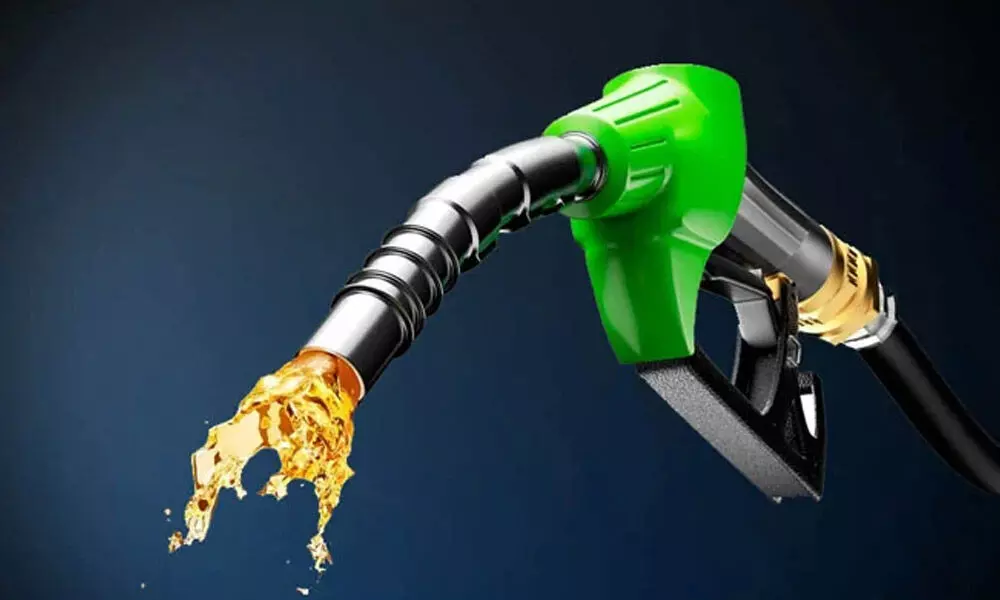
What was once hailed as a cornerstone of India’s transition to clean fuel is now facing a significant challenge: an oversupply of ethanol. With production capacity reaching nearly 20 billion liters—far exceeding the current blending requirement of about 11 billion liters—industry stakeholders are expressing concerns over the viability of investments in this sector. Distilleries are operating at only 25-30% capacity, prompting a pause in approvals for new plants as uncertainty looms over future demand.
Supply Surge Hits Mills, Farmers, and Investors
The excess capacity in the ethanol market is creating ripples throughout the supply chain, impacting sugar mills, grain processors, and farmers who had relied on ethanol as a reliable source of income. The All India Distillers’ Association (AIDA) reports that the ethanol industry has grown into a ₹50,000 crore sector, driven by ambitious government blending targets. However, slower-than-anticipated procurement by oil marketing companies has left many producers grappling with underutilized facilities and increasing inventories.
Deepak Ballani, director general of the Indian Sugar & Bio Energy Manufacturers Association, highlighted the challenges faced by distilleries, stating that many were established with the expectation that ethanol consumption would rise steadily. He emphasized the need for the government to increase blending rates and noted that no new distillery approvals are being granted until there is clarity on future demand. Plans to exceed the current E20 blending threshold have also been stalled due to public concerns regarding vehicle compatibility with higher ethanol blends. Although the government has dismissed these concerns, it has yet to provide a new timeline for increasing blending targets.
Consumers are also voicing their concerns, requesting price discounts for ethanol-blended fuel, which has a lower energy content compared to petrol. The oil ministry rejected these proposals in August, asserting that ethanol remains more expensive than petrol. As new distilleries begin operations in 2024-25, the growth in demand remains contingent on existing policy frameworks, according to AIDA.
Next Phase Hinges on Diesel Blending and Flex-Fuel Adoption
As blending with petrol appears to reach a plateau, the industry is now turning its focus to the potential of using ethanol in diesel. This transition poses technical challenges, as ethanol does not mix well with diesel, creating two separate layers that require a coupler chemical to maintain a stable blend. Officials from Indian Oil Corporation (IOCL) and Bharat Petroleum Corporation (BPCL) are currently exploring formulations for ethanol-blended diesel, but concerns about stability, engine compatibility, and long-term performance are still being evaluated.
Diesel represents a significant portion of India’s fuel consumption, powering various sectors such as freight transport, agriculture, and public transport. This makes any shift towards ethanol-blended diesel particularly sensitive. Meanwhile, automobile manufacturers are expressing that the uncertainty surrounding policies beyond E20 is hindering investments in flex-fuel vehicles (FFVs), which are designed to operate on higher ethanol blends.
A senior official from a car manufacturing company stated that while the production of flex-fuel vehicles is not a limiting factor, clarity in policy direction is essential for moving forward. AIDA has suggested promoting FFVs and reducing GST rates to stimulate adoption and increase domestic ethanol consumption. However, automakers remain cautious, questioning whether the necessary supply and distribution infrastructure for higher blends like E85 or E100 will be available.
Future Prospects and Industry Recommendations
Despite the challenges, no major car manufacturer has yet launched a mass-market flex-fuel vehicle, although prototypes have been displayed. Industry insiders have indicated that companies like Maruti Suzuki may soon introduce flex-fuel versions of popular models, while Tata Motors, Toyota Kirloskar Motor, and Mahindra & Mahindra have also showcased flex-fuel prototypes. Queries sent to these companies regarding their plans have gone unanswered.
Manufacturers argue that fiscal incentives similar to those provided for electric vehicles could significantly boost the commercial adoption of flex-fuel vehicles. Additionally, the compatibility of flex-fuel vehicles with tightening Corporate Average Fuel Efficiency (CAFE) norms could further encourage their development. However, the lower energy content of ethanol compared to petrol and diesel may slightly reduce fuel efficiency, a factor that policymakers must consider alongside investment risks and consumer acceptance.
As the ethanol industry navigates these complexities, the future of India’s clean fuel transition will depend on strategic decisions made by both the government and industry stakeholders.
Observer Voice is the one stop site for National, International news, Sports, Editor’s Choice, Art/culture contents, Quotes and much more. We also cover historical contents. Historical contents includes World History, Indian History, and what happened today. The website also covers Entertainment across the India and World.

