

Transforming Train Travel in India: The Impact of Seven New High-Speed Rail Corridors

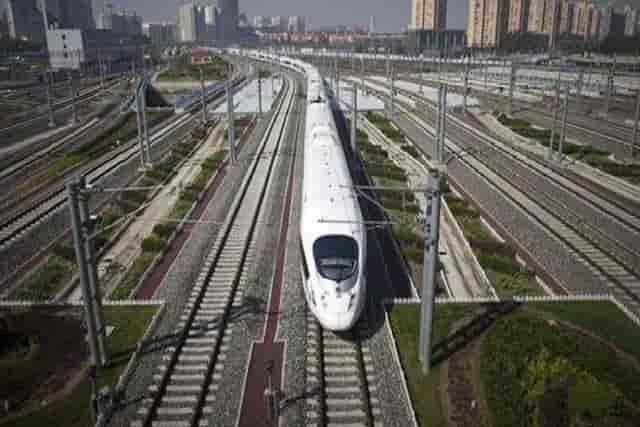
Indian Railways is embarking on a transformative journey to enhance passenger travel by introducing seven new high-speed rail corridors, as announced by Finance Minister Nirmala Sitharaman in her recent Union Budget speech. This initiative aims to provide faster, more comfortable, and premium travel experiences across key economic centers in India. The move comes alongside the introduction of Vande Bharat sleeper trains and Amrit Bharat trains, which are designed to modernize overnight travel and improve amenities for everyday commuters.
Seven New High-Speed Rail Corridors: Key Details
The newly proposed high-speed rail corridors will significantly reduce travel times between major cities, covering nearly 4,000 kilometers with an estimated investment of ₹16–20 lakh crore. The corridors include routes such as Mumbai–Pune, which will cut travel time to just 48 minutes, and Pune–Hyderabad, allowing for a journey of approximately 1 hour and 55 minutes. The Hyderabad–Bengaluru corridor will enable travel in about 2 hours, enhancing connectivity between major IT and manufacturing hubs in Karnataka and Telangana.
Other significant routes include the Hyderabad–Chennai corridor, which will take around 2 hours and 55 minutes, and the Chennai–Bengaluru corridor, reducing travel time to approximately 1 hour and 13 minutes. The Delhi–Varanasi corridor will connect the national capital with eastern Uttar Pradesh in about 3 hours and 50 minutes, while the Varanasi–Siliguri route will take around 2 hours and 55 minutes, marking the first high-speed rail service in eastern India. These corridors are expected to boost regional economies and improve inter-city mobility.
Bullet Train Corridors: What They Mean for Passengers and Indian Railways
The introduction of these high-speed rail corridors is a response to the growing demand for faster and more reliable travel options. Experts believe that these corridors will not only reduce journey times but also expand passenger capacity and encourage a shift from road and short-haul aviation to rail travel. The corridors are designed to accommodate high-density city pairs, making them a vital component of India’s transportation infrastructure.
The ambitious project is expected to transform inter-city passenger movement and act as an economic multiplier. However, concerns have been raised regarding the funding and execution of these projects. With the Mumbai-Ahmedabad bullet train project estimated to cost ₹2 trillion over 11 years, experts question whether the proposed seven corridors can be completed within a reasonable timeframe and budget. The successful implementation of these corridors is crucial for achieving India’s long-term vision for rail modernization.
Vande Bharat Sleeper Trains In Focus
In addition to high-speed rail, Indian Railways is focusing on enhancing passenger experiences with the introduction of Vande Bharat sleeper trains. These trains are designed to provide a world-class travel experience, combining advanced technology with improved comfort and reduced journey times. The Railway Minister has announced plans to launch 260 Vande Bharat sleeper trains, which will feature a fixed fare structure for different classes of travel.
The Vande Bharat sleeper trains aim to revolutionize overnight travel in India, offering a faster alternative to traditional services like the Rajdhani Express. By 2047, the fleet of Vande Bharat trains, including sleeper variants, is expected to reach around 4,500 trainsets. Meanwhile, the Amrit Bharat trains are being launched to cater to the needs of everyday commuters, focusing on improved amenities and comfort.
Experts believe that the introduction of Vande Bharat sleeper trains and Amrit Bharat trains represents a significant upgrade in passenger services, bringing Indian rail travel in line with global standards. While the Vande Bharat sleeper trains are seen as a promising development for overnight journeys, the Amrit Bharat trains primarily enhance interior quality without significantly improving travel speeds. Together, these initiatives signal a shift towards more efficient and modern rail travel in India, promising shorter travel times and improved safety for passengers.
Observer Voice is the one stop site for National, International news, Sports, Editor’s Choice, Art/culture contents, Quotes and much more. We also cover historical contents. Historical contents includes World History, Indian History, and what happened today. The website also covers Entertainment across the India and World.

