

Will Sensex Reach 95,000 by December 2026? Expert Opinions

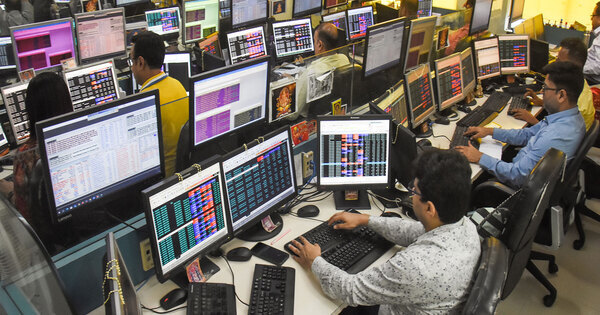
Indian stock markets have faced significant challenges over the past year, grappling with global economic instability, tariffs from the Trump administration, and the ongoing US-Iran conflict. Amid this turmoil, investors are keenly interested in the future trajectory of the Sensex. According to a recent report by Morgan Stanley, the Sensex could potentially soar to 95,000 by December 2026, signaling a possible new bull market phase for Indian equities after a prolonged period of underperformance.
Market Projections and Valuations
Morgan Stanley’s analysis suggests that the Sensex could rise by approximately 22% from its closing level of 77,563 on April 8, 2023. This projection values the market at 23.5 times trailing earnings, which is slightly above the long-term average of 22 times over the last 25 years. The report emphasizes that the market is poised for a significant move, especially considering that the past year has seen some of the weakest returns on record. Valuations have also declined to levels not seen in years, indicating a potential for recovery. The report highlights that the current higher valuation multiple reflects growing confidence in India’s medium-term growth prospects, driven by lower market volatility and a stable policy environment.
The report further notes that various macroeconomic factors, including earnings momentum and capital flows, are beginning to favor Indian equities. Despite global investors remaining cautious, the report states that trailing performance, valuations, and earnings all support a substantial recovery in Indian stocks in the coming months. Additionally, the Sensex is described as being “nearly the cheapest ever in gold terms,” suggesting a favorable investment opportunity as India’s share of global corporate profits continues to grow.
Scenarios for Future Growth
Morgan Stanley outlines several scenarios for the Sensex’s future performance. Under its base case, which carries a 50% probability, the index is expected to reach 95,000, contingent on maintaining macroeconomic stability, fiscal discipline, and a sustained gap where real growth exceeds real interest rates. This scenario assumes robust domestic growth, steady global conditions, and stable oil prices. It also anticipates a supportive liquidity environment, with retail investor inflows matching the supply of equities, and corporate earnings for the Sensex growing at an annual rate of 17% through FY28.
In a more optimistic scenario, which has a 30% likelihood, the Sensex could climb to 107,000 by December 2026. This projection is based on assumptions such as crude oil prices dropping below $70 per barrel and effective measures that enhance growth expectations and corporate earnings. Conversely, a downside case with a 20% probability could see the index decline to 76,000 if oil prices average above $100 per barrel, leading to tighter monetary policy from the Reserve Bank of India (RBI) and a potential recession in the US that could weaken global growth.
Challenges and Opportunities Ahead
Despite the optimistic outlook, Morgan Stanley identifies several immediate challenges that could impact the market. These include supply disruptions in gas and fertilizers due to the Middle East conflict, rising defense expenditures, and concerns regarding India’s lack of a direct presence in the artificial intelligence sector. The report warns that the absence of a clear AI strategy could hinder India’s services exports, although any evidence of productivity gains from AI could serve as a significant upside trigger.
On the positive side, the report highlights sustained strength in growth indicators that could lead to upward revisions in earnings. Continued policy reforms are expected to provide structural advantages in sectors like electricity. Additionally, a potential correction in the crowded global AI market and an increase in share buybacks could further support equities. The report also notes improving sentiment around the Indian rupee, which is still considered undervalued, and emphasizes India’s strong external balance sheet and reduced inflation volatility as factors contributing to a more stable macroeconomic environment.
Sectoral Insights and Investor Positioning
Morgan Stanley’s report indicates a preference for domestic cyclical sectors over defensive and export-oriented ones. The firm maintains an overweight stance on financials, consumer discretionary, and industrials while being underweight on energy, materials, utilities, and healthcare. Technology and consumer staples are viewed neutrally. The report underscores that strong government spending, a revival in private capital expenditure, and an anticipated recovery in urban demand are likely to benefit banks, industrial companies, automobile firms, and select consumer-focused businesses.
As foreign portfolio investor exposure has declined in recent months, the report highlights that the gap between India’s real policy rates and those in the US, along with a flatter yield curve, has historically been associated with stronger future market returns. The sentiment gauge has also moved closer to levels that typically indicate buying opportunities during past market lows. Furthermore, India’s representation in global indices remains lower than its share in global profits, suggesting potential for a re-rating as capital flows stabilize.
Observer Voice is the one stop site for National, International news, Sports, Editor’s Choice, Art/culture contents, Quotes and much more. We also cover historical contents. Historical contents includes World History, Indian History, and what happened today. The website also covers Entertainment across the India and World.
Follow Us on Twitter, Instagram, Facebook, & LinkedIn

