

Why Your Group Photo Gets More Likes: The Cheerleader Effect Explained

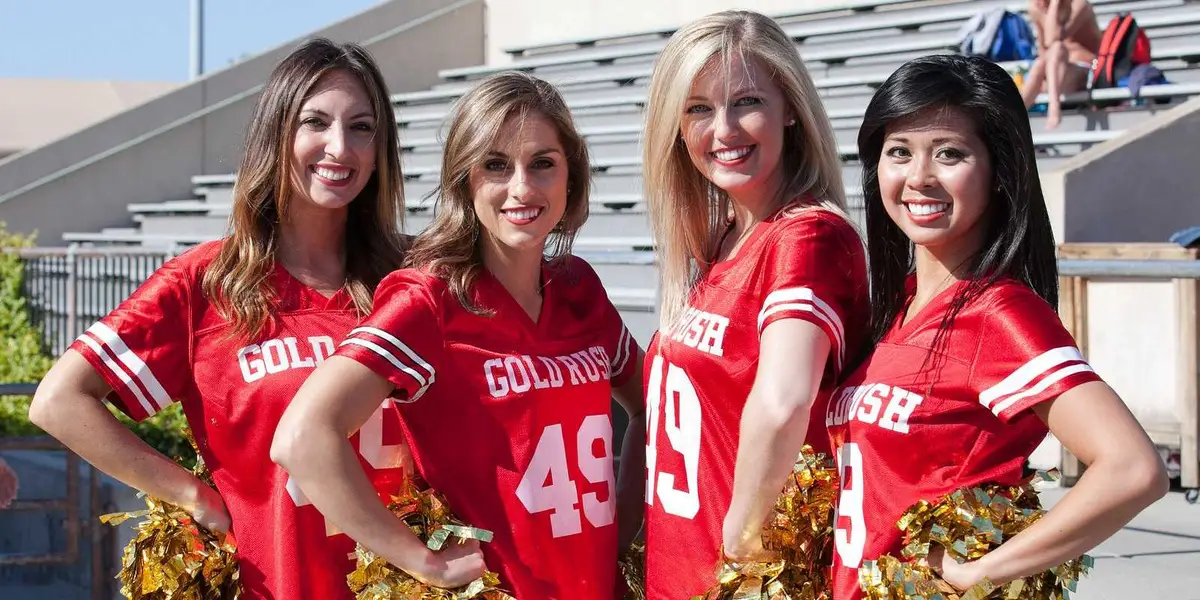
Ever noticed how a group of friends in a photo looks more attractive than when you see each person individually? Or wondered why that dating app profile with a group photo caught your eye, only to feel less impressed when you saw solo pictures of the same person? You’ve experienced the cheerleader effect—a fascinating psychological phenomenon where people appear more attractive when seen as part of a group than when viewed alone. The name comes from a joke on the TV show “How I Met Your Mother,” but the science behind it is absolutely real. Researchers have confirmed through multiple studies that our brains genuinely perceive faces as more attractive when viewing them in groups compared to seeing the exact same faces in isolation.
The cheerleader effect works because of how our visual system processes information. When you look at a group of faces, your brain doesn’t carefully examine each individual. Instead, it creates a mental average—a composite representation blending features from all the faces together. This averaging process has a smoothing effect that reduces the prominence of any individual’s less attractive features while amplifying the general attractiveness of the whole. Research from University of California San Diego’s psychology department demonstrated this effect in controlled experiments. Participants consistently rated individual faces as more attractive when those faces appeared in group photos compared to when the same faces were shown alone. The effect wasn’t huge—typically a modest increase in attractiveness ratings—but it was reliable and statistically significant.
Think of it like this. Imagine five people with slightly different facial features—one has a slightly larger nose, another has uneven eyebrows, a third has an asymmetrical smile. When you view them individually, you notice these imperfections. But when you see all five together, your brain computes an average face that smooths out individual quirks. Each person benefits from being “averaged” with the others, and the result is that everyone looks a bit better. It’s not that the group hides individuals; it’s that the visual averaging process inherently favors attractiveness. Average faces tend to be perceived as more attractive than extreme or unusual faces, a phenomenon well-documented in attractiveness research.
The Mathematics of Beauty: Why Averages Appeal to Us
The cheerleader effect connects to a broader principle in attractiveness perception: averaged features are generally more attractive than distinctive ones. This might seem counterintuitive. Shouldn’t unique, distinctive faces be more attractive than bland, average ones? Research from Princeton University’s psychology department suggests the opposite. When researchers digitally blend multiple faces together to create composite faces, people typically rate these averaged composites as more attractive than the individual faces used to create them. This happens because averaging reduces asymmetries, smooths out irregularities, and creates faces that appear more proportionate and balanced.
The evolutionary psychology explanation suggests that averaged faces signal genetic diversity and health. A face that doesn’t have extreme features might indicate a genetic background free from harmful mutations or inbreeding. Whether or not this evolutionary story is correct, the preference for averaged features is well-established. The cheerleader effect exploits this preference. When you see a group, your brain automatically generates an averaged representation, and this average is inherently more attractive than most of the individual faces. Each person in the group gets a boost by association with the averaged group appearance.
Think of Meera, who noticed her college group photos always got more likes on social media than her individual selfies. She initially thought it was because group photos seemed more fun and social. Then she noticed the same pattern with professional headshots—a group photo from a conference received more positive comments than her solo professional photo, even though she looked nearly identical in both. The difference wasn’t context or perceived personality; it was the cheerleader effect. In the group shot, viewers’ brains averaged her features with those around her, creating a more attractive mental representation than they formed when viewing her alone.
There’s an old Indian folktale about a merchant showing fabric samples. When he displayed each cloth individually, customers found flaws—this pattern was too busy, that color too dull. But when he artfully draped several fabrics together in a display, customers praised the collection’s beauty. Each fabric looked better as part of the ensemble than it had alone. The merchant understood what modern psychology later confirmed: the whole can appear more attractive than the sum of its parts when our perception creates averaged representations.
Real-World Applications: From Marketing to Social Media
The cheerleader effect has practical implications across domains. In marketing and advertising, companies increasingly use group shots rather than individual models. Fashion brands discovered that showing multiple models together in a campaign often generates better responses than showcasing one model at a time, even when the individual models are conventionally attractive. The group presentation benefits each person through the averaging effect while also creating visual interest and storytelling opportunities. According to research on visual marketing psychology, group presentations can increase perceived attractiveness of products and brand ambassadors by leveraging this cognitive quirk.
On dating apps and social media, the cheerleader effect shapes how people present themselves. Users instinctively gravitate toward group photos for profile pictures, often without understanding why these images perform better. Dating consultants and social media advisors frequently recommend including group photos in profiles specifically because of this effect. However, there’s a strategic complication: while you look more attractive in a group photo, potential matches need to identify which person you are. If your group contains people more attractive than you, the cheerleader effect might backfire by inviting unfavorable direct comparisons.
Job applications and professional networking show the effect too. LinkedIn profiles and corporate team pages benefit from group photos. A team photo makes each individual appear slightly more attractive and approachable than solo headshots might suggest. This can influence hiring decisions, client relationships, and professional first impressions in subtle but measurable ways. The effect isn’t about deception—nobody looks dramatically different—but the small boost in perceived attractiveness from group presentation can influence quick judgments that people make when deciding whether to connect, hire, or collaborate.
Think about Arjun, a recruiter who noticed he felt more positively disposed toward candidates whose LinkedIn profiles included team photos compared to those with only individual headshots. He initially attributed this to the team photos suggesting collaboration skills and social competence. But when researchers pointed out the cheerleader effect, he realized the attractiveness boost from group photos might be unconsciously influencing his professional judgments. The candidates weren’t necessarily more collaborative; they just looked slightly more attractive in group contexts, and that attractiveness subtly influenced his overall impression.
The Psychology Behind Group Perception
The cheerleader effect reveals important insights about how human perception works. Our brains are prediction machines constantly taking shortcuts to process overwhelming amounts of visual information. When viewing a group of faces, thoroughly analyzing each individual would be cognitively expensive and slow. Instead, our visual system quickly generates a summary representation—an average that captures the general characteristics of the group. This averaged representation becomes what we “see” and remember about the group. Individual variations get lost in favor of the smoothed, averaged composite.
Research from Yale University’s perception and cognition lab demonstrates that this averaging happens automatically and unconsciously. You don’t decide to average faces; your brain does it without your awareness or control. This is why the cheerleader effect works even when people know about it. You can’t simply stop averaging faces any more than you can stop seeing optical illusions after understanding how they work. The effect is built into how your visual system processes social information. Interestingly, the effect works for more than just faces. Researchers have found similar averaging effects for bodies, objects, and even abstract patterns. Any time you view multiple similar items together, your brain tends to perceive an averaged representation that smooths out individual extremes.
The effect has limits. It works best with groups of three to five people. Very large groups don’t produce stronger effects because individual faces become too small and indistinct for the averaging process to work effectively. The effect also diminishes if group members are extremely different in attractiveness. If one person is far more or far less attractive than others, they stand out as an individual rather than blending into the averaged representation. The cheerleader effect is strongest when group members have roughly comparable attractiveness levels, allowing effective averaging without extreme outliers disrupting the process.
Ethical Considerations: Authenticity in the Instagram Age
Understanding the cheerleader effect raises questions about authenticity and self-presentation in an image-saturated culture. Is strategically using group photos to appear more attractive a form of deception? Most researchers and ethicists say no, for several reasons. First, you’re not actually changing your appearance—you’re simply leveraging how human perception naturally works. Second, the effect is modest. You look slightly more attractive in groups, not dramatically transformed. Third, everyone has equal access to this strategy. It’s not an unfair advantage if anyone can use it.
However, excessive reliance on group photos while avoiding individual images might cross into misleading territory, especially on dating platforms where physical appearance is explicitly part of what people are evaluating. The key is balance and honesty. Including some group photos that benefit from the cheerleader effect while also providing clear individual photos seems ethically sound. You’re presenting yourself accurately while taking advantage of a natural perceptual phenomenon. There’s also value in remembering that attractiveness is just one dimension of first impressions. Authenticity, personality, shared interests, and genuine connection ultimately matter more than the small attractiveness boost from strategic photo selection.
Consider Priya, who built her entire dating profile around group photos, carefully choosing images where she appeared in flattering group contexts. She got plenty of matches, but first dates often felt awkward—her dates seemed slightly disappointed upon meeting her in person. The problem wasn’t that she looked different; it was that she’d unconsciously set higher attractiveness expectations through exclusive use of group photos that maximized the cheerleader effect. When she balanced her profile with both group and individual photos, she got fewer but better matches—people whose expectations aligned with reality. The lesson: the cheerleader effect can enhance presentation, but authenticity serves relationships better than optimization.
There’s a Tenali Raman story about a painter commissioned to paint a king’s portrait. The painter created a magnificent group scene showing the king surrounded by advisors, all rendered beautifully. The king loved it and paid handsomely. But when the king requested a solo portrait, the painter struggled to achieve the same impact. The king, seeing himself alone, looked less regal somehow. Tenali explained that in the group painting, the king’s majesty was enhanced by the ensemble, while in isolation, every imperfection became visible. The story teaches that context shapes perception—a lesson the cheerleader effect confirms scientifically.
Frequently Asked Questions
Q1: Does the cheerleader effect work for everyone, or only conventionally attractive people? The effect works for everyone but provides the greatest benefit to people of average attractiveness. Extremely attractive people might not gain much because they already exceed the averaged composite. Less attractive individuals can gain a noticeable boost by being averaged with a more attractive group. People of average attractiveness benefit consistently because averaging tends to enhance average features.
Q2: Can the cheerleader effect backfire if you’re the least attractive person in your group? Potentially, yes. If you’re in a group with people significantly more attractive than you, direct comparison might hurt more than the averaging effect helps. The ideal strategy is appearing in groups with people of similar attractiveness levels so that everyone benefits from averaging without inviting unfavorable comparisons.
Q3: Does this effect work with other characteristics besides physical attractiveness? Research suggests similar averaging effects occur with perceived competence, warmth, and other traits. When you see a group, you form averaged impressions of not just their physical appearance but also their apparent intelligence, friendliness, and other characteristics. The averaging process is a general feature of how we perceive groups.
Q4: Does knowing about the cheerleader effect make you immune to it? No. Like optical illusions, knowing how the effect works doesn’t stop it from working. Your brain automatically averages faces when viewing groups whether you’re aware of the process or not. Conscious knowledge can help you adjust judgments after the fact, but it doesn’t prevent the initial perceptual effect.
Q5: Is there a “reverse cheerleader effect” where being in a group makes you less attractive? Only in specific circumstances. If you’re significantly more attractive than your group, you might lose the advantage you’d have standing alone because averaging pulls you toward the group mean. Also, if you’re in a very large, crowded group where individual faces are barely visible, the effect disappears because effective averaging requires facial features to be distinguishable.
The cheerleader effect teaches us that perception is fundamentally contextual. We don’t see objects, faces, or people in isolation; we see them in relation to their surroundings, and our brains automatically perform sophisticated processing that shapes what we perceive. This particular effect—the attractiveness boost from appearing in groups—is a specific case of a general principle: our perceptions are constructed through unconscious mental processes that prioritize efficiency over accuracy. Understanding these processes doesn’t just explain why group photos get more likes; it reveals something profound about the gap between reality and how we experience reality. In a world increasingly mediated by images and first impressions, that understanding becomes ever more valuable.
Observer Voice is the one stop site for National, International news, Sports, Editor’s Choice, Art/culture contents, Quotes and much more. We also cover historical contents. Historical contents includes World History, Indian History, and what happened today. The website also covers Entertainment across the India and World.

