

Hidden Black Holes Discovered in Nearby Galaxies

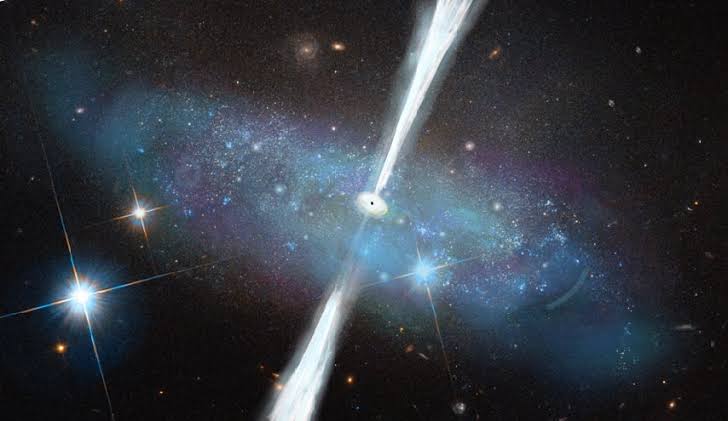
Recent high-resolution radio investigations have uncovered a concealed population of weakly active black holes nestled within nearby galaxies. This remarkable discovery sheds light on these elusive entities that influence star formation and the evolutionary trajectory of galaxies.
Astronomers have long theorized that nearly every galaxy contains a massive black hole at its core. Yet, many of these black holes remain faint, making their detection particularly challenging. Now, a collaborative team of international astronomers, including Dr. Aru Beri from the Indian Institute of Astrophysics (IIA), has made significant strides in revealing these hidden cosmic giants.
Using the advanced e-MERLIN radio array, the researchers focused their efforts on 280 nearby galaxies chosen from the well-documented Palomar sample. By examining the central regions of these galaxies at parsec scales, they were able to detect compact radio emissions from about one-quarter of the sampled galaxies. This finding indicates the presence of weakly accreting supermassive black holes that are often overlooked in conventional observational methods.
Systematic Survey Breakthrough
The significance of this study lies in its pioneering approach. It represents one of the first comprehensive high-resolution radio surveys that can isolate faint black hole activity in nearby galaxies. Previous research struggled with sensitivity and angular resolution, making it difficult to distinguish weak nuclear emissions from surrounding stellar activities. However, this study overcame those challenges by focusing on a large, clearly defined sample with superior radio resolution.
To further validate their findings, the team integrated the radio emissions data with X-ray observations from NASA’s Chandra X-ray Observatory. This combination confirmed that the emissions detected were indeed powered by actively accreting supermassive black holes, distinguishing them from other potential sources such as star formation, supernova remnants, or X-ray binary systems.
Implications for Black Hole Research
The results indicate that faint, low-level black hole activity may be the primary mode of black hole growth in the contemporary Universe. This highlights the necessity of employing high-resolution radio observations to unveil a previously hidden population of weakly active black holes in typical galaxy surveys. The findings emphasize the critical role these black holes play not only in their galaxies but also in the broader cosmic environment.
The study, authored by D. R. A. Williams-Baldwin along with the international team, has been published in the Monthly Notices of the Royal Astronomical Society. These revelations promise to deepen our understanding of black holes and their significant roles in the universe.
Observer Voice is the one stop site for National, International news, Sports, Editor’s Choice, Art/culture contents, Quotes and much more. We also cover historical contents. Historical contents includes World History, Indian History, and what happened today. The website also covers Entertainment across the India and World.

