

Why You Think Your View of Reality Is The Only Correct One

In February 2015, a simple photograph of a dress posted online created one of the most revealing moments in the history of human perception. The image showed a striped dress, and when seventeen-year-old Kavya from Mumbai first saw it, the answer seemed absolutely obvious: the dress was clearly blue and black. There was no doubt in her mind. The colors were right there, plain as day.
“It’s blue and black,” she told her classmates confidently. “How can anyone see anything else? Those are the objective colors in the photo.”
But her best friend Neha looked at the exact same image and saw something completely different. “Are you joking? It’s obviously white and gold. Look at it! The stripes are clearly white and gold. That’s just what’s there.”
Both girls were looking at the identical photograph on the same screen. Both were certain they were seeing objective reality. Both believed the other person must be joking, lying, or somehow not looking properly at what was “really there.” The disagreement escalated—not because either was being dishonest, but because each was absolutely convinced that what they saw was objective reality that any reasonable person should see.
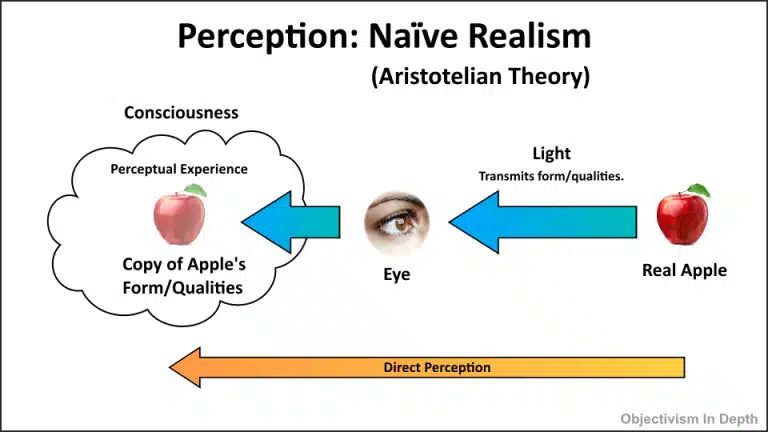
Their psychology teacher, observing the heated debate, saw a perfect teaching moment. “You’re both experiencing naïve realism,” she explained. “Each of you believes you’re seeing the dress as it objectively is—that your perception equals reality. When Kavya sees blue and black, she thinks ‘the dress IS blue and black, and anyone who sees otherwise is wrong or biased.’ When Neha sees white and gold, she thinks ‘the dress IS white and gold, and anyone who sees otherwise is confused or not looking properly.’ Neither of you recognizes that perception isn’t direct access to reality—it’s your brain’s interpretation of light and color, which can differ based on how your visual system processes the ambiguous information in this particular image.”
She continued: “Naïve realism is the belief that you see reality objectively and directly—that facts are just ‘out there’ obvious to anyone looking honestly. This makes you think: if I see it this way, that’s how it really is. Anyone who sees it differently must be uninformed, irrational, biased, or not looking properly. You don’t realize that they’re having the exact same experience—seeing what seems to them like obvious reality, and wondering why you can’t see the obvious truth they see. Naïve realism makes disagreement seem impossible to understand: ‘How can they not see what’s obviously true?'”
This cognitive bias—believing your perception and interpretation of reality is simply “reality as it is” rather than one perspective among several possible valid perspectives—affects political debates, family arguments, religious discussions, and any situation where people disagree about what seems obvious. Understanding naïve realism reveals why disagreements feel so frustrating and why we often can’t fathom how reasonable people reach different conclusions: we assume they’re seeing the same obvious reality we see and choosing to deny it, when actually they’re seeing genuinely different interpretations of complex, ambiguous information.
What Is Naïve Realism?
Naïve realism is the cognitive bias where people believe their perception and interpretation of reality is objective, unbiased, and simply “how things are”—that they see facts directly and clearly, that these facts are plain for anyone looking honestly, that rational people will agree with their interpretation, and that anyone who disagrees must be uninformed (lacking facts), lazy (not looking carefully), irrational (unable to reason properly), or biased (distorting facts for motivated reasons). The bias is “naïve” because it fails to recognize that all perception and interpretation involves subjective processing—everyone constructs their understanding of reality through cognitive filters, prior beliefs, and interpretive frameworks that can lead reasonable people to different conclusions from the same information.
The phenomenon was identified by social psychologists Lee Ross and Andrew Ward. Research at Stanford University demonstrated that people systematically believe their own views reflect objective reality while others’ different views reflect bias or error. When shown the same video footage, people with different prior beliefs would interpret it completely differently yet each group believed they were seeing objective reality while the other group was biased. Neither recognized that interpretation, not just observation, was occurring.
According to studies from Princeton University, naïve realism operates because perception feels direct and unmediated—you don’t experience the interpretive processing your brain does, so it seems like you’re seeing “what’s really there” rather than your brain’s construction. Additionally, your interpretations seem compellingly obvious to you while others’ interpretations seem clearly wrong, making it hard to imagine how reasonable people could see things differently. This creates the illusion that disagreement must result from others’ defects, not from legitimate alternative interpretations.
Research from Yale University demonstrates that naïve realism is particularly strong when: (1) issues are important to you (making your view seem obviously right), (2) information is ambiguous (allowing different interpretations while each seems clear), (3) you have strong prior beliefs (filtering how you interpret information), and (4) others disagree with you (triggering need to explain why they can’t see the obvious truth). These conditions make naïve realism nearly universal in heated disagreements.
The Parable of the Six Blind Men and the Elephant
An ancient teaching tale, originating in India, tells of six blind men who encountered an elephant for the first time. Each approached the elephant from a different position and touched a different part of the massive animal.
The first man touched the elephant’s side and declared: “An elephant is like a wall—solid, flat, and immovable. This is obviously what an elephant is. Anyone who says otherwise hasn’t truly experienced an elephant or is confused.”
The second man touched the elephant’s tusk and said: “You’re completely wrong! An elephant is like a spear—smooth, hard, and pointed. This is the clear reality. How can you not see this obvious truth?”
The third man touched the trunk and insisted: “Both of you are mistaken! An elephant is obviously like a snake—long, flexible, and moving. This is what’s really here. Why are you denying the obvious?”
The fourth man touched the leg and proclaimed: “An elephant is clearly like a tree trunk—thick, rough, and cylindrical. This is plain fact. You others must be touching the wrong thing or not paying attention.”
The fifth man touched the ear and stated: “An elephant is like a fan—thin, wide, and able to move back and forth. This is objective reality. I don’t understand how you all are so confused.”
The sixth man touched the tail and declared: “An elephant is like a rope—long, thin, and with a tuft at the end. This is simply what’s here. The rest of you must be biased or irrational to claim otherwise.”
Each blind man was absolutely convinced that his perception represented objective reality—”This is what an elephant really is.” Each thought the others were wrong, uninformed, or somehow not perceiving correctly. Each struggled to understand how reasonable people touching the same elephant could reach such obviously wrong conclusions.
None recognized that they were each perceiving one part of a larger, more complex reality. Each limited perspective was true from that position but incomplete. No single perspective captured the whole elephant. Their disagreement didn’t result from anyone being wrong, biased, or irrational—it resulted from each having access to only part of the complex reality.
A wise observer explained the lesson: “You each believed you perceived the elephant objectively—’This is what an elephant is.’ But you each perceived one aspect of a multi-faceted reality. The elephant truly has characteristics of wall, spear, snake, tree, fan, and rope—all of your perceptions were valid perspectives on the complex whole. Your mistake wasn’t in what you perceived but in assuming your limited perspective represented complete objective reality. When you encounter disagreement, consider: might we be like the blind men, each perceiving part of a larger truth, each convinced our partial view is the complete objective picture?”
Buddhist philosophy directly addresses naïve realism in teachings about avoiding absolutist thinking. The Buddha taught that reality is complex and that different valid perspectives on the same reality exist—not because truth is relative but because complex realities have multiple true aspects that different observers access. Naïve realism’s mistake is assuming “my perspective is the complete objective truth” rather than recognizing “my perspective is one valid angle on complex reality.”
The Bhagavad Gita discusses this through Krishna’s teaching about the limits of human perception and understanding. Krishna teaches that what appears to limited human perception as complete reality is actually partial view of larger truth. Assuming your perception equals objective reality represents attachment to limited view. Wisdom requires recognizing that others’ different perceptions may be equally valid perspectives on the same complex reality you’re both trying to understand.
How Everyone Thinks They See Objectively While Others Are Biased
In political disagreements and worldview conflicts, naïve realism makes people across the political spectrum all believe they see political reality objectively while opponents are biased. Research shows that liberals and conservatives both believe they’re responding to clear facts while the other side is distorting reality through bias. Each side explains their own views as “just looking at the evidence” but explains opposing views as “ideology preventing them from seeing truth.” Both can’t be seeing objective reality while the other is biased, yet both genuinely believe this.
Studies from University of California, Berkeley found that when people across the political spectrum were asked to explain their political beliefs and their opponents’ beliefs, they explained their own as following from clear facts and reason while explaining opponents’ as following from bias, misinformation, and irrationality. Democrats thought they saw reality objectively while Republicans were biased; Republicans thought they saw reality objectively while Democrats were biased. This symmetrical pattern reveals naïve realism: everyone thinks disagreement proves others’ bias, not that complex issues allow different reasonable interpretations.
In interpreting ambiguous evidence and complex information, naïve realism makes people believe their interpretation is simply “what the evidence shows” rather than one reasonable interpretation among several possible ones. Research shows that when presented with complex, ambiguous information (statistics, videos, policy proposals), people with different prior beliefs interpret it completely differently yet each group believes they’re seeing objective facts while others are biasing their interpretation. Neither recognizes the interpretive work they’re doing.
Studies demonstrate this powerfully with ambiguous video footage: when people with different prior beliefs watch the same video of police interaction or protest, they see completely different events. Each group describes what they saw with certainty—”the video clearly shows X”—yet their X’s are opposite. When confronted with others seeing Y, they don’t think “we interpreted ambiguous footage differently” but rather “they’re biased and refusing to see what the video clearly shows.” Naïve realism makes interpretation feel like observation.
In moral and ethical disagreements about right and wrong, naïve realism makes people believe moral truths are as obvious as mathematical facts—that their moral judgments are seeing moral reality clearly while those who disagree are morally confused, irrational, or corrupt. Research shows that people across different moral frameworks all experience their own moral intuitions as obvious truths rather than as culturally-shaped values. Someone who believes abortion is wrong thinks this is obvious moral fact; someone who believes abortion rights are essential thinks this is obvious moral fact. Each struggles to understand how reasonable people don’t see the obvious moral truth they see.
Studies from University of Virginia tracking moral disagreements found that people rarely think “we have different but reasonable moral frameworks leading to different conclusions.” Instead, they think “I see the moral truth clearly; they’re failing to see it due to moral blindness or corruption.” Naïve realism makes moral disagreement seem like one side seeing truth and the other denying it, rather than different reasonable people applying different valid moral principles to complex situations.
In scientific and factual disputes where expertise matters, naïve realism makes non-experts believe they see scientific truths as clearly as experts—that facts are obvious to anyone looking honestly, and experts who disagree must be biased by funding, ideology, or corruption. Research shows that people regularly discount expert consensus when it contradicts their prior beliefs, not because they carefully evaluated the evidence but because their naïve realist interpretation of limited information seems obviously true, making expert disagreement seem like expert bias rather than expert knowledge they lack.
Studies demonstrate that naïve realism contributes to science denial: when climate scientists, medical experts, or other specialists reach consensus conclusions that contradict people’s prior beliefs, naïve realism makes people think “I can see the obvious truth; these experts must be biased.” People don’t recognize that complex technical questions aren’t obvious to non-experts and that their “obvious” interpretation might be wrong while expert consensus might be right. Naïve realism makes you trust your non-expert interpretation over expert consensus because your interpretation seems obviously true to you.
Recognizing That Your View Is A View, Not Just Reality
The most important practice for countering naïve realism is explicitly reminding yourself that your perception and interpretation of reality is your perspective—one among several possible reasonable perspectives—not simply “objective reality.” When something seems obviously true to you, acknowledge: “This seems obviously true to me, from my perspective, with my background and beliefs. Others with different backgrounds might reasonably see it differently.” This shift from “this IS obvious truth” to “this seems obviously true to me” is crucial.
Before assuming others who disagree are biased or irrational, consider: “Could this information be genuinely ambiguous, allowing different reasonable interpretations?” Usually yes with complex social, political, or moral issues. If you and others are looking at the same information but seeing different things, probably you’re both interpreting ambiguous information through different but reasonable frameworks—not that you see objectively while they’re biased.
Actively seek out how reasonable people could interpret things differently than you do. Naïve realism makes you focus on why your interpretation is right and others’ are wrong. Instead, try to understand: “What would someone need to believe or value to reasonably see this differently?” Often you’ll discover that different interpretations follow from different but reasonable starting assumptions, making disagreement understandable rather than evidence of irrationality.
Recognize that feeling certain doesn’t mean you’re objectively right. Naïve realism makes certainty feel like evidence of objectivity—”I’m so sure this is true that it must just be how reality is.” But people with completely opposite views feel equally certain from their perspectives. Both can’t be objectively right despite both feeling certain. Certainty is a feeling about your interpretation, not proof that your interpretation equals reality.
Accept that on complex issues, multiple reasonable interpretations often exist. Some disagreements do involve one side being clearly right (Earth is round, vaccines prevent disease). But many involve complex ambiguous situations where different reasonable people emphasizing different values or weighting evidence differently reach different conclusions. Neither is seeing objective reality; both are constructing interpretations. Recognizing this doesn’t require giving up your view—it requires holding it as “my best interpretation” rather than “objective reality others are denying.”
Remember the dress that some saw as blue-black and others as white-gold despite identical images, and the blind men each certain their perspective on the elephant was objective reality while others were wrong. Both illustrate how naïve realism makes interpretation feel like observation—you don’t experience the interpretive work your brain does, so your conclusion feels like simple perception of what’s really there.
Naïve realism can’t be eliminated because perception will always feel direct and unmediated—you can’t experience the processing your brain does to construct your experienced reality. But recognizing the bias allows humility: when you find yourself thinking “this is obviously true and anyone who disagrees must be biased/uninformed/irrational,” that’s the signal to check for naïve realism. Ask: “Am I seeing objective reality, or am I interpreting complex information through my particular perspective and assuming my interpretation is simply how things are?” Usually the latter. Complex reality allows multiple valid perspectives. Your view is a view—often a good view, hopefully a well-reasoned view, but a view nonetheless, not simply “reality as it is.” Others’ different views aren’t necessarily wrong or biased; they might be different reasonable perspectives on the same complex reality. Accepting this doesn’t make truth relative—it makes disagreement understandable and productive rather than evidence that others are defective.
Frequently Asked Questions
If everyone has different perspectives, does that mean there’s no objective truth?
No—objective reality exists, but complex aspects of it allow multiple valid perspectives and interpretations. The elephant is objectively real with all its features, but blind men touching different parts reasonably perceive different aspects. Climate change is objectively real, but people can reasonably disagree about best policy responses. Naïve realism’s error isn’t believing in objective reality—it’s believing your interpretation of complex reality is simply “how it objectively is” rather than one perspective requiring interpretation and judgment.
How can I tell when my view is objective versus when I’m experiencing naïve realism?
Check: Do experts across different backgrounds agree? (Suggests objectivity). Is the issue complex and value-laden? (Suggests interpretation). Do reasonable people disagree? (Suggests multiple valid views). Can I articulate how reasonable people could see this differently? (Tests for naïve realism). If you can’t imagine how any reasonable person could disagree, you’re probably experiencing naïve realism—reasonable people disagree about most complex issues.
Does recognizing naïve realism mean I should doubt everything and have no strong views?
No—it means holding strong views while acknowledging they’re views, not simple observations of obvious reality. “I believe strongly that X is right based on my values and interpretation of evidence, and I recognize that others applying different values or interpretations might reasonably disagree” is different from “X is obviously true and anyone who disagrees is irrational.” The first combines conviction with humility; the second is naïve realism.
What about clear factual matters like science? Isn’t it naïve realism to doubt expert consensus?
Naïve realism works both ways: non-experts shouldn’t assume their interpretation of complex science is obvious truth when experts disagree (this is naïve realism). But experts can also experience naïve realism if they assume their interpretations are so obvious that disagreement proves bias rather than considering whether they might need to communicate better or acknowledge uncertainty. Still, expert consensus on factual matters (not policy) should generally outweigh non-expert intuitions—that’s recognizing limits of your perspective, not naïve realism.
If I recognize my view is just my perspective, won’t I lose arguments and fail to convince others?
Paradoxically, recognizing naïve realism can make you more persuasive. When you assume your view is obvious truth and others are biased, they become defensive. When you acknowledge “reasonable people can see this differently, here’s why I interpret it this way,” others listen better. Additionally, recognizing that you hold a perspective rather than obvious truth makes you more willing to refine your views when presented with good evidence, making your ultimate position stronger.
Observer Voice is the one stop site for National, International news, Sports, Editor’s Choice, Art/culture contents, Quotes and much more. We also cover historical contents. Historical contents includes World History, Indian History, and what happened today. The website also covers Entertainment across the India and World.

