

Why One Insult Stings More Than Ten Compliments Feel Good: Understanding Negativity Bias

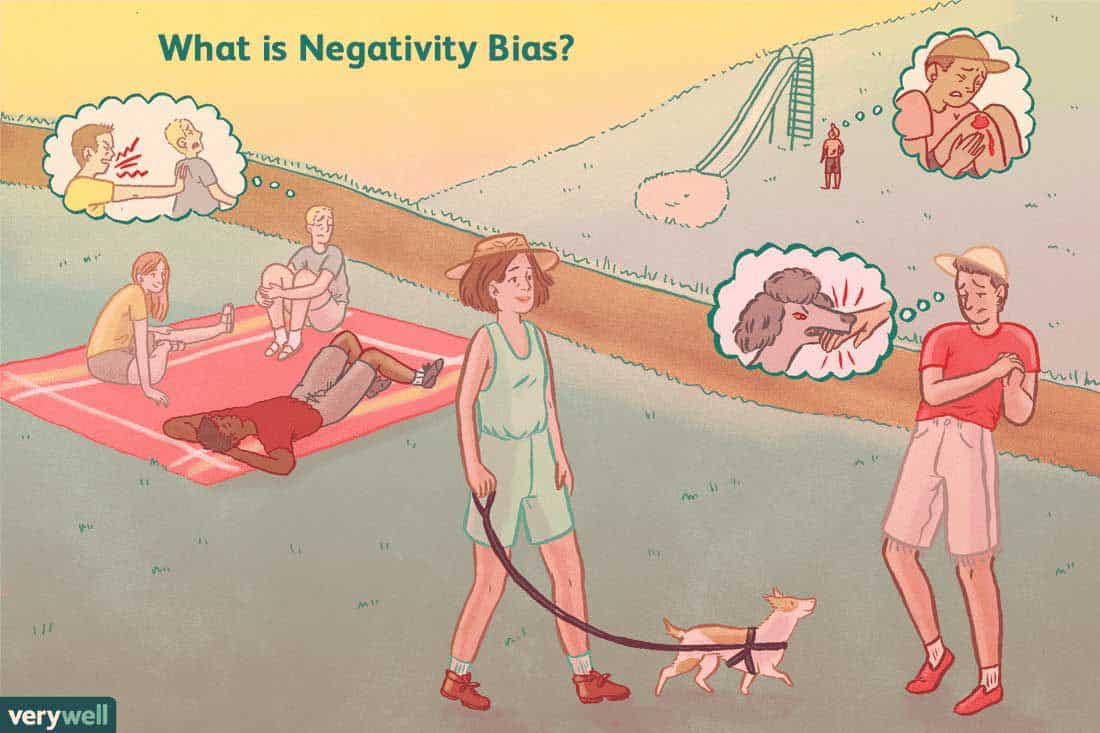
Priya had just finished her first solo dance performance at the school annual function. For ten minutes, she performed a complex Bharatanatyam piece she’d practiced for months. The auditorium of 500 people applauded enthusiastically. Her parents hugged her proudly. Her dance teacher praised her technique. Twenty classmates complimented her afterward, calling it beautiful, graceful, and inspiring.
But as she was leaving, one classmate—someone she barely knew—casually remarked, “The costume was nice, but you seemed a bit off-rhythm in the middle section.” That single comment, delivered without malice, occupied Priya’s mind completely on the drive home. She replayed that middle section obsessively in her head, convinced she’d embarrassed herself. The twenty compliments faded to background noise while the one criticism echoed loudly.
“Why can’t I stop thinking about what he said?” she asked her mother. “So many people said nice things, but all I can remember is that one negative comment. Does that mean I performed badly?”
Her mother, a psychologist, smiled sadly. “No, beta. You’re experiencing negativity bias. It’s a quirk of human psychology—negative experiences, memories, and information affect us more strongly than positive ones. That one criticism weighs more heavily in your mind than all those compliments combined, not because it’s more true or important, but because our brains evolved to pay extra attention to anything negative. One insult really does hurt more than ten compliments feel good.”
This phenomenon—negativity bias—shapes how we remember events, make decisions, form relationships, and see ourselves. Understanding it reveals why we dwell on failures while forgetting successes, why one bad day overshadows a good week, and why humans seem naturally inclined toward pessimism despite living in relatively safe, comfortable times.
What Is Negativity Bias?
Negativity bias is our tendency to give more psychological weight to negative experiences, information, and memories than to positive ones. Bad events affect us more strongly than good events of equal intensity. Criticism hurts more than praise pleases. We remember insults longer than compliments. Losing ₹100 feels worse than finding ₹100 feels good. One disappointing experience with a restaurant makes us avoid it, while one great experience makes us only moderately likely to return.
The phenomenon was systematically studied by psychologist Roy Baumeister and colleagues, who reviewed hundreds of studies and concluded: “Bad is stronger than good.” Research at Ohio State University demonstrated that people pay more attention to negative information than positive information, remember it better, and allow it to influence decisions more heavily. Showing people photographs of positive, negative, and neutral scenes while measuring brain activity revealed that negative images produced stronger and more immediate electrical activity than equally arousing positive images.
According to studies from Stanford University, negativity bias operates across domains. In relationships, it takes roughly five positive interactions to compensate for one negative interaction. In learning, punishment is more effective than reward at changing behavior (though not necessarily better for overall wellbeing). In news consumption, negative stories capture more attention and are remembered better than positive stories. In forming impressions, one negative trait influences overall judgment more than one positive trait.
Research from Yale University shows that negativity bias likely evolved because for our ancestors, threats required immediate attention while opportunities could often wait. Missing a berry patch meant missing calories, but you’d have other chances to find food. Missing signs of a predator meant death. Evolution favored brains that prioritized negative information—pessimistic ancestors who overestimated dangers survived better than optimistic ones who underestimated them.
The Farmer’s Ninety-Nine Good Harvests
An old tale from rural India tells of a farmer who had one hundred harvests in his lifetime. Ninety-nine were good to excellent, providing abundantly for his family and community. But in his sixty-third year, drought destroyed his crop—a single failed harvest among ninety-nine successful ones.
In his old age, when asked about his farming life, the farmer spoke primarily about that one failed year. He described in vivid detail the withered crops, the anxiety about feeding his family, the humiliation of accepting charity. When young farmers asked his advice, he warned extensively about drought preparedness and crop failure prevention.
His children gently reminded him of the ninety-nine abundant harvests, the festivals celebrated, the weddings funded, the community supported through his agricultural success. “Father, you had ninety-nine good years and one bad year. Why do you remember the one bad year so clearly while the ninety-nine good years blend together?”
The farmer paused, recognizing the truth. “The good years felt like the natural order—what I expected and deserved. That one failed year felt like catastrophe, threat, and danger. My mind gripped it tightly, studying it, learning from it, fearing its return. The good years were pleasant but unremarkable. The bad year was terrible and unforgettable.”
Buddhist philosophy addresses negativity bias directly in teachings about suffering and attention. The Buddha taught that untrained minds naturally gravitate toward dukkha (suffering, dissatisfaction) and remember it more vividly than sukha (pleasure, satisfaction). The First Noble Truth acknowledges this tendency while teaching that it can be transformed through practice. Meditation trains attention to notice positive experiences with the same intensity as negative ones, counteracting the natural bias.
The Bhagavad Gita touches on this through Krishna’s teaching about equanimity—treating pleasure and pain, gain and loss, victory and defeat with equal mind. Krishna recognizes that human nature gives these pairs asymmetric weight (pain hurts more than pleasure pleases, loss stings more than gain delights), but teaches that wisdom requires developing symmetric awareness. The negativity bias is the natural state; equanimity is the cultivated achievement.
How Negativity Bias Colors Our World
In relationships and social life, negativity bias creates an asymmetry where conflicts and hurts loom far larger than kindnesses and joys. Psychologist John Gottman’s research on marriages found that stable relationships require a ratio of approximately five positive interactions for every one negative interaction. One harsh word carries roughly the weight of five kind words. One betrayal requires multiple demonstrations of trustworthiness to overcome. The negativity bias makes relationships harder than they need to be—we remember fights vividly while forgetting everyday kindnesses.
Research from Harvard University shows that people in conflict situations recall negative behaviors from their partners with detailed accuracy while struggling to recall positive behaviors. When asked to describe their relationship, people in distress list negative incidents in specific detail but describe positive aspects in vague generalities. The negativity bias makes troubled relationships seem worse than they objectively are by overweighting negative experiences in memory.
In news and media consumption, negativity bias explains why “if it bleeds, it leads.” News outlets know that negative stories—disasters, crimes, conflicts, failures—capture more attention than positive stories. People are more likely to click, read, share, and remember negative news, creating a media landscape that systematically overrepresents the negative aspects of life while underrepresenting the positive.
This creates a paradox where people living in historically safe, healthy, prosperous times believe the world is becoming more dangerous and worse. Crime rates fall, yet fear of crime rises because crime stories dominate news. Life expectancy increases, poverty decreases, violence declines, but people perceive worsening conditions because negativity bias makes negative news more salient and memorable than statistical realities showing improvement.
In learning and education, negativity bias makes criticism more effective at changing behavior than praise—but at psychological cost. Students remember harsh criticism from teachers vividly for decades while forgetting praise. One discouraging comment from a teacher can extinguish a student’s interest in a subject, while praise rarely creates equally powerful motivation. The bias makes us better at learning what not to do than at learning what to do.
Teachers sometimes exploit this by primarily offering criticism, believing it’s more educational. But while criticism does teach effectively in the short term, the long-term cost includes anxiety, reduced self-confidence, and negative associations with learning. The negativity bias makes criticism feel more important and truthful than praise, even when praise is equally valid and more psychologically beneficial.
In self-perception and memory, negativity bias creates distorted self-narratives where failures loom larger than successes. People vividly remember embarrassing moments from years ago while forgetting accomplishments. Job interview mistakes replay endlessly in memory while successful interviews fade. Rejected manuscript proposals sting for months while accepted ones provide only brief satisfaction.
This creates impostor syndrome—the feeling of being a fraud despite objective success—because the negativity bias makes failures and weaknesses psychologically more prominent than achievements and strengths. Someone with ninety-nine successes and one failure feels like a failure because the one failure occupies more mental space than the ninety-nine successes combined.
In consumer behavior and reviews, negativity bias makes people more likely to leave reviews after bad experiences than good ones, creating rating systems that systematically overrepresent negative experiences. Someone who has ten good meals at a restaurant might not review it, but one bad meal prompts an immediate angry review. This makes online ratings skewed negatively compared to average customer experiences.
Businesses understand this and often invest disproportionately in preventing negative experiences compared to creating positive ones. The psychological impact of one service failure far outweighs the impact of several positive service experiences, making failure prevention more valuable than success creation from a customer-retention perspective.
Balancing Negative and Positive
The most important insight for managing negativity bias is recognizing that your psychological experience of events isn’t an accurate reflection of objective reality. When you feel that everything is going wrong because of a few negative experiences amid many positive ones, that’s the negativity bias distorting your perception. Your feelings are real, but they don’t accurately represent the ratio of good to bad in your life.
Practice deliberate positive memory rehearsal. Your brain naturally rehearses negative memories—replaying that embarrassing moment, that conflict, that failure. Counteract this by deliberately rehearsing positive memories with equal frequency and vividness. At day’s end, actively recall three good things that happened with as much detail as your brain gives to negative events. This conscious practice helps balance the natural bias.
Keep gratitude journals or positive experience logs. Because negative experiences automatically encode more strongly in memory, positive experiences need deliberate recording to have equal impact. Writing down good things that happen creates a record that persists beyond natural memory, allowing you to review evidence that your life contains more positive than negative, even when your memory suggests otherwise.
When receiving feedback—in relationships, work, or learning—consciously weight positive and negative comments equally even though they won’t feel equal. If someone gives you nine compliments and one criticism, remind yourself rationally that the feedback was ninety percent positive, even though it feels mostly negative. This conscious correction helps counteract the automatic weighting bias.
Cultivate deliberate optimism as a corrective to natural pessimism. You don’t need to cultivate pessimism—negativity bias does that automatically. You do need to cultivate optimism to balance the scale. This doesn’t mean ignoring real problems or dangers. It means consciously attending to positive aspects of situations with the same intensity your brain automatically gives to negative aspects.
Limit negative media consumption and seek positive news. Because negativity bias makes negative news more engaging, you need to consciously choose balanced or positive news sources to counteract the natural pull toward negative content. Following accounts that share positive developments, good news, and human progress provides necessary balance to the negativity-biased news landscape.
Remember Priya, whose mind magnified one criticism while minimizing twenty compliments, and the farmer whose ninety-nine good harvests paled against one bad year in memory. Both illustrate how negativity bias systematically distorts our perception, making bad events seem more common, more important, and more representative than they actually are. The bias evolved to keep our ancestors alive, but in modern safe environments, it often makes us miserable despite objective good fortune. Recognizing it, understanding where it comes from, and deliberately counterbalancing it doesn’t eliminate the bias—we’re human, and bad will always be stronger than good in immediate psychological impact. But awareness transforms an invisible distorting force into a recognized tendency we can partially compensate for, creating slightly more accurate perceptions of our lives, relationships, and world.
Frequently Asked Questions
Is negativity bias the same as depression?
No. Negativity bias is a universal human tendency to weight negative information more heavily than positive. Everyone has it. Depression involves this bias becoming extreme and distorted, where negative information dominates entirely and positive information barely registers. Negativity bias is normal cognitive functioning; depression is a clinical condition requiring treatment. However, negativity bias can contribute to depression vulnerability in some people, and depressed individuals show exaggerated negativity bias.
Can negativity bias ever be helpful?
Yes, in situations involving genuine threats or risks. The bias evolved because it kept ancestors alive by making them attend carefully to dangers. In modern contexts like driving, crossing streets, or evaluating potential risks, negativity bias helps by making you appropriately cautious. The problem is that the bias operates constantly, making you overly focused on minor negatives even in safe situations where such vigilance is unnecessary and psychologically costly.
Why do I remember negative events from years ago but forget positive events from yesterday?
Because negative events encode more strongly in memory during initial experience and are rehearsed more frequently afterward. Your brain automatically replays negative events (worrying about them, analyzing what went wrong, preparing for future threats), which strengthens those memories. Positive events encode more weakly initially and aren’t rehearsed as much, so they fade faster. This creates memory banks heavily weighted toward negative experiences even if your life had more positive than negative events.
Does negativity bias get worse or better with age?
Research shows complex patterns. Young adults show strong negativity bias, but interestingly, older adults (65+) often show reduced negativity bias or even positivity bias—they attend to and remember positive information better than negative. This “positivity effect” in aging may reflect limited remaining time creating motivation to focus on emotionally positive experiences, or accumulated wisdom about what’s truly worth worrying about versus what’s not.
How can parents help children develop resilience against negativity bias?
Model balanced attention by discussing both positive and negative aspects of days, not just problems. Help children actively recall and savor positive experiences rather than only processing negative ones. When children experience setbacks, acknowledge the negative feelings while also pointing out positive aspects they might be overlooking due to negativity bias. Teach children that one bad event doesn’t define them or erase good things, explicitly naming the negativity bias when it appears to distort their self-perception.
Observer Voice is the one stop site for National, International news, Sports, Editor’s Choice, Art/culture contents, Quotes and much more. We also cover historical contents. Historical contents includes World History, Indian History, and what happened today. The website also covers Entertainment across the India and World.

