

Why Everyone Wants the Popular Sneakers: Understanding the Bandwagon Effect

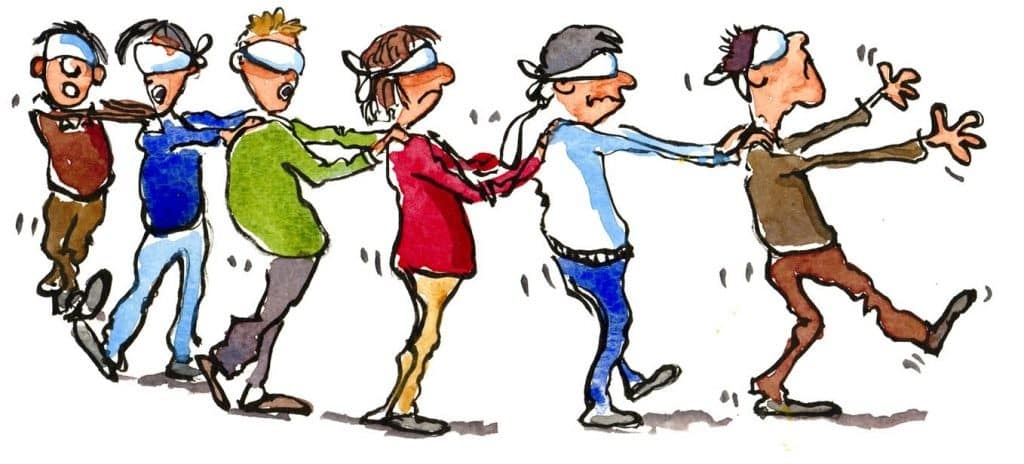
Remember when fidget spinners suddenly appeared in every student’s hand? Or when a particular hairstyle dominated your school seemingly overnight? One week nobody had them, the next week everyone did. You weren’t copying anyone specifically—it just felt like “everyone’s doing it, so I should too.”
Welcome to the bandwagon effect, one of the most powerful forces shaping human behavior. This psychological phenomenon explains why we jump on trends, adopt popular opinions, and make choices based on what others are doing rather than independent judgment.
The term comes from 19th-century American politics, when parade bands would ride on wagons, and people would literally “jump on the bandwagon” to show support for winning candidates. Today, we still jump on metaphorical bandwagons every day—from fashion choices to career decisions to political views.
The Invisible Pull of the Crowd
The bandwagon effect operates on a simple premise: the more people believe or do something, the more we’re inclined to believe or do it too. It’s not necessarily because we’ve independently evaluated the choice and found it valuable. We adopt it because popularity itself becomes a form of social proof.
Research from Yale University’s Department of Psychology demonstrates that humans are hardwired for conformity. Our ancestors survived by sticking with the group—those who wandered off alone often didn’t pass on their genes. This evolutionary heritage makes us naturally inclined to follow the crowd, even when logic suggests otherwise.
Consider the classic Asch conformity experiments conducted at Swarthmore College. Researchers asked participants to identify which line matched a reference line’s length. When surrounded by actors giving obviously wrong answers, 75% of participants conformed to the incorrect group response at least once—despite clear evidence before their eyes. The pull of social consensus was stronger than visual reality.
There’s an ancient Jataka tale about a hare who heard a loud noise and, assuming danger, ran frantically through the forest. Seeing the hare run, a deer started running too. Then a boar joined, then a buffalo, then a tiger—each animal joining the stampede without knowing why. Eventually, thousands of animals were fleeing in panic from nothing. A wise lion finally stopped to ask the original hare what happened. The “danger” turned out to be a fallen coconut. The lesson? Following the crowd without understanding leads to collective foolishness.
Why Smart People Follow the Herd
You might think intelligent, independent thinkers would resist the bandwagon effect. Unfortunately, education and intelligence offer limited protection. Here’s why even smart people jump on bandwagons:
Information Shortcuts: When we lack time or knowledge to evaluate every choice, observing what others choose provides a quick decision-making shortcut. If 500 people are eating at one restaurant while another stands empty, the crowded one probably serves better food—or so we assume.
Social Acceptance: Humans crave belonging. Going against popular trends risks social rejection, which triggers genuine psychological distress. According to Harvard’s Social Cognitive and Affective Neuroscience Lab, our brains process social rejection similarly to physical pain.
Fear of Missing Out (FOMO): When everyone discusses the latest show, app, or trend, staying out feels isolating. The bandwagon effect feeds on FOMO, creating anxiety about being left behind.
Reduced Personal Responsibility: Following the crowd feels safer than making independent choices. If everyone chooses wrong, you’re not personally to blame. This psychological comfort makes conformity attractive, especially for important decisions.
Think about Arjun, a teenager who wasn’t interested in a particular smartphone brand. But when classmate after classmate got the same phone, sharing photos of its distinctive design on social media, Arjun found himself wanting one too—not because he needed its features, but because he felt increasingly left out of conversations and group activities centered around that device.
When Bandwagons Drive Off Cliffs
The bandwagon effect isn’t always harmless trend-following. It can have serious consequences:
Financial Bubbles: Stock market crashes and cryptocurrency collapses often result from bandwagon investing. People buy assets not based on value analysis but because “everyone’s doing it.” The 2008 housing crisis partly stemmed from collective belief that “housing prices always go up”—a bandwagon assumption that proved catastrophically wrong.
Political Polarization: Research on voting behavior shows that people increasingly vote not based on policy evaluation but on which side seems to be winning or which their social group supports. This creates self-reinforcing political tribes where independent thinking diminishes.
Dangerous Health Trends: From extreme diets to unproven medical treatments, the bandwagon effect can compromise health. When celebrities or influencers promote questionable health practices, followers adopt them en masse without consulting medical professionals.
Cyberbullying and Mob Mentality: Online, the bandwagon effect fuels pile-on attacks. One person criticizes someone, others join in, and suddenly hundreds participate in harassment—many without understanding the original context.
The 2016 demonetization in India provides a striking example. Initially, long bank queues suggested universal compliance and support. People standing in line for hours influenced others to believe “this must be important; everyone’s doing it.” The bandwagon effect created an appearance of unanimous support that didn’t necessarily reflect actual individual assessment of the policy’s merits.
Breaking Free From the Bandwagon
Recognizing the bandwagon effect in action is your first step toward independent thinking. Here’s how to resist its pull:
Pause Before Joining: When you feel the urge to adopt a trend, ask yourself: “Do I actually want this, or do I want it because others have it?” This simple question creates critical distance.
Seek Contrarian Perspectives: Deliberately expose yourself to viewpoints that challenge popular consensus. Even if you ultimately agree with the majority, understanding dissenting views strengthens your reasoning.
Examine Your Motivations: Are you choosing this restaurant because the food genuinely appeals to you, or because it’s Instagram-popular? Are you supporting this cause because you’ve researched it, or because your friends do?
Remember That Popularity ≠ Quality: The most popular option isn’t automatically the best. Sometimes crowds are wrong. History is filled with once-popular ideas that proved disastrous.
Build Confidence in Independent Choice: Practice making small decisions based solely on your preferences, not others’ approval. Order the unpopular menu item if it appeals to you. Watch the less-discussed movie that interests you. These small acts build resistance to larger bandwagon pressures.
There’s wisdom in the Panchatantra story of the monkey chief who insisted all monkeys wear caps because he received one as a gift. The monkeys obeyed until a clever monkey asked, “Why?” The chief had no good answer except “because I do.” The question “Why?” is your most powerful tool against mindless bandwagon-jumping.
The Positive Side of Social Influence
The bandwagon effect isn’t inherently bad. It explains how positive social changes spread—from increasing recycling rates to reducing smoking. When people see others adopting beneficial behaviors, they’re more likely to follow.
Understanding this effect helps parents, teachers, and leaders create positive change. Highlighting “most students complete homework on time” often works better than punishment. Showing “your neighbors use less electricity than you” motivates conservation. The bandwagon effect, channeled properly, can drive collective progress.
Frequently Asked Questions
Q1: Is the bandwagon effect the same as peer pressure? They’re related but distinct. Peer pressure involves direct social coercion (“Come on, everyone’s doing it!”), while the bandwagon effect is often subtle and internalized—you adopt behaviors simply because you observe others doing them, without anyone explicitly pressuring you.
Q2: Can the bandwagon effect override personal values? Sometimes, yes. Research shows people will compromise moderately held values when faced with strong social consensus. However, deeply held core values typically show more resistance to bandwagon pressure.
Q3: Are children more susceptible than adults? Generally, yes. Adolescents and teenagers show particularly strong bandwagon effects as they’re still forming identity and heavily value peer acceptance. However, adults remain susceptible, especially in unfamiliar situations or regarding complex issues.
Q4: How do companies exploit the bandwagon effect in marketing? Through phrases like “bestselling,” “most popular,” and showing crowds using products. Testimonials like “Join 10 million satisfied customers” trigger bandwagon psychology. User counts, ratings, and “trending” labels all leverage this effect.
Q5: Can recognizing the bandwagon effect help me make better decisions? Absolutely. Awareness doesn’t eliminate the effect but weakens it. When you catch yourself thinking “everyone believes this,” you can pause and evaluate independently. This metacognitive awareness is a powerful tool for better judgment.
Observer Voice is the one stop site for National, International news, Sports, Editor’s Choice, Art/culture contents, Quotes and much more. We also cover historical contents. Historical contents includes World History, Indian History, and what happened today. The website also covers Entertainment across the India and World.

