

Union Budget 2026: Analyzing Nirmala Sitharaman’s Longest and Shortest Budget Addresses

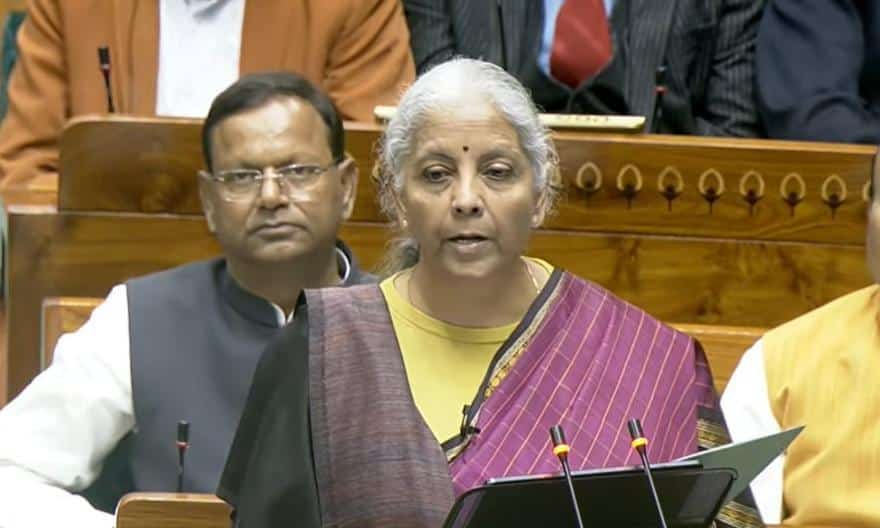
Union Finance Minister Nirmala Sitharaman delivered her ninth consecutive Union Budget speech in the Lok Sabha on Sunday, lasting 1 hour and 25 minutes. This address outlined the government’s fiscal strategy for the 2026-27 financial year, detailing spending plans, tax proposals, and key policy priorities. As one of the most anticipated events in India’s economic calendar, the speech highlighted Sitharaman’s record tenure as the longest-serving finance minister in continuous office, a position she has held since May 31, 2019.
Significance of the Budget Presentation
Sitharaman’s recent Budget presentation is notable not only for its content but also for its historical context. Prime Minister Narendra Modi hailed the event as a significant moment in India’s parliamentary tradition. Over the years, Sitharaman’s Budget speeches have evolved in both duration and style. Her inaugural Budget in 2019 was the longest at that time, clocking in at 2 hours and 8 minutes. This year’s speech, while shorter, continued to reflect her unique approach, which includes incorporating couplets in multiple languages and using a traditional red cloth ‘bahi-khata’ instead of the customary leather briefcase.
Sitharaman’s tenure has seen her become a trailblazer in Indian finance, being the first full-time woman finance minister to present the Union Budget. Her speeches have consistently drawn attention for their length and depth, with the 2020 Budget being the longest in independent India’s history at nearly 2 hours and 39 minutes. Each year, she has focused on different themes, showcasing the government’s priorities and vision for the country’s economic future.
Key Highlights of the 2026-27 Budget
In her latest address, Sitharaman announced a significant increase in the capital expenditure target, raising it to Rs 12.2 lakh crore for the fiscal year 2027, up from Rs 11.2 lakh crore in the current year. This move is aimed at bolstering infrastructure development and stimulating economic growth. The fiscal deficit is projected to decrease slightly to 4.3 percent of GDP, down from the 4.4 percent anticipated for 2025-26. Additionally, net tax receipts are estimated to reach Rs 28.7 lakh crore, reflecting the government’s efforts to enhance revenue collection.
The total size of the Union Budget has been set at Rs 53.5 lakh crore, with the general government debt-to-GDP ratio around 85 percent as of 2024. This includes 57 percent attributed to central government debt, indicating a careful balancing act between fiscal responsibility and growth-oriented spending. The Budget aims to address various sectors, ensuring that the government’s priorities align with the needs of the economy and the population.
Historical Context of Sitharaman’s Budget Speeches
Sitharaman’s journey as finance minister has been marked by several milestones. She is only the second woman in independent India to present the Union Budget, following in the footsteps of Indira Gandhi. Her speeches have consistently reflected the government’s evolving priorities, with themes ranging from health and infrastructure to inclusive development and green growth.
In 2021, her Budget focused on six pillars, including well-being and governance, while the 2022 Budget emphasized public investment and infrastructure modernization. The 2023 Budget introduced the Saptarishi vision, outlining seven key priorities for the nation. Each year, her presentations have not only provided a fiscal roadmap but also showcased her commitment to addressing the diverse needs of the Indian populace.
Looking Ahead: The Future of India’s Economy
As India navigates a complex global economic landscape, Sitharaman’s Budget speeches will continue to play a crucial role in shaping the country’s fiscal policies. The emphasis on capital expenditure and fiscal discipline reflects a strategic approach to fostering growth while managing debt levels. With her record tenure and innovative presentation style, Sitharaman remains a pivotal figure in India’s economic narrative.
The government’s focus on infrastructure and social welfare is expected to resonate with various stakeholders, from investors to citizens. As the nation moves towards the 2026-27 fiscal year, the implications of this Budget will be closely monitored, both domestically and internationally, as India seeks to solidify its position in the global economy.
Observer Voice is the one stop site for National, International news, Sports, Editor’s Choice, Art/culture contents, Quotes and much more. We also cover historical contents. Historical contents includes World History, Indian History, and what happened today. The website also covers Entertainment across the India and World.
Follow Us on Twitter, Instagram, Facebook, & LinkedIn

