

Trump Proposes Tariffs as Alternative to Federal Income Taxes: Are the Claims Supported by Data?

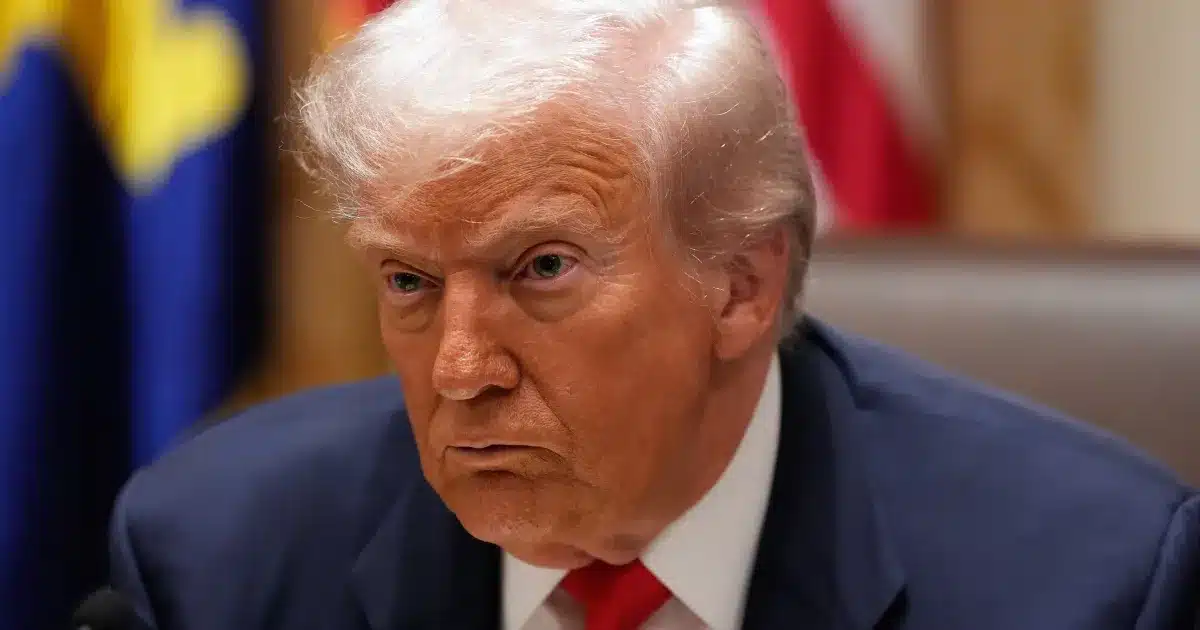
US President Donald Trump has reignited discussions around the possibility of replacing federal income taxes with tariffs, a concept that has been a cornerstone of his economic strategy during the 2024 presidential campaign. During a recent Cabinet meeting, Trump asserted that the increasing revenue from tariffs could eventually eliminate the need for income tax payments by Americans. However, this assertion contradicts federal revenue data, which shows that individual income taxes remain the primary source of government funding.
Current Revenue Landscape
Federal revenue data reveals a stark contrast to Trump’s claims about tariffs. In the last fiscal year, the U.S. government collected approximately $2.66 trillion from individual income taxes, making up about 51% of total revenue, which amounted to $5.23 trillion. In comparison, tariffs generated nearly $195 billion, accounting for only 3.7% of the total revenue. The first month of the new fiscal year followed a similar trend, with individual income taxes contributing $217 billion, or 54% of the roughly $404 billion generated. Tariffs, on the other hand, brought in about $31 billion, representing 7.75% of the total revenue for that period.
Experts have expressed skepticism regarding the feasibility of Trump’s proposal. Brandon DeBot, a senior attorney adviser at New York University’s Tax Law Center, stated that the idea is not mathematically or economically viable. Analysts from various perspectives have echoed this sentiment, emphasizing that even with the highest tariffs imposed in the postwar era, the revenue generated falls significantly short of what income taxes provide.
Economic Implications of Tariff-Only Taxation
Trump remains optimistic about the potential for a tariff-based revenue system, claiming that the government will eventually be able to eliminate income taxes. He pointed to an increase in foreign investment as evidence that the tariff strategy is effective. White House spokesman Kush Desai stated that Trump’s tariffs could generate trillions in revenue, with costs ultimately borne by foreign exporters. However, this assertion raises questions about the accuracy of projected figures, as many have not been fully disclosed.
Economists warn that a tax system reliant solely on tariffs could disproportionately impact lower-income households. Unlike income taxes, which can be adjusted with credits and deductions, tariffs tend to raise prices for consumers, shifting the financial burden onto them. Additionally, higher tariffs could provoke retaliatory measures from trading partners, potentially leading to reduced imports and slower economic growth, which could ultimately decrease federal revenue.
Challenges and Legislative Hurdles
The proposal to replace income taxes with tariffs faces significant challenges, both politically and economically. Trump’s tariff program is currently under review by the Supreme Court, which could potentially roll back the president’s authority to impose such duties. Even if the court rules against Trump, he still has other mechanisms to tax imports, including those used during his first term.
Replacing the federal income tax, which has been in place since the ratification of the 16th Amendment in 1913, would require substantial legislative changes and a complete overhaul of the national budget. Critics of the proposal argue that it comes at a time of increasing economic inequality, with a growing number of billionaires and millionaires. Michael Graetz, a professor of tax law at Yale University, noted that reducing the tax burden on the wealthy while increasing it on the middle class raises significant ethical concerns.
Observer Voice is the one stop site for National, International news, Sports, Editor’s Choice, Art/culture contents, Quotes and much more. We also cover historical contents. Historical contents includes World History, Indian History, and what happened today. The website also covers Entertainment across the India and World.

