

Systemic Mastocytosis: When Mast Cells Accumulate in Places They Shouldn’t

When 42-year-old Ramesh experienced repeated episodes of sudden skin flushing, racing heartbeat, severe abdominal cramping, and dizziness over several months, his doctors initially suspected anxiety attacks or food allergies. But when routine blood work showed elevated tryptase levels—a protein released by mast cells—and a bone marrow biopsy revealed clusters of abnormal mast cells throughout his marrow, he was diagnosed with systemic mastocytosis, a rare disorder affecting only 1 in 10,000-20,000 people. His doctor explained that mast cells—immune cells normally protecting against infections and allergies—were accumulating excessively in his bone marrow, skin, liver, spleen, and gastrointestinal tract due to a genetic mutation, causing them to release chemicals triggering his symptoms. Systemic mastocytosis is often called the “great mimicker” because its symptoms—flushing, itching, diarrhea, fatigue—resemble many common conditions, leading to years of misdiagnosis. Understanding systemic mastocytosis is crucial because severe reactions can be life-threatening without proper treatment, the disease exists on a spectrum from indolent forms compatible with normal lifespan to aggressive forms requiring intensive therapy, and early recognition allows preventive measures avoiding triggers that cause dangerous mast cell activation.
Mast Cells: Immune Guardians That Multiply Out of Control
Mast cells are specialized immune cells found throughout your body, particularly concentrated in areas that interface with the outside world—skin, lungs, digestive tract, and mucous membranes. They’re sentinels of your immune system, stationed at potential entry points for infections and allergens. Inside each mast cell are hundreds of granules—tiny sacs containing powerful chemical mediators including histamine (causes blood vessels to dilate, increases mucus production, makes skin itch), tryptase (an enzyme that breaks down proteins and serves as a marker for mast cell activation), heparin (prevents blood clotting), prostaglandins and leukotrienes (cause inflammation, smooth muscle contraction, and pain), and various cytokines (chemical messengers coordinating immune responses).
When mast cells detect danger—bacteria, viruses, allergens, or tissue damage—they degranulate, meaning they release these stored chemicals into surrounding tissues. This triggers immediate protective responses: increased blood flow bringing immune cells to the area, inflammation walling off infections, mucus production flushing out pathogens, and in allergic reactions, the dramatic symptoms we recognize as allergies. Normally, mast cells exist in controlled numbers, degranulate only when appropriately triggered, and their chemical release is carefully regulated. In systemic mastocytosis, everything goes wrong with this system.
Systemic mastocytosis is caused by mutations in the KIT gene, which provides instructions for making a protein called KIT receptor (also called CD117). This receptor sits on the surface of mast cells receiving signals that control their growth, division, and survival. The most common mutation—found in 80-95% of systemic mastocytosis patients—is D816V, occurring at position 816 in the KIT protein where aspartic acid is replaced by valine. This single letter change causes the KIT receptor to be constantly “on” even without receiving normal signals, like a light switch stuck in the on position. The overactive KIT receptor sends continuous growth signals causing mast cells to multiply excessively, accumulate in organs where they don’t normally reside in large numbers (bone marrow, liver, spleen, lymph nodes), survive longer than normal instead of dying on schedule, and become hypersensitive, releasing their chemicals in response to minor triggers or even spontaneously.
The disease is classified into subtypes based on severity and organ involvement. Indolent systemic mastocytosis (ISM) is the most common form (70-80% of cases) with slow progression, generally stable disease, and near-normal life expectancy. Mast cells accumulate primarily in skin, bone marrow, and occasionally liver/spleen, but organ function remains largely preserved. Smoldering systemic mastocytosis (SSM) represents 5-10% of cases with higher mast cell burden showing signs of organ dysfunction without meeting criteria for aggressive disease. Systemic mastocytosis with associated hematologic neoplasm (SM-AHN) occurs in 20-30% where patients have both mastocytosis and another blood disorder like chronic myelomonocytic leukemia, myelodysplastic syndrome, or acute myeloid leukemia. The blood disorder often determines prognosis.
Aggressive systemic mastocytosis (ASM) affects <10% with organ damage from mast cell infiltration causing liver dysfunction, malabsorption, bone fractures, or cytopenias (low blood counts). Median survival 2-5 years without treatment. Mast cell leukemia (MCL) is the rarest and most severe form (<1% of cases) with very high numbers of mast cells in blood and bone marrow, rapidly progressive organ failure, and median survival 6-12 months even with treatment. Most systemic mastocytosis is sporadic (random) rather than familial, though rare families with inherited KIT mutations exist.
Symptoms: Chemical Mediators Creating Chaos Throughout the Body
Symptoms of systemic mastocytosis result from two mechanisms: mediator release causing immediate symptoms when mast cells degranulate, and organ infiltration causing dysfunction when mast cells accumulate in tissues. Mediator release symptoms occur in episodes lasting minutes to hours, triggered by various factors or occurring spontaneously. Flushing is the most common symptom (60-80% of patients)—sudden reddening of skin, particularly face, neck, and upper chest, accompanied by warmth. Episodes last 15-30 minutes typically. Pruritus (itching) affects 50-70% of patients, ranging from mild to severe, sometimes without visible rash, or with urticaria (hives) appearing as raised, red, itchy welts.
Gastrointestinal symptoms plague 60-80% of patients including abdominal cramping and pain (from smooth muscle contraction caused by mediators), diarrhea (often chronic, sometimes malabsorption from mast cells in intestinal wall), nausea and vomiting, heartburn and reflux, and bloating. Cardiovascular symptoms include tachycardia (rapid heartbeat—often 100-140 beats per minute during episodes), palpitations (feeling heart racing or pounding), hypotension (low blood pressure causing dizziness, lightheadedness), and in severe cases, syncope (fainting) or near-syncope. Anaphylaxis or anaphylactoid reactions occur in 20-50% of patients—severe systemic reactions with widespread flushing, difficulty breathing, throat swelling, severe hypotension, loss of consciousness. These can be triggered by insect stings (bees, wasps—10x higher anaphylaxis risk than general population), medications (especially NSAIDs like ibuprofen, aspirin; opioids; anesthetics), alcohol, exercise, emotional stress, or occur spontaneously. Unlike typical allergies, mastocytosis anaphylaxis can occur without prior exposure.
Neuropsychiatric symptoms affect 40-60% including cognitive difficulties (brain fog, memory problems, difficulty concentrating), headaches (often severe, migraine-like), mood changes (depression affecting 50%, anxiety 40%), and fatigue (profound exhaustion affecting 70-80% of patients, often the most disabling symptom). Constitutional symptoms include bone pain (30-40% of patients from mast cell infiltration in bone marrow, osteoporosis, or pathologic fractures), weight loss in aggressive forms, enlarged liver (hepatomegaly) or spleen (splenomegaly) detectable on physical exam or imaging, and lymphadenopathy (swollen lymph nodes).
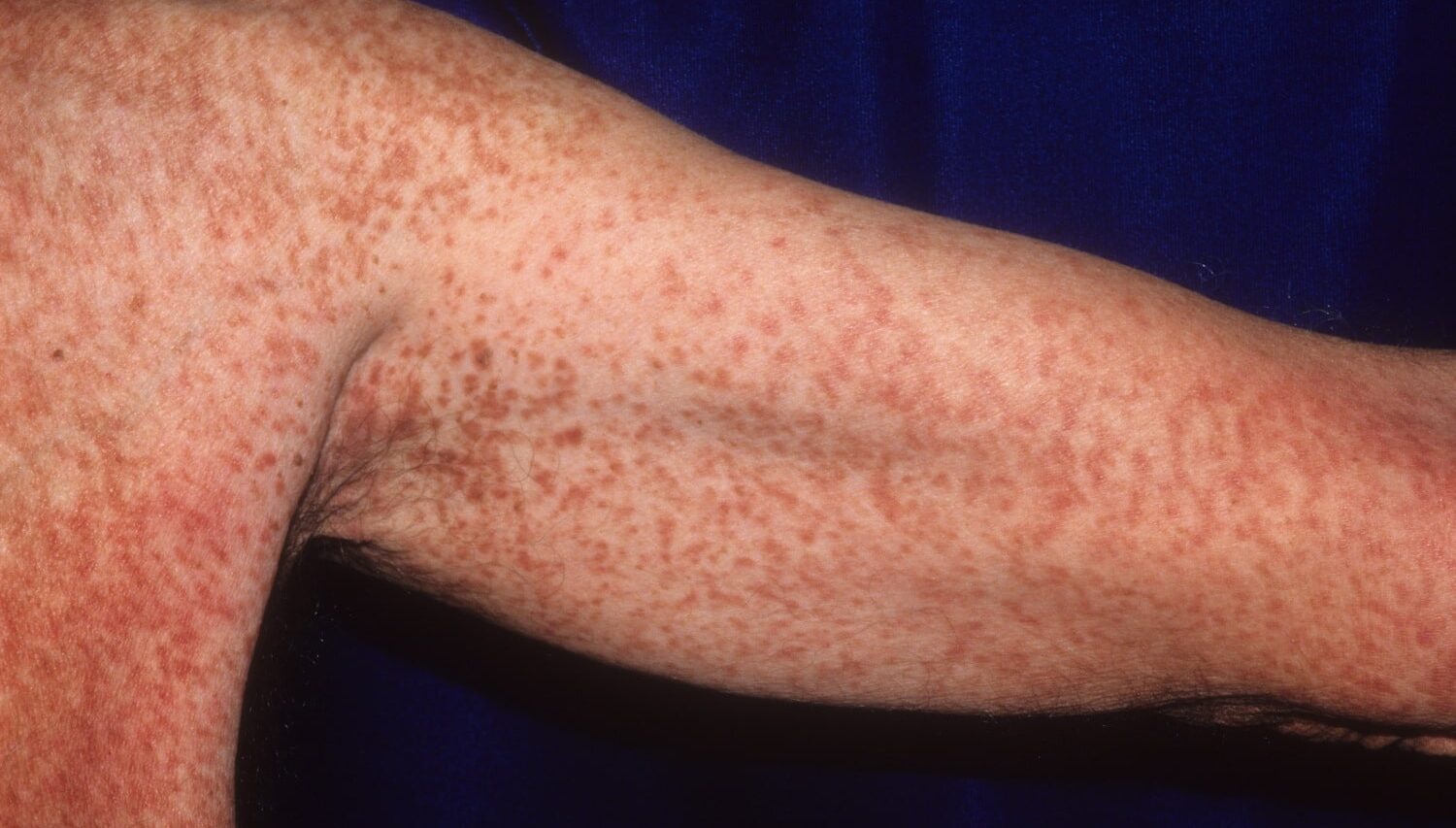
Skin involvement in systemic mastocytosis includes urticaria pigmentosa—the most common skin finding, occurring in 50-80% of patients. Brown or reddish-brown spots or patches on trunk, arms, and legs, varying from few lesions to hundreds covering body surface. When rubbed or scratched, lesions become raised, red, and itchy (Darier’s sign—pathognomonic for cutaneous mastocytosis). Some patients have diffuse cutaneous mastocytosis—widespread thickening and yellowing of skin. Others have mastocytomas—solitary nodules. Interestingly, 20-50% of systemic mastocytosis patients have no skin involvement at all—their disease is purely systemic making diagnosis more challenging.
Diagnosis: Finding Excess Mast Cells and Proving They’re Abnormal
Diagnosing systemic mastocytosis requires demonstrating abnormal mast cell accumulation in organs and proving they’re clonal (derived from a single mutated cell) rather than reactive (normal response to allergy or infection). The diagnostic process starts with clinical suspicion based on symptoms, particularly recurrent flushing, urticaria pigmentosa, anaphylaxis, or unexplained bone pain. Serum tryptase is the most important screening test—tryptase is an enzyme released by mast cells. Normal baseline tryptase is <11.5 ng/mL. Levels >20 ng/mL strongly suggest mastocytosis (though can be elevated in severe allergies, kidney failure, or acute myeloid leukemia). In systemic mastocytosis, baseline tryptase is typically 20-200 ng/mL, sometimes higher in aggressive forms.
Bone marrow biopsy is essential for definitive diagnosis—the gold standard test. Under anesthesia, a needle is inserted into the hip bone extracting bone marrow samples. Pathologists examine the tissue looking for dense aggregates of 15+ mast cells clustered together (major diagnostic criterion), spindle-shaped mast cells instead of normal round morphology, mast cells expressing CD25 or CD2 markers (abnormal—normal mast cells don’t express these), and KIT D816V mutation in mast cells. Diagnosis requires either the major criterion plus one minor criterion, or three minor criteria.
Additional testing includes complete blood count checking for cytopenias (low red cells, white cells, or platelets suggesting bone marrow involvement or associated hematologic disorder), liver function tests (elevated alkaline phosphatase or transaminases suggest liver infiltration), imaging with abdominal ultrasound or CT showing enlarged liver, spleen, or lymph nodes, bone density scan (DEXA) detecting osteoporosis (present in 30-50% of patients), and skeletal X-rays identifying lytic bone lesions or fractures. Genetic testing uses special PCR techniques detecting the KIT D816V mutation in blood or bone marrow—present in 80-95% of systemic mastocytosis patients. Standard sequencing often misses this mutation; allele-specific PCR is required. Finding the mutation confirms clonal mast cell disease.
Organ function assessment determines subtype classification measuring liver enzymes, albumin, and bilirubin (liver function), complete blood counts (bone marrow function), and malabsorption indicators (vitamin B12, albumin, weight loss). Evidence of organ damage indicates smoldering, aggressive, or mast cell leukemia rather than indolent disease. Differential diagnosis rules out conditions mimicking mastocytosis including carcinoid syndrome (flushing, diarrhea from neuroendocrine tumors secreting serotonin), pheochromocytoma (episodic flushing, tachycardia, hypertension from adrenal tumor secreting catecholamines), and systemic allergic conditions (chronic urticaria, angioedema, severe allergies causing elevated tryptase).
Treatment: Controlling Symptoms and Managing Progression
Treatment strategies differ dramatically between indolent and aggressive forms. For indolent systemic mastocytosis (ISM), treatment focuses on symptom control and preventing severe reactions since life expectancy is near-normal. No disease-modifying therapy is needed for most ISM patients. Antihistamines are the backbone of symptom management using H1 antihistamines (cetirizine, loratadine, fexofenadine) blocking histamine effects on blood vessels and nerves, reducing itching, flushing, and urticaria. Doses often higher than standard allergy treatment—sometimes 2-4 times normal dose. H2 antihistamines (ranitidine, famotidine) block histamine’s effects on stomach acid production, reducing reflux, abdominal pain, and diarrhea. Many patients take both H1 and H2 blockers for optimal symptom control.
Mast cell stabilizers like cromolyn sodium prevent mast cell degranulation reducing mediator release. Taken orally 4 times daily before meals and bedtime. Helps gastrointestinal symptoms in 50-70% of patients, though less effective for skin symptoms. Leukotriene antagonists (montelukast) block leukotrienes—inflammatory mediators released by mast cells—reducing flushing, abdominal cramping, and respiratory symptoms in some patients. For severe symptoms, omalizumab (anti-IgE antibody) or other immunomodulators may help selected patients, though evidence is limited.
Anaphylaxis prevention and management is critical—all patients should carry two epinephrine auto-injectors at all times, wear medical alert identification, avoid known triggers (NSAIDs, alcohol, extreme temperatures, intense exercise), and premedicate before procedures (endoscopy, surgery, dental work) with antihistamines and sometimes corticosteroids. For osteoporosis, calcium and vitamin D supplementation, bisphosphonates (alendronate, risedronate) if bone density very low, and avoidance of risk factors (smoking, excessive alcohol). Gastrointestinal management includes dietary modifications (avoiding triggers—spicy foods, alcohol, caffeine), antidiarrheal medications (loperamide), proton pump inhibitors for reflux, and sometimes steroids for severe malabsorption.
For aggressive systemic mastocytosis (ASM) or mast cell leukemia (MCL), cytoreductive therapy aims to reduce mast cell burden and prevent organ damage. Cladribine (2-CdA) is a chemotherapy drug showing efficacy in ASM with response rates 50-60% reducing mast cell burden, improving organ function, and sometimes achieving complete remission. Given as 5-7 day continuous infusion, repeated every 4-8 weeks. Side effects include bone marrow suppression, infections, and fatigue. Interferon-alpha reduces mast cell proliferation in some patients. Hydroxyurea or other chemotherapy agents are sometimes used.
Targeted therapy with midostaurin (Rydapt) was FDA-approved in 2017 specifically for ASM, SM-AHN, and MCL. It’s a tyrosine kinase inhibitor blocking the mutant KIT protein’s activity. Clinical trials showed 60% overall response rate with improvement in organ function, reduction in mast cell burden, and symptom improvement. Taken orally twice daily. Side effects include nausea, vomiting, diarrhea, fatigue, and low blood counts. Avapritinib is a newer, more selective KIT inhibitor approved in 2021 for advanced systemic mastocytosis showing even higher response rates (75-80%) in early trials. For SM-AHN, the associated blood disorder often requires treatment—chemotherapy for leukemia, myelodysplastic syndrome treatments, or sometimes stem cell transplantation.
Living with Systemic Mastocytosis: Triggers, Adaptations, and Prognosis
Prognosis varies enormously by subtype. Indolent systemic mastocytosis (ISM) patients have near-normal life expectancy—median survival not significantly different from general population. Quality of life varies; some patients have minimal symptoms with treatment while others struggle with chronic fatigue, pain, and mediator symptoms despite optimal management. Progression to aggressive disease occurs in <5% of ISM patients. Smoldering SM has intermediate prognosis—median survival 8-10 years. Aggressive SM without treatment has median survival 2-5 years; with treatment (cladribine, midostaurin, avapritinib) survival improves to 5-8 years with some patients achieving prolonged remissions. Mast cell leukemia has poorest prognosis—median survival 6-12 months even with aggressive treatment, though occasional long-term survivors exist. SM-AHN prognosis depends primarily on the associated blood disorder—for example, if the hematologic malignancy is chronic myelomonocytic leukemia versus acute leukemia.
Trigger avoidance is crucial for all patients. Common triggers to avoid include NSAIDs (ibuprofen, naproxen, aspirin) which directly trigger mast cell degranulation causing severe reactions in many patients. Acetaminophen is generally safe. Opioid pain medications (codeine, morphine) cause histamine release—if needed, synthetic opioids like fentanyl are safer. Alcohol (even small amounts trigger flushing, tachycardia in 30-50% of patients). Extreme temperatures (hot baths, saunas, very cold exposure). Physical triggers (vigorous exercise, friction on skin, pressure). Emotional stress (anxiety, anger trigger mediator release). Insect stings (especially bees, wasps—avoid areas with stinging insects, carry epinephrine). Foods (highly variable between patients—common triggers include spicy foods, fermented foods, aged cheeses, processed meats, foods high in histamine or that trigger histamine release). Certain medications (some antibiotics, muscle relaxants, contrast dyes used in imaging).
Lifestyle adaptations improve quality of life including maintaining consistent daily routines (irregular sleep, meals, stress worsen symptoms), pacing activities to avoid exhaustion, stress management techniques (meditation, counseling, biofeedback), staying hydrated (helps regulate blood pressure), temperature regulation (layered clothing, air conditioning, avoiding extremes), and dietary modifications (identifying and avoiding personal triggers, eating smaller frequent meals). Medical alert identification is essential—bracelet or necklace stating “systemic mastocytosis, risk of anaphylaxis, carries epinephrine.”
Support resources include The Mast Cell Disease Society providing education, support groups, and research advocacy, online communities connecting patients sharing experiences and coping strategies, and specialized mastocytosis clinics at academic medical centers offering comprehensive care. Many patients benefit from multidisciplinary care involving hematology/oncology for disease management, allergy/immunology for mediator symptoms and anaphylaxis prevention, gastroenterology for GI symptoms, endocrinology for bone health, and psychiatry/psychology for anxiety, depression, and cognitive symptoms.
Frequently Asked Questions
Q1: How is systemic mastocytosis different from regular allergies, and can you have both?
Systemic mastocytosis and allergies are fundamentally different conditions, though they share similar symptoms because both involve mast cell activation. Regular allergies occur when your immune system overreacts to harmless substances (pollen, foods, pet dander) producing IgE antibodies against them. When you encounter the allergen, IgE antibodies on mast cells trigger degranulation releasing histamine and other mediators causing allergy symptoms. Crucially, in allergies you have a normal number of normal mast cells that react appropriately to specific allergens—the problem is the immune system mistakenly identifying harmless substances as dangerous. Systemic mastocytosis involves abnormal accumulation of clonal mast cells carrying KIT mutations throughout organs. These abnormal mast cells release mediators spontaneously or in response to minimal triggers, even without allergen exposure. The problem isn’t what triggers the mast cells but rather having too many hypersensitive mast cells that release chemicals inappropriately. Key differences: normal mast cell numbers in allergies versus excess abnormal mast cells in mastocytosis, specific allergen triggers in allergies versus multiple triggers or spontaneous release in mastocytosis, normal baseline tryptase in allergies versus elevated baseline tryptase >20 ng/mL in mastocytosis, and skin lesions (urticaria pigmentosa) in many mastocytosis patients, not seen in allergies. You can absolutely have both conditions simultaneously—in fact, some studies suggest mastocytosis patients may have higher rates of allergies than the general population. Having underlying mastocytosis makes allergic reactions more severe and potentially dangerous because you start with overactive mast cells, then add allergen triggering further release. If you have known allergies plus features suggesting mastocytosis (elevated baseline tryptase, urticaria pigmentosa, severe anaphylaxis to insect stings, or unexplained flushing/abdominal symptoms), you should be evaluated for mastocytosis. Treatment differs too—allergies respond to allergen avoidance, antihistamines, and sometimes immunotherapy, while mastocytosis requires chronic antihistamines, mast cell stabilizers, trigger avoidance, and in aggressive forms, cytoreductive therapy targeting the abnormal mast cell population.
Q2: My doctor found elevated tryptase in my blood. Does this mean I definitely have systemic mastocytosis?
Not necessarily—elevated tryptase can occur in several conditions, though it’s an important clue warranting further investigation. Baseline tryptase >20 ng/mL significantly increases mastocytosis likelihood, but the interpretation depends on the level and clinical context. Causes of elevated tryptase include systemic mastocytosis (most common cause of persistent baseline elevation >20 ng/mL), hereditary alpha tryptasemia (HAT)—a recently discovered genetic condition where people inherit extra copies of the gene encoding alpha tryptase, causing baseline levels 8-25 ng/mL. These individuals may have increased allergic reactions, flushing, GI symptoms, but don’t have mastocytosis. Affects 4-6% of general population. Acute allergic reactions or anaphylaxis cause transient tryptase elevation during the reaction, peaking 1-2 hours after symptom onset, then returning to baseline within 24 hours. If your blood was drawn during or shortly after a reaction, elevated tryptase might reflect acute activation not mastocytosis. Myeloid blood disorders (acute myeloid leukemia, myelodysplastic syndromes, chronic myeloid leukemia) can elevate tryptase. Kidney failure reduces tryptase clearance, causing accumulation and elevated levels. What you should do depends on the level and symptoms. Tryptase 11.5-20 ng/mL—borderline elevation, could be HAT, mild mastocytosis, or other causes. If you have symptoms (flushing, anaphylaxis, urticaria pigmentosa), refer to allergist or hematologist for evaluation including genetic testing for HAT, skin examination for urticaria pigmentosa, and possible bone marrow biopsy if high clinical suspicion. Tryptase >20 ng/mL—significantly elevated, warrants thorough evaluation for mastocytosis. Repeat tryptase when well (not during a reaction) confirming it’s truly baseline elevation. Refer to hematologist or mastocytosis specialist. Evaluation typically includes bone marrow biopsy with special testing for mast cell aggregates, CD25 expression, and KIT D816V mutation. Imaging (abdominal ultrasound or CT) looking for enlarged liver/spleen. Complete blood count and liver function tests. Even if bone marrow biopsy doesn’t show mastocytosis criteria, persistently elevated tryptase with symptoms suggests mast cell activation disorder—a condition where patients have mast cell mediator symptoms without meeting strict mastocytosis criteria. These patients still benefit from mastocytosis-type treatments (antihistamines, mast cell stabilizers, trigger avoidance). Bottom line: elevated tryptase doesn’t equal mastocytosis diagnosis, but it’s an important clue requiring appropriate workup to determine the cause and ensure you receive appropriate management.
Q3: I was diagnosed with indolent systemic mastocytosis. Will this progress to an aggressive form, and what’s my life expectancy?
The vast majority of patients with indolent systemic mastocytosis (ISM) remain indolent throughout their lives with near-normal life expectancy. Progression to aggressive disease is uncommon. Studies following ISM patients for 10-20+ years show that <5% progress to more aggressive forms (smoldering, aggressive, or mast cell leukemia). Most patients remain stable with symptoms controlled by medications. Factors associated with higher progression risk include very high tryptase levels (>200 ng/mL), very high percentage of mast cells in bone marrow (>30%), evidence of smoldering features (enlarged spleen >16cm, tryptase >125 ng/mL without organ damage), and certain additional mutations beyond KIT D816V (mutations in ASXL1, RUNX1, or other genes associated with blood disorders). Even with these risk factors, progression isn’t inevitable—many patients with unfavorable features remain stable for decades. Life expectancy for ISM is essentially normal. Large studies show median survival for ISM patients is not significantly different from age-matched general population. Many patients live into their 70s, 80s, and beyond. Quality of life varies more than survival—some ISM patients have minimal symptoms with good control on antihistamines and mast cell stabilizers, working full-time, participating in most activities with minor restrictions. Others struggle significantly with chronic fatigue (the most disabling symptom for many), chronic pain, frequent flushing episodes, GI symptoms, and anxiety about anaphylaxis, leading to disability despite normal life expectancy. The key to good outcomes is excellent symptom management—finding the right combination of medications, identifying and avoiding personal triggers, managing complications (treating osteoporosis, addressing fatigue and pain), and regular monitoring. Annual follow-up with hematologist or mastocytosis specialist includes physical exam, tryptase levels, complete blood count, liver function tests, and addressing new symptoms. If concerning changes occur (rapid tryptase increase, new cytopenias, enlarged liver/spleen, weight loss), repeat bone marrow biopsy may be needed assessing for progression. Most ISM patients can reassure themselves that while living with chronic symptoms can be challenging, the disease itself won’t significantly shorten their lives. Focus should be on optimizing quality of life through excellent medical care, trigger avoidance, stress management, and connecting with support communities who understand the invisible nature of this illness.
Q4: What should I do if I experience anaphylaxis, and how do I know when to use my epinephrine auto-injector?
All systemic mastocytosis patients should carry two epinephrine auto-injectors at all times because anaphylaxis can occur unpredictably, progress rapidly, and be life-threatening. Knowing when and how to use epinephrine could save your life. Use epinephrine immediately if you experience any of these severe symptoms: difficulty breathing, wheezing, or throat tightness suggesting airway swelling, feeling like you can’t get enough air, severe swelling of lips, tongue, or face that interferes with swallowing or breathing, lightheadedness or feeling like you might faint (suggests low blood pressure), loss of consciousness or severe confusion, chest pain or very rapid heartbeat >130-140 bpm, severe widespread hives or swelling over large body areas, or any combination of symptoms affecting two or more body systems (skin plus breathing, skin plus GI plus cardiovascular). Don’t wait to see if symptoms worsen—early epinephrine is safer and more effective than delayed treatment. How to use the auto-injector: remove from protective case, hold firmly with orange tip pointing downward against outer thigh (can inject through clothing), press down hard until you hear a click, hold firmly against thigh for 3-10 seconds (follow your specific device instructions), remove and massage injection area for 10 seconds, and call emergency services immediately even if symptoms improve (say “I have systemic mastocytosis and just used epinephrine for anaphylaxis”). Lie down with legs elevated unless breathing difficulty makes lying down uncomfortable—sitting upright is okay if needed. If symptoms don’t improve or worsen after 5-10 minutes, use the second epinephrine auto-injector. Go to the emergency room even if symptoms resolve—biphasic reactions (symptoms returning hours later) occur in 20% of anaphylaxis cases. Hospital observation for 4-6 hours is standard. What happens after using epinephrine: heart racing, shaking, anxiety, headache, and nausea are common side effects—unpleasant but not dangerous. These resolve within 30-60 minutes. Medical evaluation is still essential. After any anaphylactic episode, follow up with your hematologist or allergist to identify triggers if possible, adjust preventive medications, review trigger avoidance, and ensure adequate epinephrine prescriptions. Prevention strategies include premedication before high-risk situations (dental procedures, surgery, colonoscopy) with H1 antihistamines, H2 antihistamines, and sometimes steroids 12-24 hours before procedure. Avoid known triggers vigilantly. Maintain excellent baseline symptom control with daily medications. Consider wearing medical alert identification stating “systemic mastocytosis, severe anaphylaxis risk, carries epinephrine” so emergency responders know your condition. Many patients fear using epinephrine unnecessarily, but the risk of severe anaphylaxis far exceeds the risk of unnecessary epinephrine. When in doubt, use it—you cannot overdose with one auto-injector, and the consequences of delayed treatment during severe anaphylaxis (brain damage from low oxygen, death) far outweigh the temporary discomfort of epinephrine side effects.
Q5: Can I live a normal life with systemic mastocytosis—work, exercise, travel, have children?
Yes, most patients with indolent systemic mastocytosis can live relatively normal lives with appropriate precautions and management, though “normal” may require some adaptations. Work and career: many patients work full-time in various professions. Challenges include fatigue (the most limiting factor—some patients need reduced hours or work-from-home options), unpredictable symptoms (flexible employers who understand occasional sick days help), and avoiding occupational triggers (outdoor workers avoiding insect stings, chefs managing food triggers, jobs requiring intense physical exertion). Disability accommodations under ADA (in US) may include flexible schedules, work-from-home options, or modified duties. Some patients qualify for disability benefits if symptoms are severe and uncontrolled. Exercise and physical activity: moderate exercise is generally safe and beneficial for cardiovascular health, weight management, and mental wellbeing. Recommendations include avoiding extreme exertion (very intense workouts can trigger mediator release), staying hydrated before/during/after exercise, avoiding exercise in extreme heat or cold, starting slowly and building gradually, choosing lower-impact activities (swimming, cycling, yoga, walking over running, intense aerobics), and carrying epinephrine during exercise. Many patients successfully participate in recreational sports, gym workouts, and outdoor activities with precautions. Travel: generally safe with planning—carrying sufficient medications including multiple epinephrine auto-injectors, medical alert identification and documentation of diagnosis for airport security, researching medical facilities at destinations, travel insurance covering medical emergencies, avoiding destinations with high insect sting risk or extreme climates, and for international travel, knowing how to say “I need emergency medical help for anaphylaxis” in the local language. Pregnancy and childbearing: pregnancy is possible and many mastocytosis patients have successful pregnancies and healthy babies. However, pregnancy requires specialized care with high-risk obstetrics experienced with mastocytosis, careful medication management (many medications must be stopped or changed during pregnancy), planning for anesthesia during delivery (regional anesthesia carefully managed due to potential mast cell activation), and understanding that pregnancy can worsen, improve, or not affect symptoms (varies individually). Genetic counseling discusses very low inheritance risk—most mastocytosis is sporadic, not inherited, so children’s risk is essentially general population risk unless rare familial form. Quality of life varies enormously—some patients have minimal impact from well-controlled symptoms while others struggle significantly with chronic pain, fatigue, anxiety about reactions, and social isolation from dietary restrictions and activity limitations. Connecting with other patients through support groups, working with knowledgeable physicians, optimizing medications, and focusing on what you can do rather than restrictions helps many patients maintain good quality of life despite chronic illness. The key message: systemic mastocytosis is a chronic condition requiring ongoing management, but it doesn’t have to define your entire life. With proper care, most patients find ways to work, maintain relationships, pursue hobbies, and live fulfilling lives.
Disclaimer
This article adapts publicly available information from medical databases and research organizations. This content is for informational and educational purposes only and does not constitute medical advice. ObserverVoice.com is a news and information platform — not a healthcare provider. Decisions about systemic mastocytosis diagnosis, genetic testing, and treatment should be made in consultation with qualified physicians, hematologists, allergists, and specialists in mast cell disorders who can evaluate your individual symptoms, test results, and health circumstances. If you experience symptoms of anaphylaxis including difficulty breathing, throat swelling, or severe dizziness, use your epinephrine auto-injector and call emergency services immediately.
References
- National Organization for Rare Disorders. Systemic Mastocytosis. https://rarediseases.org/rare-diseases/systemic-mastocytosis/
- The Mast Cell Disease Society. What is Systemic Mastocytosis? https://tmsforacure.org/overview/systemic-mastocytosis/
- PMC. Mastocytosis: An Update on Pathogenesis, Diagnosis and Treatment. https://www.ncbi.nlm.nih.gov/pmc/articles/PMC8765682/
- PMC. Systemic Mastocytosis: Clinical Practice Guidelines. https://www.ncbi.nlm.nih.gov/pmc/articles/PMC5014508/
- World Health Organization. Rare Diseases. https://www.who.int/news-room/fact-sheets/detail/rare-diseases
Observer Voice is the one stop site for National, International news, Sports, Editor’s Choice, Art/culture contents, Quotes and much more. We also cover historical contents. Historical contents includes World History, Indian History, and what happened today. The website also covers Entertainment across the India and World.

