

New Rules Proposed for Two-Wheeled Road Ambulances in India

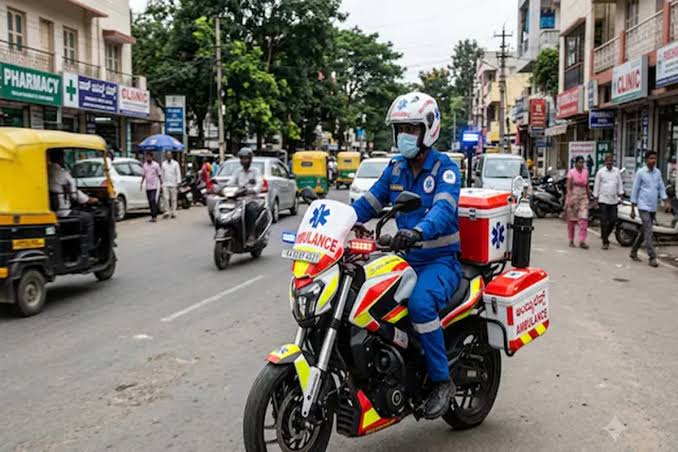
The Ministry of Road Transport and Highways has announced plans to enhance emergency medical services by proposing draft amendments to the Central Motor Vehicles Rules, 1989. These amendments seek to regulate two-wheeled road ambulances, a vital asset for rapid emergency response and crucial access to healthcare, especially in rural areas and challenging terrains.
Currently, there is no specific regulation governing two-wheeled road ambulances as a separate vehicle category in India. This has resulted in the absence of national standards for their construction, safety, and operational protocols. The proposed changes aim to fill this gap by implementing **AIS-209 (Part 1):2026 – Construction and Functional Requirements for Life Support Two-Wheeled Road Ambulances**.
New Standards for Safety and Functionality
The draft notification suggests that all two-wheeled road ambulances categorized as L2, manufactured from **October 1, 2027**, will need to adhere to the new AIS-209 standards. These vehicles will be equipped with emergency top lights that also must comply with the new regulations starting from the same date.
Operational and Fitness Requirements
The operational parameters for these ambulances will be dictated by the respective State Governments, allowing for tailored licensing based on local needs. Two-wheeled ambulances will be classified as transport vehicles and will require a fitness certificate every two years. Strict inspections will cover critical safety features, including the secure installation of patient conveyance units, functioning emergency warning lights, and the effectiveness of patient restraint systems.
Comprehensive Safety Measures
The AIS-209 (Part 1):2026 standard defines two-wheeled road ambulances as L2-category vehicles equipped with specialized ambulance units for patient transportation. This standard outlines essential construction and safety measures such as vehicle stability, braking performance, and emergency warning systems. Furthermore, it emphasizes safe loading and unloading of patients while providing protection against environmental factors.
The introduction of this regulatory framework for two-wheeled road ambulances aims to enhance safety and accountability in their design and operation. By enabling faster responses and improving access to emergency medical services, these regulations will significantly benefit areas where traditional ambulances may struggle to navigate.
The public will have the opportunity to comment on these draft rules for **30 days** starting from the notification date, after which the final regulations under the **Central Motor Vehicles Rules, 1989 (CMVR 1989)** will be established.
Observer Voice is the one stop site for National, International news, Sports, Editor’s Choice, Art/culture contents, Quotes and much more. We also cover historical contents. Historical contents includes World History, Indian History, and what happened today. The website also covers Entertainment across the India and World.

