

Sri Lanka Faces State of Emergency as Devastating Floods Claim Hundreds of Lives

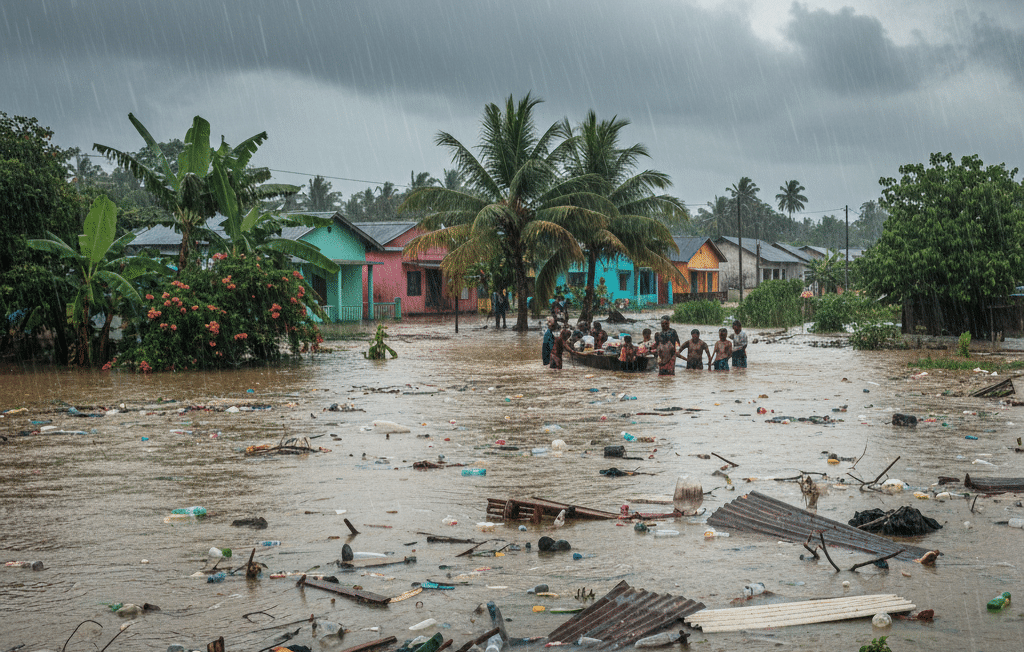
The recent floods and mudslides in Sri Lanka have resulted in a catastrophic death toll exceeding 330, marking one of the country’s most severe weather disasters in recent history. With over 200 individuals reported missing and approximately 20,000 homes destroyed, the situation has forced 108,000 people into temporary shelters, according to the Disaster Management Centre. President Anura Kumara Dissanayake has described this calamity as the “most challenging natural disaster” in Sri Lanka’s history, with reconstruction costs expected to be staggering.
Widespread Destruction and Displacement
The floods have wreaked havoc across Sri Lanka, leaving a significant portion of the population without essential services. Reports indicate that around one-third of the country is currently without electricity or running water. The state of emergency declared by the government underscores the severity of the situation following Cyclone Ditwah. Evacuation orders are in effect in several regions as the Kelani River’s water levels continue to rise dangerously. Eyewitness accounts reveal the extent of the destruction; one resident from central Sri Lanka reported that around 15 houses in her area were completely buried under mud and boulders, with no survivors.
The hardest-hit areas include Kandy and Badulla, where many communities remain isolated due to blocked roads caused by landslides. Residents like Saman Kumara from the village of Maspanna have shared harrowing stories of loss and survival. “We lost two people in our village… others are sheltering in a temple and a house that is still standing,” he recounted, highlighting the dire conditions as food and clean water supplies dwindle.
Rescue Efforts and Challenges
Rescue operations have been underway, with the navy assisting stranded individuals. One survivor recounted a narrow escape, describing how they had to climb onto the roof of a nearby building to avoid rising waters. “We were very lucky… while we were on the roof, part of it collapsed… three women fell into the water, but they were helped back onto the roof,” said WM Shantha. The urgency of the rescue efforts is evident, as many areas remain inaccessible, complicating the delivery of aid and support.
Tragically, the floods have also claimed the lives of 11 residents from an elderly care home in the north-central district of Kurunegala. The police confirmed that the home was inundated during the disaster, adding to the growing list of casualties. As the rescue operations continue, the need for immediate assistance is becoming increasingly critical.
Government Response and International Aid
In response to the disaster, the Sri Lankan government has issued an appeal for international aid, urging citizens living abroad to contribute financially to support affected communities. The government is mobilizing resources to address the immediate needs of those displaced by the floods. Cyclone Ditwah, which brushed the eastern coast of the island on Friday, has since moved away, but the monsoon season continues to pose risks for further extreme weather events.
Historically, Sri Lanka has faced severe flooding, with the worst incident in June 2003 resulting in 254 deaths and displacing hundreds of thousands. The current flooding crisis is part of a broader pattern, as Southeast Asia grapples with some of the worst floods in years, impacting millions across Indonesia, Malaysia, and Thailand. The situation remains fluid, with ongoing assessments needed to understand the full extent of the damage and the long-term implications for the affected regions.
Observer Voice is the one stop site for National, International news, Sports, Editor’s Choice, Art/culture contents, Quotes and much more. We also cover historical contents. Historical contents includes World History, Indian History, and what happened today. The website also covers Entertainment across the India and World.

