

Rupee Declines Below 90/$ for the First Time Amid US Tariffs and FII Flow Challenges

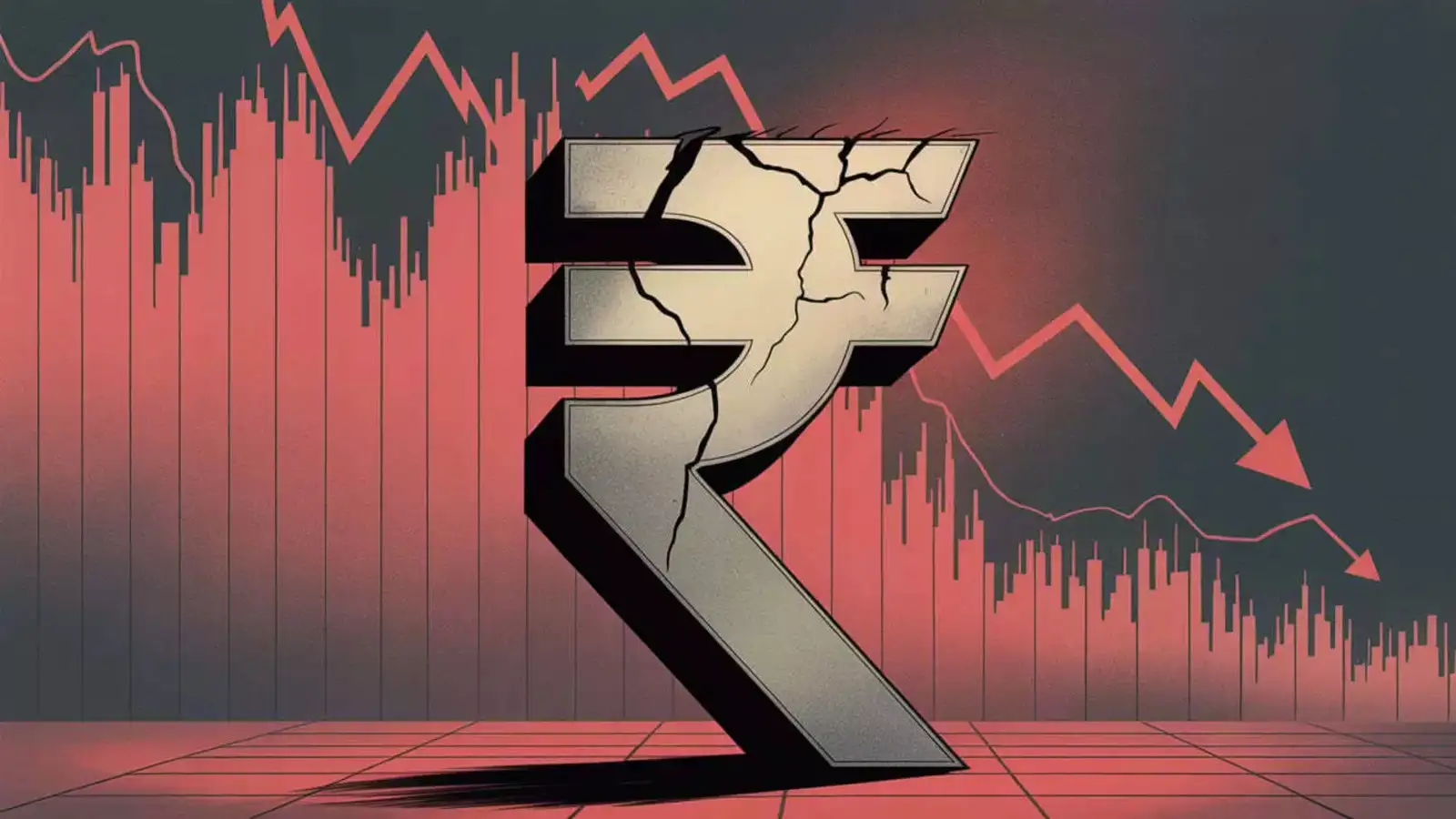
The Indian rupee has crossed a significant threshold, hitting an all-time low of 90.29 against the US dollar on Wednesday, before settling at 90.19. This decline marks a 5.5% drop since the announcement of reciprocal tariffs by the US in April. The weakening currency is raising concerns about its impact on the broader economy, as foreign investments continue to exit and trade deficits widen due to soaring import costs.
Factors Contributing to the Rupee’s Decline
The depreciation of the rupee can be attributed to several factors, including a significant outflow of foreign portfolio investments (FPIs) and rising import costs. Since the beginning of the year, over $17 billion has been withdrawn by FPIs, exacerbating the currency’s decline. Additionally, the surge in gold and silver prices has led to record imports, contributing to a widening trade deficit. A report from the State Bank of India (SBI) highlighted that the rupee’s fall from 85 to 90 against the dollar occurred in less than a year, marking the fastest decline of this magnitude. Despite the Reserve Bank of India’s (RBI) attempts to stabilize the currency, external pressures continue to mount.
Impact on the Economy and Imports
The weakening rupee is expected to increase the cost of imports, affecting various sectors, including fuel, electronics, and healthcare. As import prices rise, consumers may face higher costs for goods and services. This situation also complicates overseas education, travel, and medical expenses for Indian citizens. However, a weaker rupee could benefit remittances from abroad and enhance export earnings, providing some relief to the economy. Bankers suggest that while a depreciating currency poses risks of imported inflation, it could also help address the current account deficit and improve share valuations in dollar terms.
Market Reactions and Future Outlook
Market analysts have noted that the rupee’s decline has triggered stop-loss orders, leading to increased volatility. Forex consultant K.N. Dey pointed out that the RBI’s intervention has temporarily capped the rupee’s fall, which reached an all-time low of 90.21. The recent GDP growth data of 8.2% failed to boost market sentiment, indicating a disconnect between equity markets and currency performance. Traditionally, a strong correlation existed between the rupee and the stock market, but this relationship appears to have weakened, as evidenced by the BSE Sensex reaching new heights even as the rupee falters.
Observer Voice is the one stop site for National, International news, Sports, Editor’s Choice, Art/culture contents, Quotes and much more. We also cover historical contents. Historical contents includes World History, Indian History, and what happened today. The website also covers Entertainment across the India and World.

