

Rupee Declines 48 Paise to 93.31 Against Dollar Following Stalled US-Iran Peace Talks

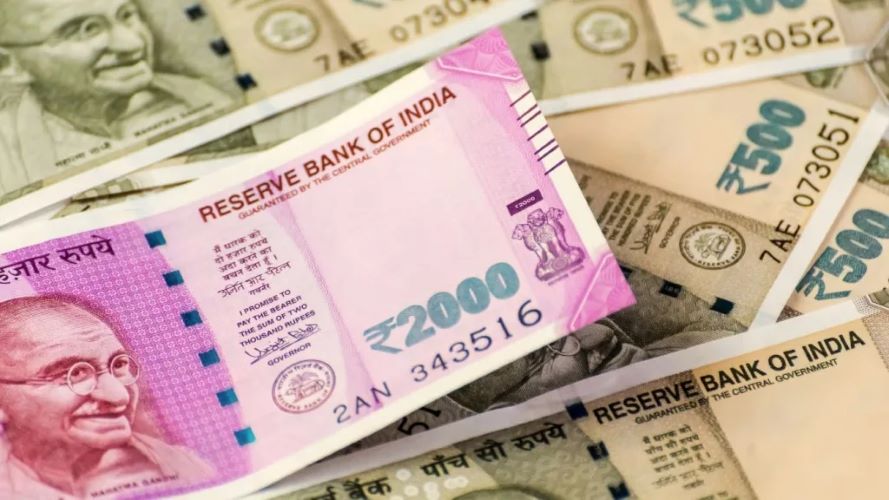
Rupee’s value took a significant hit at the start of the week, plunging 48 paise to 93.31 against the US dollar in early trading on Monday. This decline is attributed to escalating geopolitical tensions in the Middle East and a surge in oil prices, which have surpassed the $100 per barrel threshold. Investor sentiment has turned cautious following the fading ceasefire that had previously buoyed markets, compounded by unsuccessful peace talks in Pakistan aimed at resolving the ongoing conflict.
Geopolitical Tensions and Oil Prices Surge
The geopolitical landscape has become increasingly volatile, particularly following US President Donald Trump’s announcement on Sunday regarding the US Navy’s blockade of the Strait of Hormuz. This strategic move has contributed to a sharp increase in oil prices, with Brent crude for June delivery rising by 7% to reach $102 a barrel. The heightened tensions have not only affected oil markets but have also led to a decline in US equity futures and Asian shares, while US Treasury yields and the dollar have seen an uptick, reversing the trends observed in the previous week.
Investor Withdrawal from Indian Equities
Amid this uncertainty, foreign investors have been withdrawing significant amounts from Indian equities. Data from the National Securities Depository Limited (NSDL) indicates that in the first ten days of April alone, foreign portfolio investors (FPIs) pulled out Rs 48,213 crore (approximately $5.14 billion). This follows a record outflow of Rs 1.17 lakh crore (around $12.7 billion) in March. In stark contrast, February had witnessed an inflow of Rs 22,615 crore, marking the highest in 17 months. Cumulatively, total FPI outflows for 2026 have reached Rs 1.8 lakh crore, reflecting a diminished risk appetite among global investors.
Market Analysts’ Perspectives
VK Vijayakumar, Chief Investment Strategist at Geojit Investments, highlighted that the ongoing energy crisis linked to the Middle East conflict, coupled with its potential repercussions on the Indian economy and the weakening rupee, has kept foreign investors in a selling mode. He noted that markets in South Korea and Taiwan are currently more appealing due to better earnings growth expectations compared to India’s outlook for the fiscal year 2027. Meanwhile, banking and market expert Ajay Bagga commented on the failed peace talks between the US and Iran, stating that the initial optimism in the markets has dissipated, leading to a more negative outlook for Indian markets. He advised investors to adopt a disciplined approach, suggesting monthly investments through the Systematic Investment Plan (SIP) route.
Ongoing Conflict and Market Implications
The conflict, which ignited on February 28, continues to reverberate through global markets. Following coordinated strikes by the US and Israel on Iran, Tehran has disrupted operations in the Strait of Hormuz, a crucial global energy corridor responsible for transporting nearly 20% of the world’s fuel. As tensions in the Middle East escalate, investors remain on edge, with developments surrounding the Strait of Hormuz and the broader conflict significantly influencing movements across commodities, currencies, and equity markets. The situation remains fluid, and market participants are closely monitoring any new developments that could further impact the economic landscape.
Observer Voice is the one stop site for National, International news, Sports, Editor’s Choice, Art/culture contents, Quotes and much more. We also cover historical contents. Historical contents includes World History, Indian History, and what happened today. The website also covers Entertainment across the India and World.
Follow Us on Twitter, Instagram, Facebook, & LinkedIn

