

Princess Charlotte of Prussia: Duchess and Royal Troublemaker

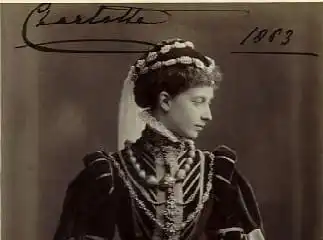
Princess Charlotte of Prussia (24 July 1860 – 1 October 1919) was a Prussian and German royal, Duchess of Saxe-Meiningen from 1914 to 1918. She was the eldest granddaughter of Queen Victoria and became known for her mischief-making and eccentric personality throughout her life in European high society.
Early Life and Education
Charlotte was born on 24 July 1860 at the Neues Palais in Potsdam, the second child and eldest daughter of Prince Frederick William of Prussia and Victoria, Princess Royal. Her father became Crown Prince in 1861 when his own father ascended to the Prussian throne as King Wilhelm I. Through her mother, Charlotte was the granddaughter of Queen Victoria and Prince Albert; she and her brother Wilhelm were the only grandchildren born during Prince Albert’s lifetime.
The family spent winters in Berlin and summers in Potsdam, with periodic stays at a country property purchased and refurbished in 1863. Charlotte’s mother, known as Vicky, was an intellectually demanding parent who supervised her children’s education closely and fostered English cultural values in the household. From early childhood, however, Charlotte proved difficult. By age two she was known as “sweet naughty little Ditta” and displayed a nervous disposition marked by frequent agitation, nail-biting, violent tantrums, and digestive troubles. She was an indifferent student, much to her mother’s dismay, and her relationship with Vicky became strained as she grew older.
Career and Achievements
At age seventeen, Charlotte married Prince Bernhard of Saxe-Meiningen in 1878, eager to escape parental control. Her husband’s weak-willed personality had little effect on her strong character. The couple had one child, Princess Feodora, though Charlotte frequently left the girl in the care of family members while she pursued her own interests in Berlin society. Charlotte and Feodora developed a difficult relationship similar to the one Charlotte had experienced with her own mother.
When her brother succeeded their father as Emperor Wilhelm II in 1888, Charlotte’s social influence increased significantly. Throughout his reign, she became known for spreading gossip and causing mischief in court circles. She spent her life alternating between bouts of illness and frivolous, extravagant pursuits. In 1914, she became Duchess of Saxe-Meiningen when her husband inherited the duchy, though this title lasted only four years.
Notable Events and Milestones
Charlotte’s marriage to Prince Bernhard in 1878 marked her escape from her mother’s household at a young age. Her brother Wilhelm’s ascension to the German throne in 1888 elevated her status within European royal circles and gave her greater opportunity to exercise influence through gossip and social intrigue. Her elevation to Duchess of Saxe-Meiningen came in 1914, but the end of World War I in November 1918 brought the loss of her husband’s title when the duchy ceased to exist as a sovereign state.
Additional Resources
Princess Charlotte’s life reflects the complexities of late nineteenth and early twentieth-century European royalty, marked by family tensions, social influence, and the upheaval of World War I. Readers seeking more detailed information about her life, her family connections, and her role in German and British royal history can consult biographical archives and the full Wikipedia article on Princess Charlotte of Prussia.
Observer Voice is the one stop site for National, International news, Sports, Editor’s Choice, Art/culture contents, Quotes and much more. We also cover historical contents. Historical contents includes World History, Indian History, and what happened today. The website also covers Entertainment across the India and World.

