

Oil Prices Surge Over $100 Following US Announcement of Strait of Hormuz Blockade

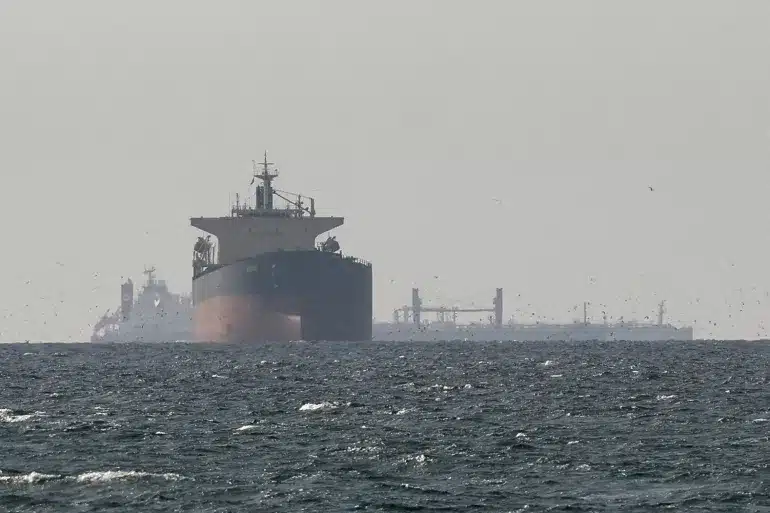
Oil markets have experienced a significant surge, with prices surpassing the $100 per barrel mark following an announcement from U.S. President Donald Trump regarding a blockade of Iranian ports. In early trading, U.S. crude oil, known as WTI, jumped 8% to reach $104.24 per barrel, while Brent crude, the global benchmark, rose 7% to $102.29. This spike in prices comes after tense peace talks between the U.S. and Iran concluded without resolution, raising concerns over oil supply disruptions in the region.
Market Reaction to Blockade Announcement
The announcement of the blockade has sent shockwaves through the oil markets. President Trump declared that the U.S. Navy would begin enforcing a blockade of the Strait of Hormuz, a critical maritime route for global oil shipments. He emphasized that the blockade would target all vessels attempting to enter or exit the strait, citing concerns over potential threats from Iran. “Effective immediately, the United States Navy, the Finest in the World, will begin the process of BLOCKADING any and all Ships trying to enter, or leave, the Strait of Hormuz,” Trump stated on Truth Social. This move is expected to impact the flow of up to 2 million barrels per day of Iranian-linked oil, further tightening global supply.
Implications for Global Oil Prices
Analysts predict that the recent developments could keep oil prices elevated, particularly as the U.S. approaches its midterm elections in November. Saul Kavonic, head of energy research at MST Marquee, noted that the market conditions are reverting to those seen before the ceasefire, with the U.S. now poised to block Iranian oil flows. Since the onset of the conflict, Brent crude has seen significant volatility, climbing from approximately $70 per barrel in late February to peaks exceeding $119. The uncertainty surrounding the blockade and its potential impact on oil supply is likely to keep prices fluctuating in the coming weeks.
Strategic Importance of the Strait of Hormuz
The Strait of Hormuz is a vital chokepoint for global oil trade, with around one-fifth of the world’s oil passing through it daily. Major oil-exporting nations, including Saudi Arabia, Iraq, the United Arab Emirates, Kuwait, and Iran, rely on this route for their shipments. Despite the ceasefire, marine tracking data indicates that traffic through the strait has remained subdued, with only over 40 commercial vessels reported to have crossed since the truce began. The U.S. Central Command has stated that the blockade will be enforced impartially against vessels of all nations, although ships traveling between non-Iranian ports will still be allowed to pass through.
Future Outlook Amid Ongoing Tensions
As tensions in the region continue to escalate, the implications for global energy markets remain uncertain. The U.S. Navy’s blockade is expected to further complicate shipping routes and could lead to increased prices at the pump for consumers. With the situation evolving rapidly, stakeholders in the oil market are closely monitoring developments. The potential for continued disruptions in the Strait of Hormuz could have lasting effects on global oil supply and pricing, making it a critical area of focus for both investors and policymakers alike.
Observer Voice is the one stop site for National, International news, Sports, Editor’s Choice, Art/culture contents, Quotes and much more. We also cover historical contents. Historical contents includes World History, Indian History, and what happened today. The website also covers Entertainment across the India and World.
Follow Us on Twitter, Instagram, Facebook, & LinkedIn

