

Mercosur Trade Deal Stalled: French Objections and Agricultural Protests Challenge EU Negotiations

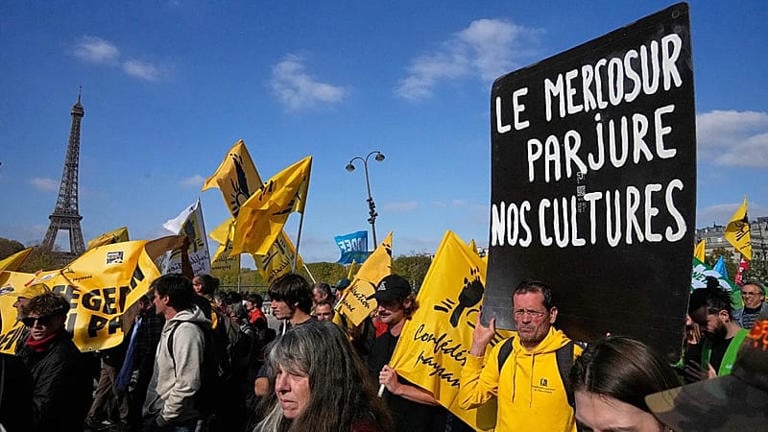
France’s last-minute objections and escalating protests from farmers are jeopardizing the European Union’s long-awaited free-trade agreement with the Mercosur bloc of South America. As EU negotiators aimed to finalize a deal that has been in the works for nearly 25 years, angry farmers took to the streets in Brussels, expressing fears over increased competition from cheaper agricultural imports. The agreement, which involves the EU and five Mercosur nations—Brazil, Argentina, Uruguay, Paraguay, and Bolivia—would gradually eliminate tariffs on most goods traded between the two regions over a span of 15 years. However, the timeline for signing the deal is now uncertain.
Growing Opposition from EU Member States
French Prime Minister Sébastien Lecornu declared the current terms of the agreement “unacceptable,” stating that the necessary conditions for EU leaders to authorize its signing have not been met. This statement raises the possibility of delaying the decision until 2026 or beyond. While acknowledging the European Commission’s efforts to safeguard farmers and enhance food safety checks, Lecornu emphasized that France remains unconvinced about the deal’s benefits. Other countries, including Poland, Austria, and the Netherlands, share similar concerns, fearing that Mercosur exporters could undermine EU farmers who adhere to stricter labor, environmental, and sanitary regulations.
The call for “mirror clauses” by France, which would require Mercosur producers to comply with the same standards as EU farmers, has not been fully accepted. Analysts suggest that this standoff highlights the limits of the EU’s political unity and its global influence, raising questions about the bloc’s ability to negotiate effectively with other partners.
Strategic Importance of the Agreement
The Mercosur agreement comes at a crucial time for the EU, which is looking to diversify its trade relationships following the imposition of tariffs by the United States earlier this year. EU officials view the pact as a strategic counterbalance to the aggressive trade policies of both the US and China. European Commission spokesperson Olof Gill emphasized the importance of concluding the agreement by the end of the year, arguing that it would enhance the EU’s geopolitical standing and foster cooperation on climate and economic security.
Agriculture remains a central issue in the ongoing debate surrounding the trade agreement. In 2024, the EU exported agricultural goods worth €235.4 billion ($272 billion), and critics warn that the deal could harm local dairy and beef producers while potentially causing environmental damage. Proponents argue that the agreement would save businesses approximately $4.26 billion in duties annually and open new markets for a variety of products, including French wine, German pharmaceuticals, and Brazilian minerals.
To address the growing opposition, the European Commission has proposed several safeguards. These include mechanisms that would allow farmers to initiate investigations if Mercosur imports are priced at least 10% below EU products, as well as tighter border inspections for banned pesticides. Despite these measures, French concerns persist, and agricultural unions are planning further demonstrations in Brussels as EU leaders convene later this week, underscoring the political risks associated with a deal that was once considered a cornerstone of the EU’s trade strategy.
Observer Voice is the one stop site for National, International news, Sports, Editor’s Choice, Art/culture contents, Quotes and much more. We also cover historical contents. Historical contents includes World History, Indian History, and what happened today. The website also covers Entertainment across the India and World.

