

Japan and India Engage in Discussions to Investigate Rare Earth Deposits Amidst Supply Concerns from China

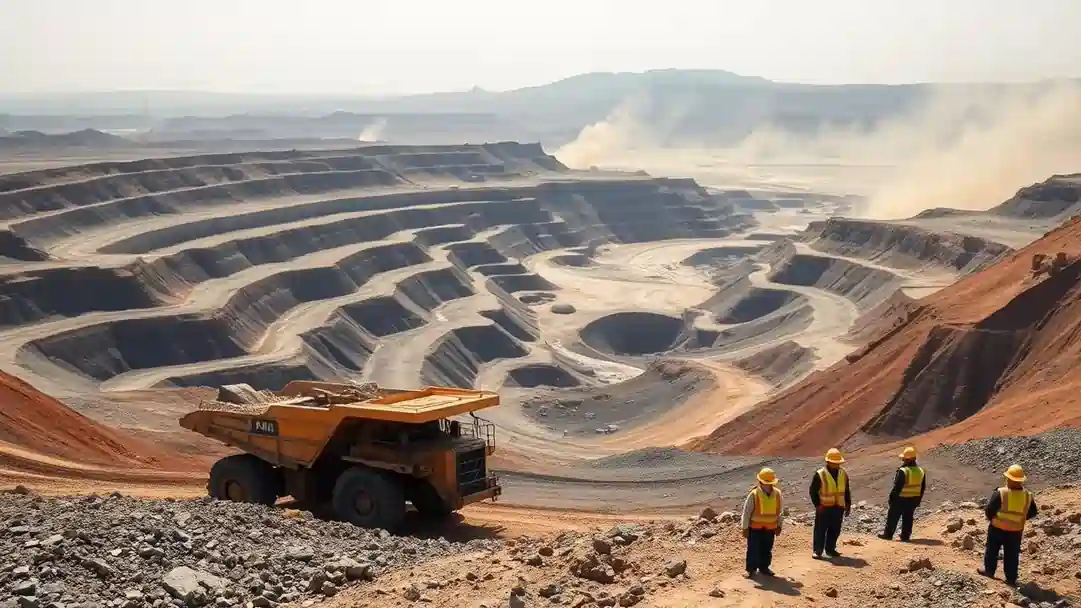
Japan is actively engaging in discussions with India to jointly explore rare earth deposits located in Rajasthan. This initiative aims to decrease Japan’s reliance on China for essential minerals used in the production of magnets. Recent reports indicate that Japan’s interest in these deposits follows a preliminary agreement on critical minerals signed between the two nations last year. As part of this collaboration, Japan plans to send experts to assess the site and potentially provide extraction technology and funding in exchange for a stable supply of rare earth materials.
Exploring Rare Earth Deposits in Rajasthan
The discussions between Japan and India come in light of recent discoveries of significant rare earth deposits in Rajasthan and Gujarat. Union minister G. Kishan Reddy announced that three hard rock deposits containing approximately 1.29 million metric tons of rare earth oxides have been identified. These deposits are crucial for various industries, including electric vehicles and renewable energy technologies. Japan’s interest in these resources is part of a broader strategy to secure a stable supply chain for critical minerals, which are essential for advanced technologies.
Sources familiar with the negotiations revealed that Japan is keen to send experts to Rajasthan to evaluate the deposits further. However, the timeline for this visit remains unspecified. The collaboration aims to leverage Japan’s advanced extraction technology, which is necessary for processing hard rock deposits, a technique that India currently lacks. This partnership could significantly enhance India’s capabilities in rare earth extraction and processing.
Technological Collaboration and Investment
In exchange for access to Rajasthan’s rare earth deposits, Japan is expected to provide both extraction technology and financial investment. This arrangement would ensure a reliable supply of rare earth materials to Japan, which is crucial for its manufacturing sector. The Japanese government has emphasized the importance of diversifying its mineral supply sources, particularly in light of rising tensions with China. Naoki Kobayashi, deputy director at Japan’s Ministry of Economy, Trade and Industry, confirmed that Japan is exploring mining projects globally to secure its mineral needs.
While Japan is focused on rare earths, it is also looking to collaborate with Indian companies on other critical minerals such as lithium, copper, and cobalt, particularly in Africa. This broader strategy reflects Japan’s commitment to reducing its dependence on Chinese imports and enhancing its resource security.
Impact of Geopolitical Tensions
The discussions between Japan and India occur against a backdrop of increasing geopolitical tensions, particularly between Japan and China. Recently, China imposed export restrictions on dual-use items to several Japanese entities, which has raised concerns about supply chain vulnerabilities. These restrictions effectively limit access to seven rare earth elements and other critical minerals for Japanese companies, underscoring the urgency for Japan to secure alternative sources.
As both Japan and India seek to bolster their industrial capabilities, the exploration of rare earth deposits in Rajasthan could play a pivotal role in their economic strategies. By developing industrial-scale facilities to process rare earth elements, India aims to enhance its position in the global market while reducing reliance on Chinese imports. This collaboration not only benefits Japan’s manufacturing sector but also aligns with India’s growth objectives in critical technology sectors.
Future Prospects for India-Japan Collaboration
The potential partnership between Japan and India in the rare earth sector signifies a strategic move towards greater cooperation in resource management. As both nations navigate the complexities of global supply chains, their collaboration could lead to significant advancements in technology and resource extraction. The focus on rare earths, along with other critical minerals, highlights the importance of sustainable and secure supply chains in today’s geopolitical landscape.
With Japan’s technological expertise and India’s resource potential, this partnership could pave the way for a more resilient and diversified mineral supply network. As discussions progress, the outcomes of these negotiations will be closely watched, as they hold implications not only for Japan and India but also for the broader dynamics of global trade and resource management.
Observer Voice is the one stop site for National, International news, Sports, Editor’s Choice, Art/culture contents, Quotes and much more. We also cover historical contents. Historical contents includes World History, Indian History, and what happened today. The website also covers Entertainment across the India and World.
Follow Us on Twitter, Instagram, Facebook, & LinkedIn

